
How to Enhance an Excavator’s Operational Reach—Digging Deeper, Higher, and Further—Through Custom Modifications
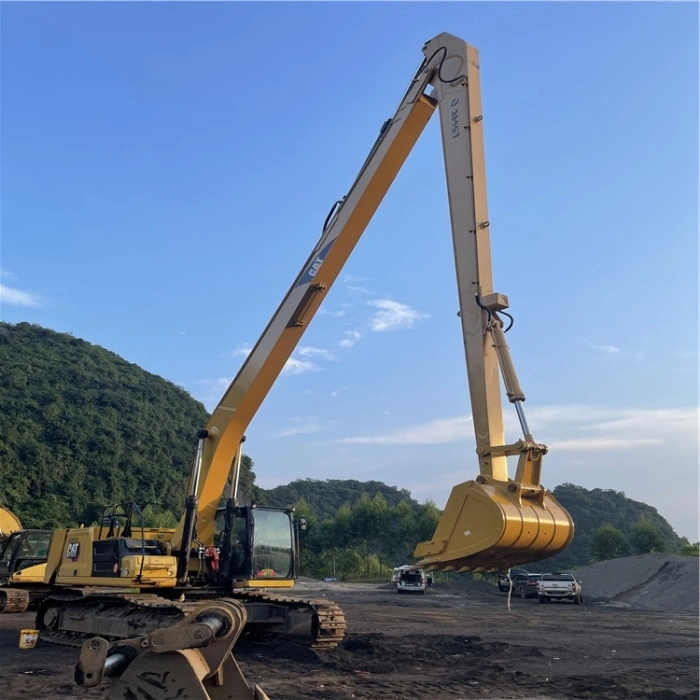
An extended-reach boom for an excavator is not a standard feature; rather, it is a specialized modification designed to broaden the machine's operational range. By replacing the original boom and arm, it effectively extends the excavator’s "reach," enabling it to perform complex tasks—such as accessing distant areas, excavating at greater depths, or carrying out demolition work—that would otherwise be beyond the capabilities of a standard configuration. Its primary value lies in its ability to handle specific, demanding tasks—which might otherwise require multiple pieces of specialized equipment or high-risk manual labor—through a cost-effective modification of a single machine.
Customization and Selection: Longer Is Not Always Better
The primary principle for customizing an extended-reach boom is compatibility; the design must be based on the excavator’s tonnage and the intended operating conditions—it should not be extended arbitrarily.
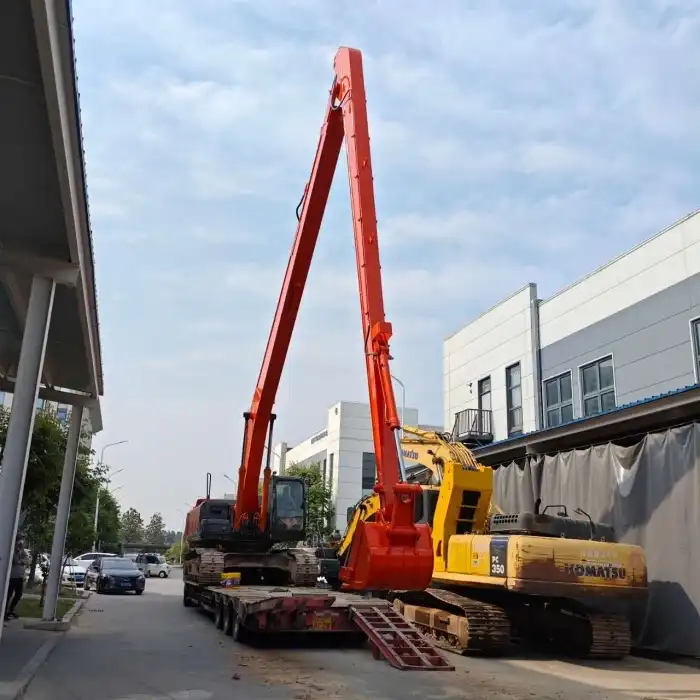
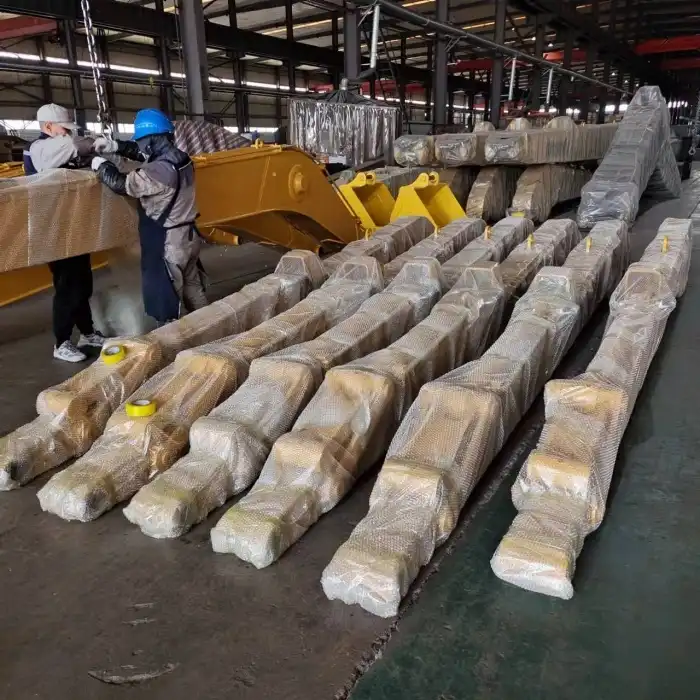
Configuration Determines Function: Extended-reach booms are primarily categorized into two-section, three-section, and four-section types.
Two-section: The most common configuration, designed to increase digging radius and depth; typically used for standard deep excavation and desilting.
Three-section/Four-section: Often referred to as "demolition booms," these incorporate additional intermediate boom segments to achieve significant operating heights, specifically for high-reach demolition tasks.
Tonnage Dictates Length: The length of an extended-reach boom must be strictly matched to the excavator’s tonnage. An improper match—akin to "a small horse pulling a heavy cart"—can lead to equipment damage.
Functions and Benefits: From "Out of Reach" to "Highly Efficient Completion"
The impact of an extended boom is both direct and significant; its core value lies in using machinery to replace manual labor and high-risk tasks.
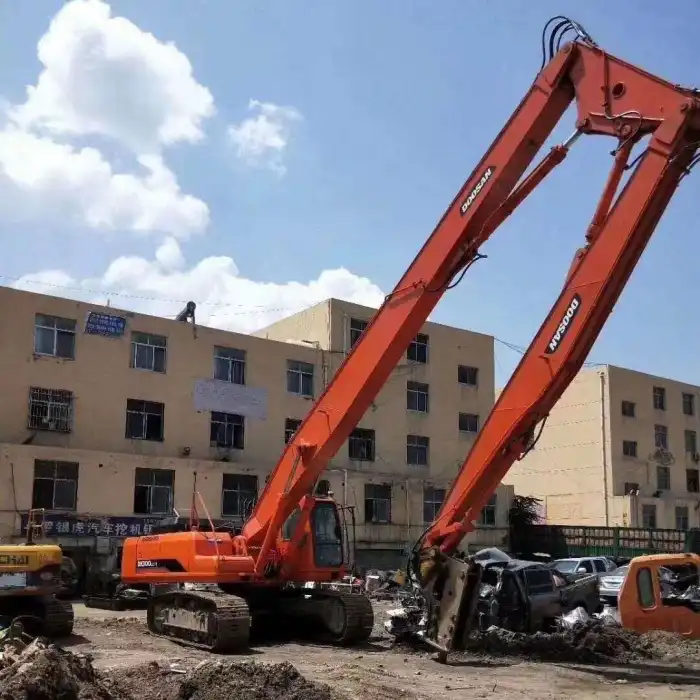
Expanding the Operational Range: The most immediate benefit is a substantial increase in an excavator’s maximum digging radius, depth, and height, making previously inaccessible work areas reachable.
Enhancing Safety and Efficiency: In scenarios such as building demolition or river dredging, operators can work from a safe distance or on solid ground—avoiding the need to approach unstable structures or venture onto soft, precarious riverbanks—while benefiting from the far greater efficiency of mechanized operations.
Versatility and Improved Equipment Utilization: By attaching an extended boom, a standard excavator can be transformed into a specialized machine for dredging or demolition. This eliminates the need to purchase additional, dedicated equipment for occasional, specialized tasks.
A Practical Example: During the redevelopment of a port storage yard, an excavator equipped with an 18-meter extended boom was used to handle high-stacked cargo from a safe distance. This increased the storage capacity for materials like nickel ore by 60%, effectively easing the pressure on limited yard space.
Primary Operating Conditions: Specialized for "Deep, High, Distant, and Hazardous" Tasks
The use of extended-reach booms is highly concentrated in areas where standard excavators struggle to perform. Key applications include:
Deep Excavation and Foundation Work: Used for excavating and moving earth in deep pits, such as those for building foundations, subway stations, and underground utility corridors. Two-section extended-reach booms are the most common choice for these tasks.
River Dredging and Hydraulic Engineering: A classic application for extended-reach booms. Operators can remain on the riverbank while dredging the center of a river channel or canal, eliminating the need for equipment to enter the water or for the construction of temporary access paths. This is particularly well-suited for dredging rivers, lakes, and reservoirs, as well as for bank stabilization work.
Demolition of High-Rise Buildings and Structures: This is the primary purpose of three-section or four-section "demolition booms." Equipped with hydraulic shears or breakers, these machines can dismantle high-rise buildings, chimneys, and overpasses from a distance—working vertically from the top down—which significantly reduces the risks associated with demolition.
Specialized Material Handling and High-Reach Operations: Used in ports, terminals, and large storage yards for organizing, loading, and unloading high-stacked cargo. They are also employed in scenarios where ground conditions are restrictive, such as grading highway slopes or performing long-reach excavation inside tunnels.
Visit www.stnd-machinery.com or contact us by email at arm@stnd-machinery.com~