

How to use the excavator transfer carrier?
November 2, 2026

1. Product Overview This Excavator Transfer carrier, namely excavator dolly, is specifically engineered for different classes crawler excavators. The entire frame is fabricated from high-strength welded structural steel, delivering robust structural stability and superior load-bearing capacity, with a maximum safe working load (SWL) of from 20000Kg to 90,000 kg available from us. The unit is fitted with heavy-duty semi-solid or fully-solid tires, engineered for exceptional abrasion resistance, shock absorption, and high adaptability to rugged jobsite terrain. It is widely utilized for short-distance jobsite relocations, effectively preventing asphalt/concrete pavement damage, protecting excavator track grousers, and minimizing undercarriage wear.   2. Pre-Operation Preparation All loading and relocation operations must be performed strictly on firm, level, and well-compacted ground. Prior to operation, clear all loose gravel, debris, and obstructions along the transit route, and avoid soft, collapsed, or slippery surface conditions.  Position the transport dolly level on the ground to ensure full tire contact and uniform load distribution, eliminating any chassis tilt or wheel overhang. Operators must routinely inspect the tires for tread wear, structural damage, and inflation pressure (if applicable), replacing worn tires promptly to guarantee safe towing and rolling stability.  3. Standard Operating Procedures (SOP) Alignment & Positioning: Approach the dolly at low idle speed and align the excavator squarely with the frame. Guide the left and right tracks smoothly onto the designated load-bearing channels of the dolly. Boom & Arm Adjustment: Slowly raise the boom and arm to adjust front-end clearance while maintaining the excavator body parallel to the dolly frame, until the tracks are fully elevated and the machine rests securely on the deck. Towing Rig Setup: Rest the front working attachment (boom/arm/bucket) firmly inside the bucket of the towing vehicle (prime mover) to provide stable three-point support. Towing Transit: The assembly must be towed by a designated motor vehicle at a maximum speed of 15 km/h, maintaining a steady, uniform pace. 4. Safety Operating Specifications WARNING — UNBRAKED TRAILER: This transport dolly is not equipped with an independent braking system. Sudden acceleration, hard braking, and aggressive/sharp turns are strictly prohibited during transit to prevent jackknifing, sliding, and rollover. Negotiating Slopes & Rough Terrain: When traversing slopes, ramps, or uneven road surfaces, decelerate well in advance and proceed slowly at a constant speed. Operational Limits: Overloading, speeding, and reckless operation are strictly prohibited. Routine Maintenance: Periodically inspect the main body frames, wheel hubs, lug fasteners, and tires to ensure long-term operational safety and structural reliability.

1. Product Overview

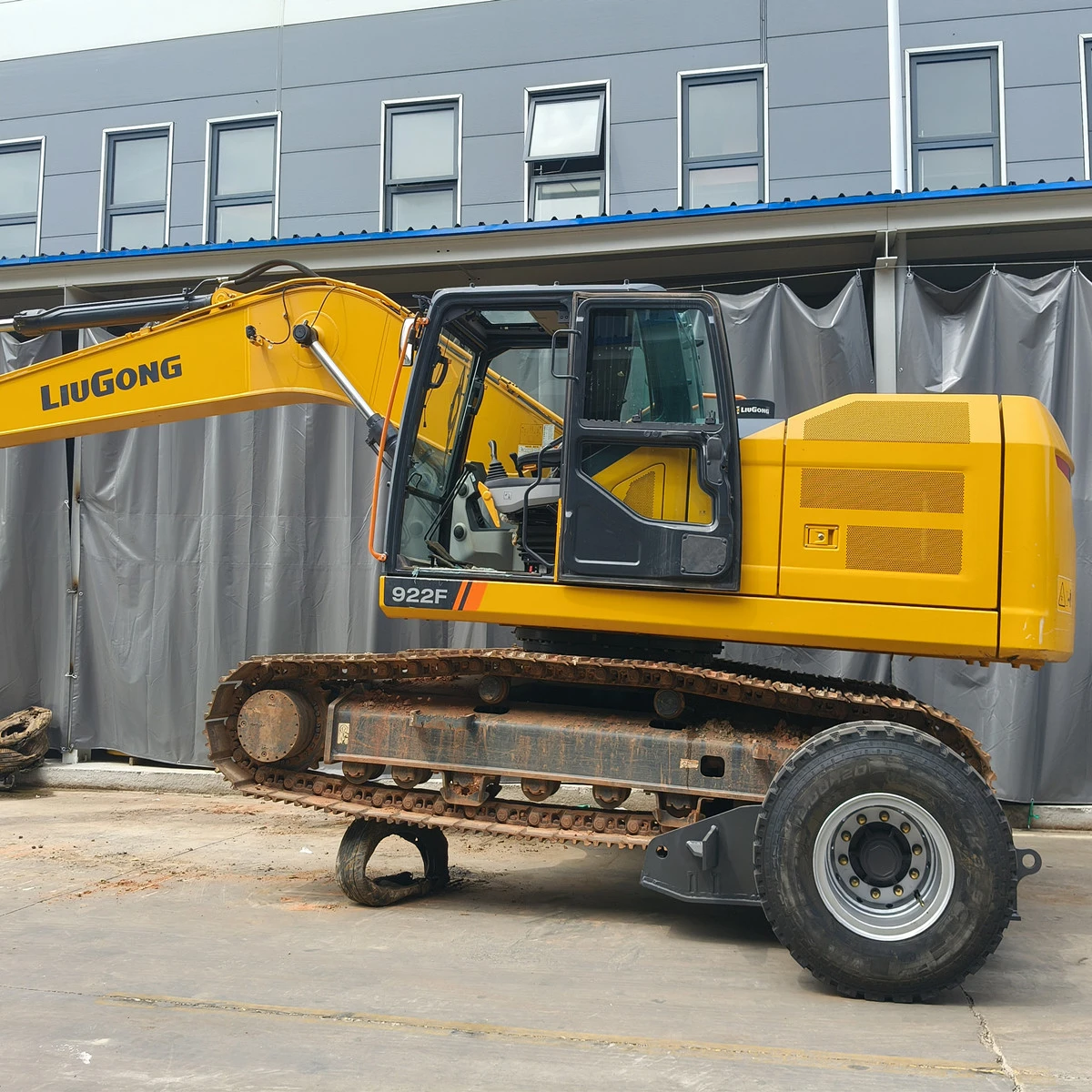
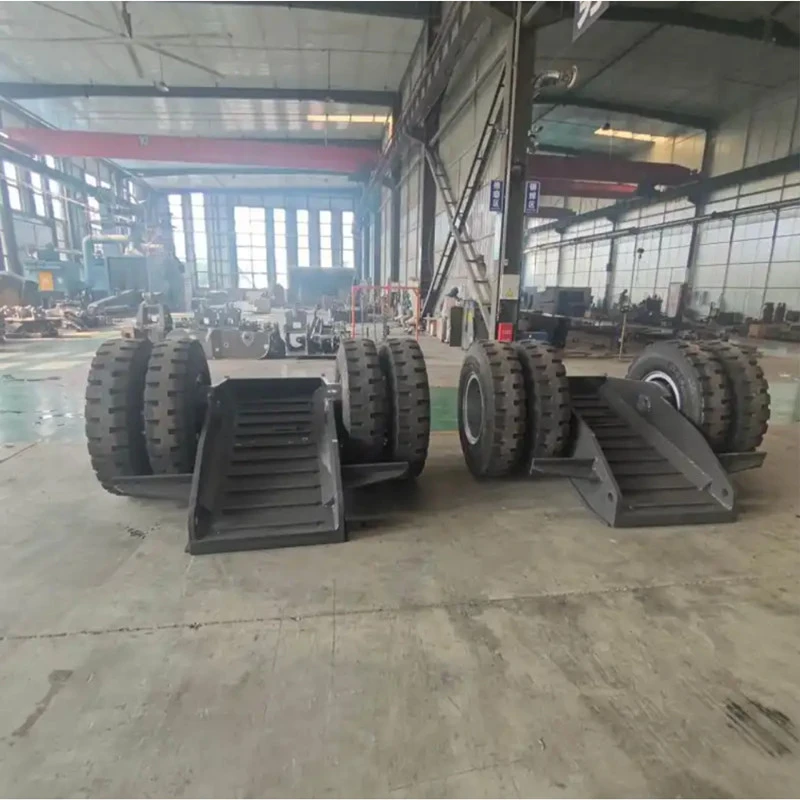
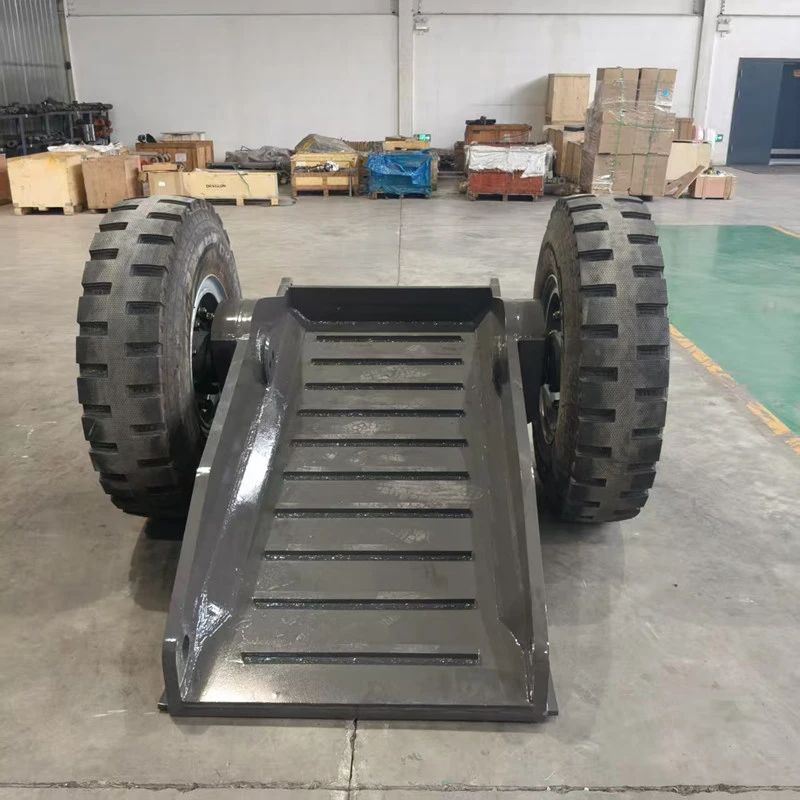
This Excavator Transfer carrier, namely excavator dolly, is specifically engineered for different classes crawler excavators. The entire frame is fabricated from high-strength welded structural steel, delivering robust structural stability and superior load-bearing capacity, with a maximum safe working load (SWL) of from 20000Kg to 90,000 kg available from us.

The unit is fitted with heavy-duty semi-solid or fully-solid tires, engineered for exceptional abrasion resistance, shock absorption, and high adaptability to rugged jobsite terrain. It is widely utilized for short-distance jobsite relocations, effectively preventing asphalt/concrete pavement damage, protecting excavator track grousers, and minimizing undercarriage wear.
1. Product Overview This Excavator Transfer carrier, namely excavator dolly, is specifically engineered for different classes crawler excavators. The entire frame is fabricated from high-strength welded structural steel, delivering robust structural stability and superior load-bearing capacity, with a maximum safe working load (SWL) of from 20000Kg to 90,000 kg available from us. The unit is fitted with heavy-duty semi-solid or fully-solid tires, engineered for exceptional abrasion resistance, shock absorption, and high adaptability to rugged jobsite terrain. It is widely utilized for short-distance jobsite relocations, effectively preventing asphalt/concrete pavement damage, protecting excavator track grousers, and minimizing undercarriage wear.   2. Pre-Operation Preparation All loading and relocation operations must be performed strictly on firm, level, and well-compacted ground. Prior to operation, clear all loose gravel, debris, and obstructions along the transit route, and avoid soft, collapsed, or slippery surface conditions.  Position the transport dolly level on the ground to ensure full tire contact and uniform load distribution, eliminating any chassis tilt or wheel overhang. Operators must routinely inspect the tires for tread wear, structural damage, and inflation pressure (if applicable), replacing worn tires promptly to guarantee safe towing and rolling stability.  3. Standard Operating Procedures (SOP) Alignment & Positioning: Approach the dolly at low idle speed and align the excavator squarely with the frame. Guide the left and right tracks smoothly onto the designated load-bearing channels of the dolly. Boom & Arm Adjustment: Slowly raise the boom and arm to adjust front-end clearance while maintaining the excavator body parallel to the dolly frame, until the tracks are fully elevated and the machine rests securely on the deck. Towing Rig Setup: Rest the front working attachment (boom/arm/bucket) firmly inside the bucket of the towing vehicle (prime mover) to provide stable three-point support. Towing Transit: The assembly must be towed by a designated motor vehicle at a maximum speed of 15 km/h, maintaining a steady, uniform pace. 4. Safety Operating Specifications WARNING — UNBRAKED TRAILER: This transport dolly is not equipped with an independent braking system. Sudden acceleration, hard braking, and aggressive/sharp turns are strictly prohibited during transit to prevent jackknifing, sliding, and rollover. Negotiating Slopes & Rough Terrain: When traversing slopes, ramps, or uneven road surfaces, decelerate well in advance and proceed slowly at a constant speed. Operational Limits: Overloading, speeding, and reckless operation are strictly prohibited. Routine Maintenance: Periodically inspect the main body frames, wheel hubs, lug fasteners, and tires to ensure long-term operational safety and structural reliability.


2. Pre-Operation Preparation

All loading and relocation operations must be performed strictly on firm, level, and well-compacted ground. Prior to operation, clear all loose gravel, debris, and obstructions along the transit route, and avoid soft, collapsed, or slippery surface conditions.

Position the transport dolly level on the ground to ensure full tire contact and uniform load distribution, eliminating any chassis tilt or wheel overhang. Operators must routinely inspect the tires for tread wear, structural damage, and inflation pressure (if applicable), replacing worn tires promptly to guarantee safe towing and rolling stability.
1. Product Overview This Excavator Transfer carrier, namely excavator dolly, is specifically engineered for different classes crawler excavators. The entire frame is fabricated from high-strength welded structural steel, delivering robust structural stability and superior load-bearing capacity, with a maximum safe working load (SWL) of from 20000Kg to 90,000 kg available from us. The unit is fitted with heavy-duty semi-solid or fully-solid tires, engineered for exceptional abrasion resistance, shock absorption, and high adaptability to rugged jobsite terrain. It is widely utilized for short-distance jobsite relocations, effectively preventing asphalt/concrete pavement damage, protecting excavator track grousers, and minimizing undercarriage wear.   2. Pre-Operation Preparation All loading and relocation operations must be performed strictly on firm, level, and well-compacted ground. Prior to operation, clear all loose gravel, debris, and obstructions along the transit route, and avoid soft, collapsed, or slippery surface conditions.  Position the transport dolly level on the ground to ensure full tire contact and uniform load distribution, eliminating any chassis tilt or wheel overhang. Operators must routinely inspect the tires for tread wear, structural damage, and inflation pressure (if applicable), replacing worn tires promptly to guarantee safe towing and rolling stability.  3. Standard Operating Procedures (SOP) Alignment & Positioning: Approach the dolly at low idle speed and align the excavator squarely with the frame. Guide the left and right tracks smoothly onto the designated load-bearing channels of the dolly. Boom & Arm Adjustment: Slowly raise the boom and arm to adjust front-end clearance while maintaining the excavator body parallel to the dolly frame, until the tracks are fully elevated and the machine rests securely on the deck. Towing Rig Setup: Rest the front working attachment (boom/arm/bucket) firmly inside the bucket of the towing vehicle (prime mover) to provide stable three-point support. Towing Transit: The assembly must be towed by a designated motor vehicle at a maximum speed of 15 km/h, maintaining a steady, uniform pace. 4. Safety Operating Specifications WARNING — UNBRAKED TRAILER: This transport dolly is not equipped with an independent braking system. Sudden acceleration, hard braking, and aggressive/sharp turns are strictly prohibited during transit to prevent jackknifing, sliding, and rollover. Negotiating Slopes & Rough Terrain: When traversing slopes, ramps, or uneven road surfaces, decelerate well in advance and proceed slowly at a constant speed. Operational Limits: Overloading, speeding, and reckless operation are strictly prohibited. Routine Maintenance: Periodically inspect the main body frames, wheel hubs, lug fasteners, and tires to ensure long-term operational safety and structural reliability.

3. Standard Operating Procedures (SOP)

Alignment & Positioning: Approach the dolly at low idle speed and align the excavator squarely with the frame. Guide the left and right tracks smoothly onto the designated load-bearing channels of the dolly.

Boom & Arm Adjustment: Slowly raise the boom and arm to adjust front-end clearance while maintaining the excavator body parallel to the dolly frame, until the tracks are fully elevated and the machine rests securely on the deck.

Towing Rig Setup: Rest the front working attachment (boom/arm/bucket) firmly inside the bucket of the towing vehicle (prime mover) to provide stable three-point support.

Towing Transit: The assembly must be towed by a designated motor vehicle at a maximum speed of 15 km/h, maintaining a steady, uniform pace.

4. Safety Operating Specifications

WARNING — UNBRAKED TRAILER: This transport dolly is not equipped with an independent braking system. Sudden acceleration, hard braking, and aggressive/sharp turns are strictly prohibited during transit to prevent jackknifing, sliding, and rollover.

Negotiating Slopes & Rough Terrain: When traversing slopes, ramps, or uneven road surfaces, decelerate well in advance and proceed slowly at a constant speed.

Operational Limits: Overloading, speeding, and reckless operation are strictly prohibited.

Routine Maintenance: Periodically inspect the main body frames, wheel hubs, lug fasteners, and tires to ensure long-term operational safety and structural reliability.


Please contact us for more information about this excavator transfer carrier~

Visit www.stnd-machinery.com or contact arm@stnd-machinery.com.

Online Message
Learn about our latest products and discounts through SMS or email