

Hydraulic Double-Head Ballast Tamper: Efficient Ballast Compaction After Rail Tie Replacement
Replacing rail ties is only the first step in track maintenance. If the ballast beneath the newly installed ties is not properly compacted, the track will lack sufficient support, compromising both safety and stability. Manual tamping is slow and labor-intensive—unsuitable for modern railway maintenance crews that need speed and consistent quality. The Hydraulic Double-Head Ballast Tamper addresses this gap as an excavator-mounted attachment designed specifically for post-tie-replacement ballast compaction.
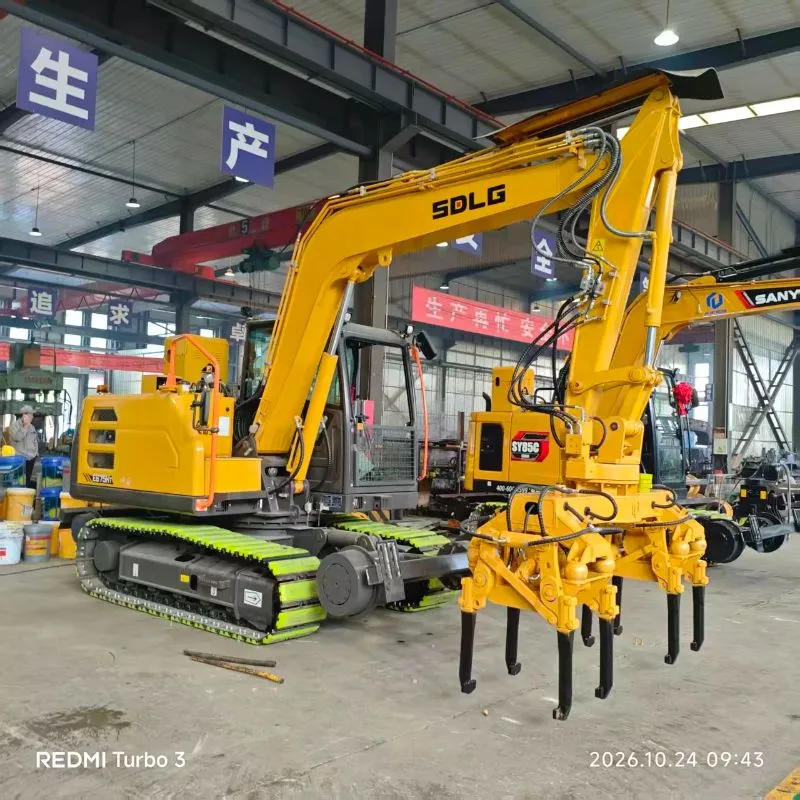
Why Ballast Tamping Is Essential After Tie Replacement
Ballast distributes the load from the ties to the subgrade and maintains track geometry. Tie replacement disturbs the compacted state of the ballast bed, creating voids between the tie bottom and the ballast. Without proper tamping, ties can settle or “cock” under traffic loading, rapidly degrading track alignment. Specifications require that tamping tools be inserted simultaneously on opposite sides of the same tie to ensure complete compaction beneath the tie and firm seating of the rail on the tie plate. Tamping after tie replacement is therefore not optional—it is a necessary step to ensure safe operation once the track is reopened.
Key Specifications of the TNYyDGJ75 Model
The “double-head” design is central to both efficiency and stability. The TNYyDGJ75 model from Shandong Tiannuo is built for 60–90 ton excavators, compatible with track gauges of 1435 mm and 1520 mm. Its tamper head vibration frequency reaches 63.5 Hz, with 8 tamping heads, maximum compaction depth of 400 mm, and clamping range of 320–550 mm. These figures mean the attachment can work on mainline and heavy-haul railways, reaching the critical ballast layer beneath the tie.
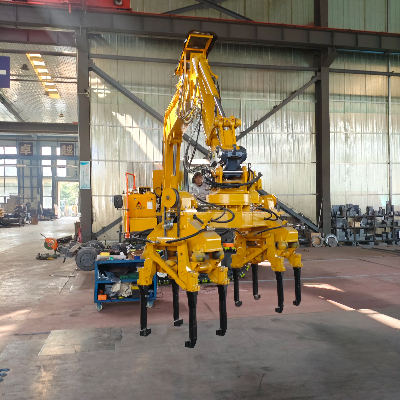
The 360-degree rotation function is another practical feature. On curves or turnout areas, the operator can adjust the attachment angle from the cab without repositioning the host machine. At 880 kg, the unit is a reasonable load for a 60-ton-plus excavator, maintaining host stability during operation.
The Practical Value of Excavator-Mounted Design
Designing the tamper as an excavator attachment rather than a dedicated tamping vehicle lowers the barrier to entry for railway maintenance departments. Excavators are already common equipment for track crews and contractors. With a quick-coupler, one host machine can switch between tie replacement, tamping, and material handling. Compared with purchasing a dedicated ballast tamping machine, the attachment approach is more economical in both initial investment and daily maintenance.
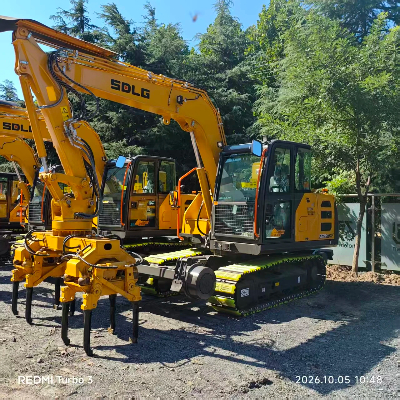
Operationally, the driver never leaves the cab; handle controls manage rotation and clamping. The dual-head design allows both sides of the tamping heads to work in coordination, covering the compaction needs on both sides of the tie in a single insertion—reducing repetitive positioning time.
Application Scenarios and Selection Guidance
The Hydraulic Double-Head Ballast Tamper is aimed at routine maintenance, major overhaul projects, and emergency repairs. After tie replacement is complete, the tamping heads vibrate and clamp the ballast beneath the ties, rearranging ballast particles into a dense state.
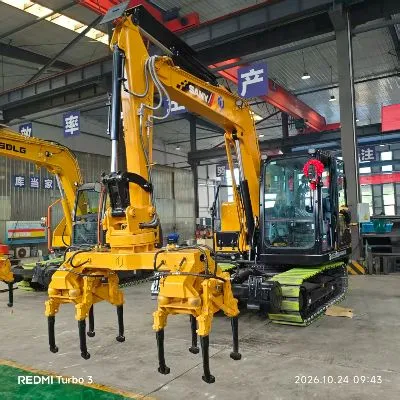
Selection considerations: First, confirm the host excavator tonnage falls within the 60–90 ton range and that the hydraulic system flow and pressure meet the attachment’s rated requirements. Second, choose the gauge specification—1435 mm for standard gauge, 1520 mm for broad gauge regions. Finally, if the work involves turnout areas or frequent curve operations, the 360-degree rotation feature offers meaningful operational convenience.
For railway maintenance units or contractors seeking a ballast compaction solution after tie replacement, the Hydraulic Double-Head Ballast Tamper provides a balanced option between efficiency and investment. For detailed technical specifications or compatibility information, contact the manufacturer directly.
Visit www.stnd-machinery.com or contact arm@stnd-machinery.com~