

Match Bucket to Site, Maximize Your Excavator’s Value
Every excavator on a site is judged by one part of itself: the bucket. It is the only component in contact with the ground, and the only one that converts hydraulic pressure into production. When the bucket is wrong for the material, the losses show up everywhere at once — slower cycles, teeth changed more often than planned, cracked shells, and fuel burned to move material twice.
STND Machinery manufactures excavator buckets from 0.1 to 5.0 m³ in high-strength wear-resistant steel, built to the carrier and to the ground it will dig, with the mounting interface matched to the machine rather than assumed.
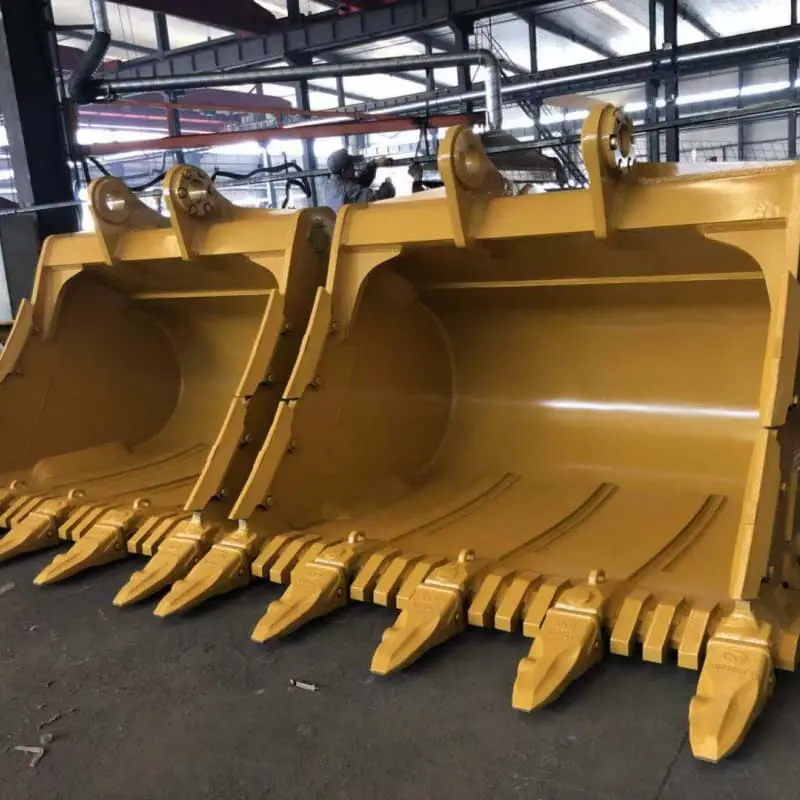
What Is an Excavator Bucket?
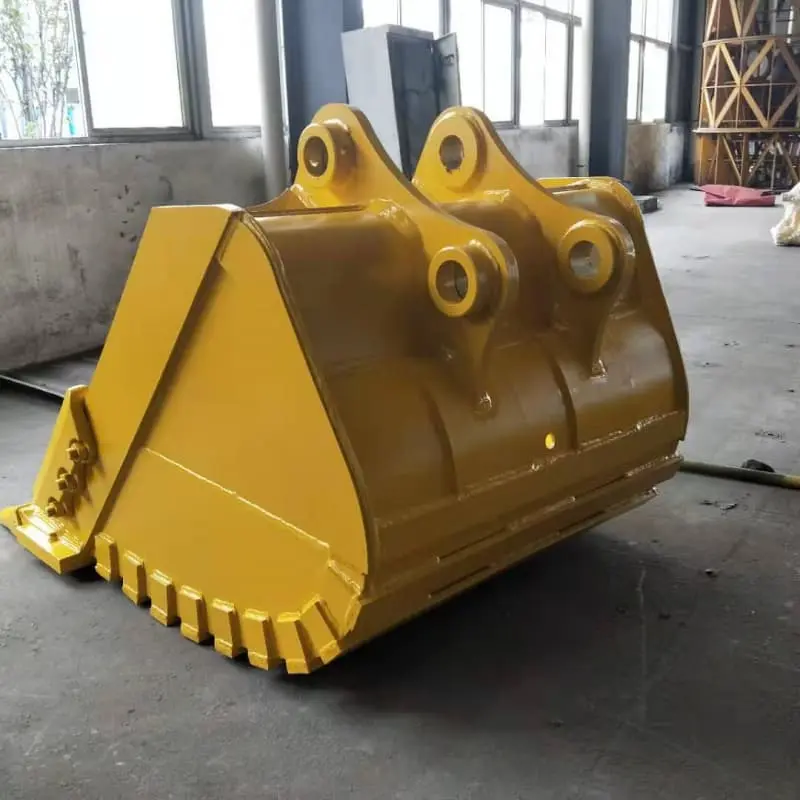
An excavator bucket is the primary working device of the machine. Driven by the cylinder and linkage, it cuts, scoops, carries and releases material. Its shell profile, cutting edge, tooth arrangement and width are all variables, and they are set by the job rather than by the machine alone.
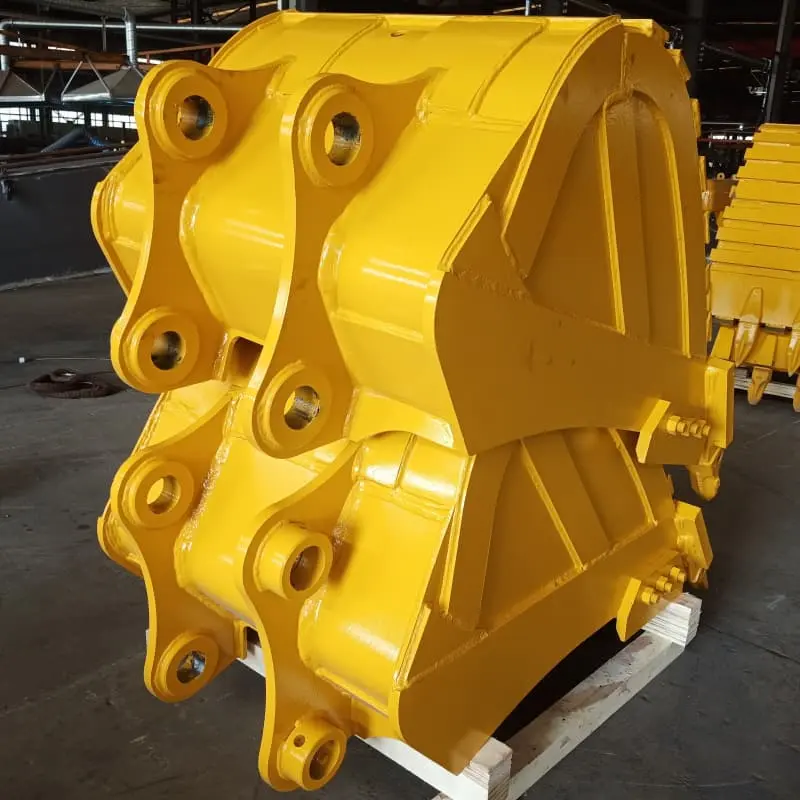
It mounts to the arm through a pin-on connection or a quick coupler. That choice is not cosmetic: a pin-on mount gives a fixed, direct load path for continuous production work, while a quick coupler trades a small amount of that rigidity for the ability to change attachments within minutes on a mixed-scope site.
One Bucket Line, Two Very Different Jobs
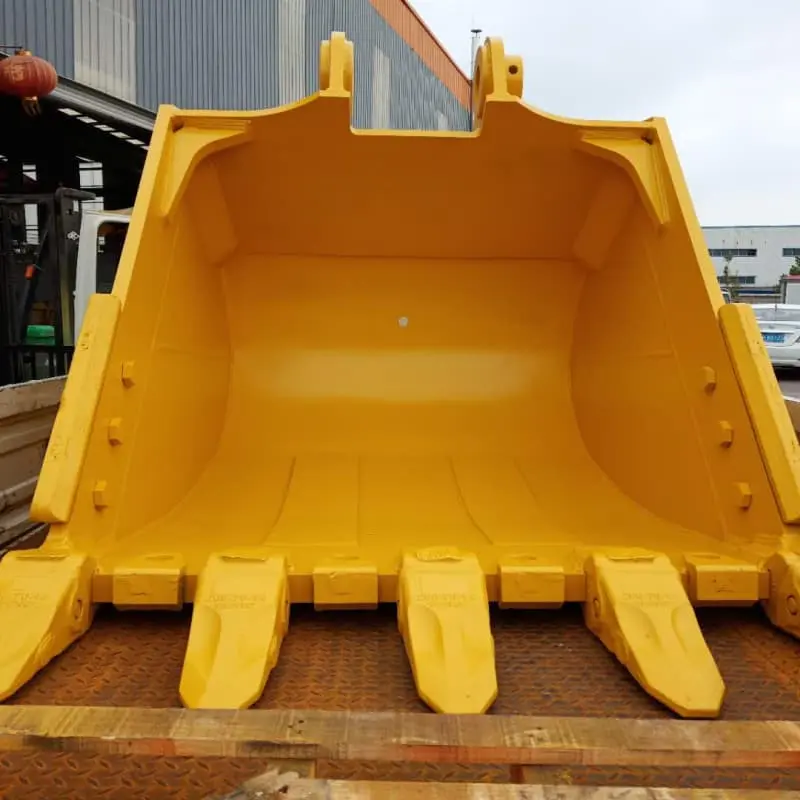
Standard bucket. Built for general clay and loose soil, plus loading of sand, soil and gravel. Its geometry favours volume and clean release, which is what keeps cycle times short in bulk earthmoving and loading.
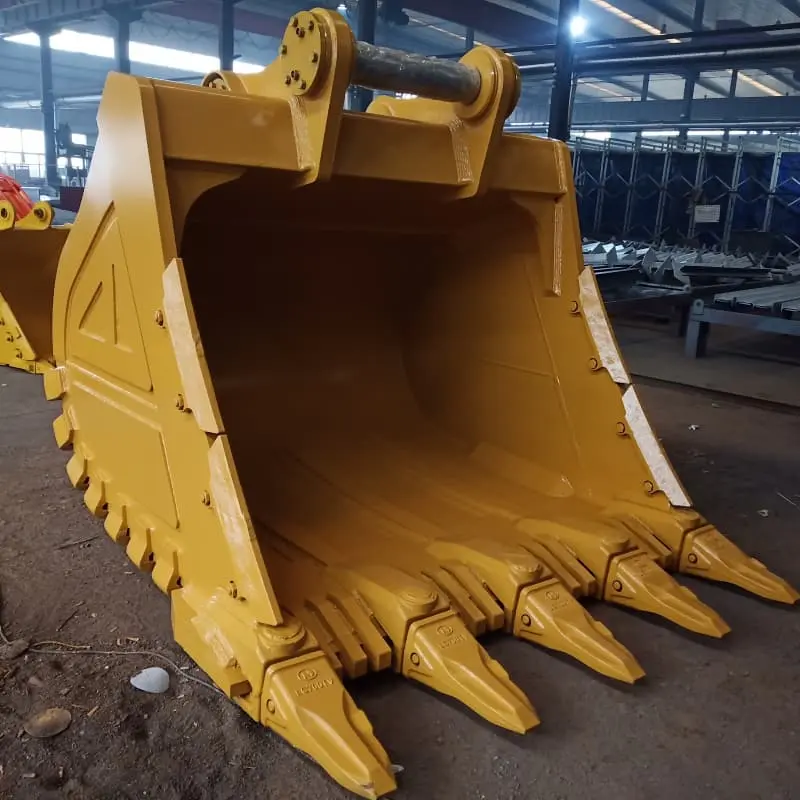
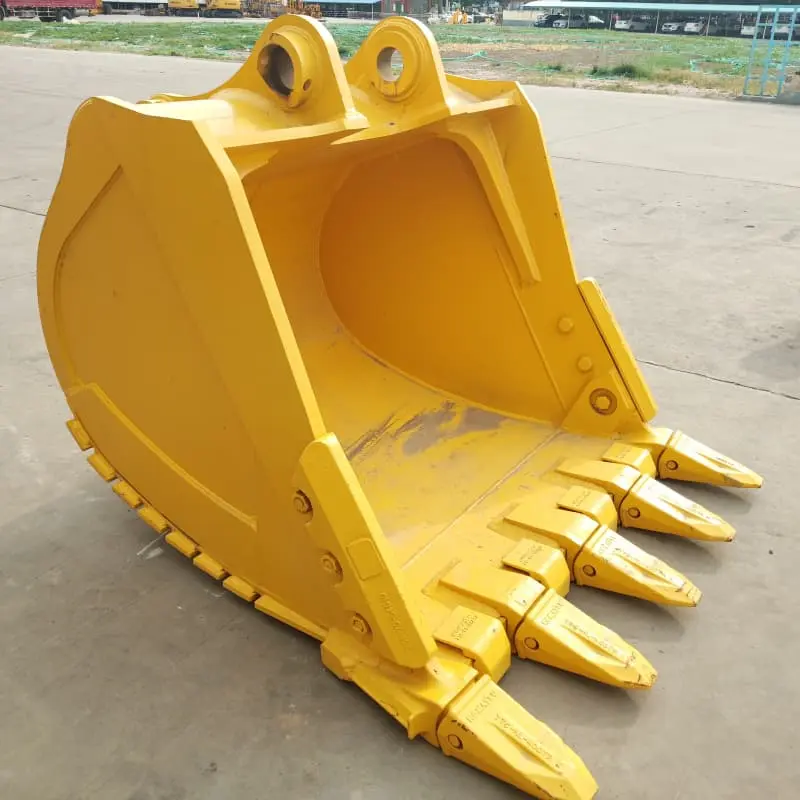
Rock bucket. Built for hard soil mixed with gravel, sub-hard rock, weathered stone and solid rock. Here the shell, edge and wear protection carry impact and abrasion rather than volume, so the plate specification and reinforcement layout are different by design.
Using a standard bucket in rock is the most common and most expensive mismatch in earthmoving. The bucket does not fail immediately — it fails slowly, through edge wear, shell deformation and weld cracking, while the operator compensates with more striking and more fuel per cubic metre.
Four Things That Decide Bucket Life
1. Steel at the surfaces that wear.
Shell and wear areas are built from high-strength wear-resistant steel, with reinforced edges and wear plates at the points that take the abrasion. Protecting those points is what separates a bucket that lasts a season from one that is re-plated mid-season.
2. Welding treated as the critical process.
A bucket passes through cutting, turning, milling, drilling, forming, welding, grinding, sandblasting and painting. Welding is the step that determines structural strength and service life, because it is where the load path through the shell is actually created.
3. Geometry matched to the task.
Capacity, width and profile are selected against material density and the required production rate. A wider bucket on a light carrier adds reach but costs breakout force; a narrower high-capacity bucket loads out faster but concentrates wear. The published range runs from 0.1 to 5.0 m³ and 500 to 2,000 mm in width, which allows that balance to be set rather than accepted.
4. Interface matched to the machine.
Pin diameter, pin centres, ear plate spacing and coupler type are configured to the excavator make and model. A bucket that does not sit correctly on the arm loads the pins unevenly and shows up as bushing wear long before the shell is worn out.
Published Specifications
Feature | Details |
Material | High-strength wear-resistant steel |
Capacity | 0.1 – 5.0 m³ |
Weight | 100 – 2,000 kg |
Width | 500 – 2,000 mm |
Mounting | Pin-on or quick coupler |
Reinforcement | Reinforced edges and wear plates |
Customization | Size, shape, teeth and cutting edge to order |
Carrier Matching | Configured to the excavator make and model |
The published range covers 0.1 to 5.0 m³ with a weight range of 100 to 2,000 kg. Final shell thickness, tooth type and wear plate layout are confirmed against the carrier, the material and the required duty cycle before production.
Where These Buckets Work
Construction and earthworks: Trenching, bulk excavation, grading and backfill with a standard configuration.
Quarrying and mining: Loading and handling abrasive rock where wear protection drives the cost per tonne.
Demolition and site clearance: Handling broken concrete and mixed debris with reinforced edges and wear plates.
Landscaping and agriculture: Soil movement, land preparation and material handling with a matched width.
Road and infrastructure: Trench and foundation work where a quick coupler keeps one carrier productive across tasks.
How to Specify a Bucket
A bucket is configured, not picked from a shelf. Five inputs settle the specification:
Carrier: make, model, operating weight, and pin diameter and centres on the existing bucket.
Material: clay, loose soil, gravel, weathered rock or solid rock, and its density.
Duty: bulk loading, trenching, grading or demolition, and the target production per shift.
Mounting: pin-on or quick coupler, with coupler make and model where applicable.
Wear plan: tooth type, edge protection and whether wear plates should be replaceable on site.
Why Choose STND Machinery?
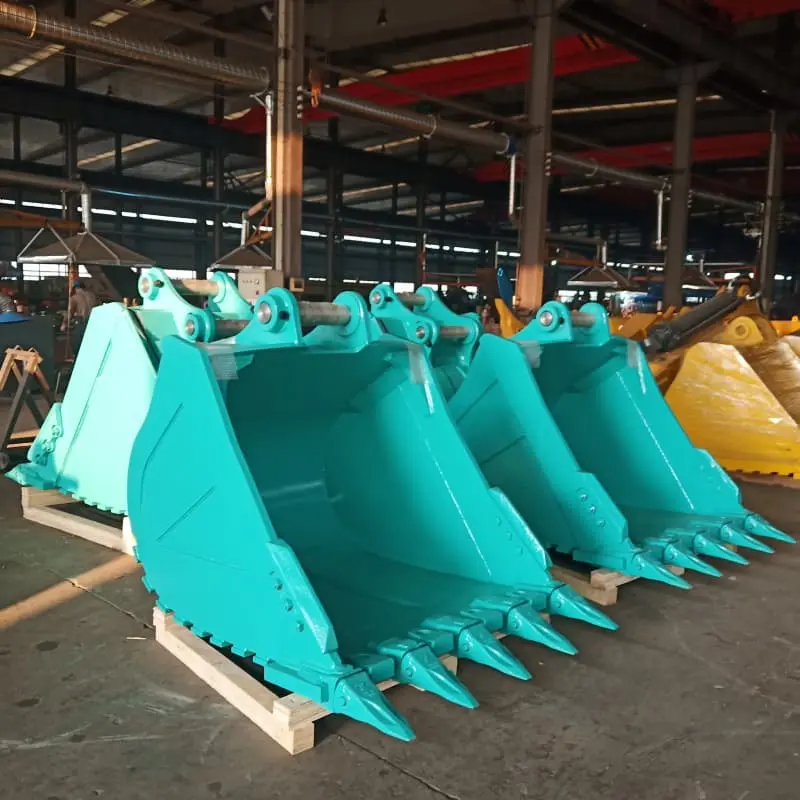
Shandong Tiannuo Construction Machinery Co., Ltd. was founded in 2014 and manufactures from its own plant in Jining, Shandong, with a technical team carrying more than ten years of excavator retrofitting experience. The attachment range covers standard, rock, grid, skeleton, V-type, 4-in-1 and high-frequency screening buckets, which means the bucket is matched alongside the arm and the coupler rather than treated as a stand-alone purchase.
Custom work follows a fixed sequence: design against the working environment and operating requirement, raw material selection, manufacture to drawing, then installation, commissioning and maintenance support after delivery.
Send your excavator model, material type, required capacity and mounting dimensions for a matched proposal. Shandong Tiannuo Construction Machinery Co., Ltd. is located at 369 Deyuan Road, Jining High-tech Zone, Jining City, Shandong Province, China. Visit www.stnd-machinery.com or contact arm@stnd-machinery.com for more information about the Excavator Bucket.