

Railway Sleeper Changer | Replace Railroad Ties Without A Heavy Work Train
Replacing sleepers is not really a lifting problem. A sleeper is heavy, but a machine can handle it. The problem is that the work has to happen on a live railway, and the real cost is not the sleeper — it is the possession. Every minute of blocked track is a minute of lost capacity, and the conventional method spends a large part of that window simply getting ready.
The traditional arrangement needs a work train, a rail flatcar, or a crane to place a machine on the track, and the same equipment to take it off again. The clamp, the pull and the insertion are the productive part; the logistics around them are the overhead. A self-propelled sleeper changer removes that overhead by travelling on the track itself.
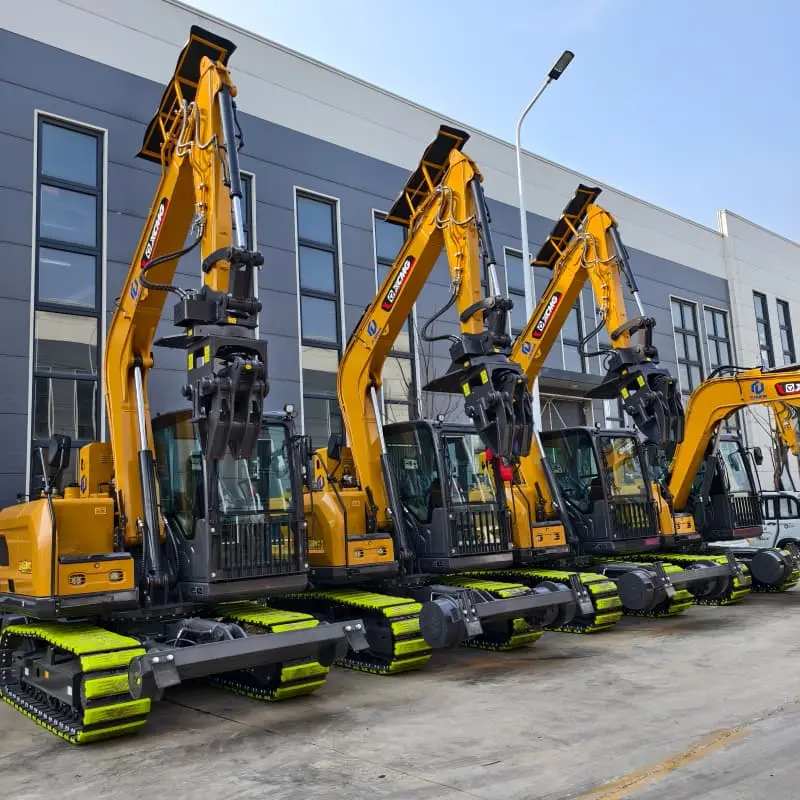
Tiannuo Machinery has worked in railway construction and maintenance equipment for more than ten years, as a source factory in Jining, Shandong. This sleeper changer is built around a simple idea: the machine should be its own transport.
What Is a Railway Sleeper Changer?
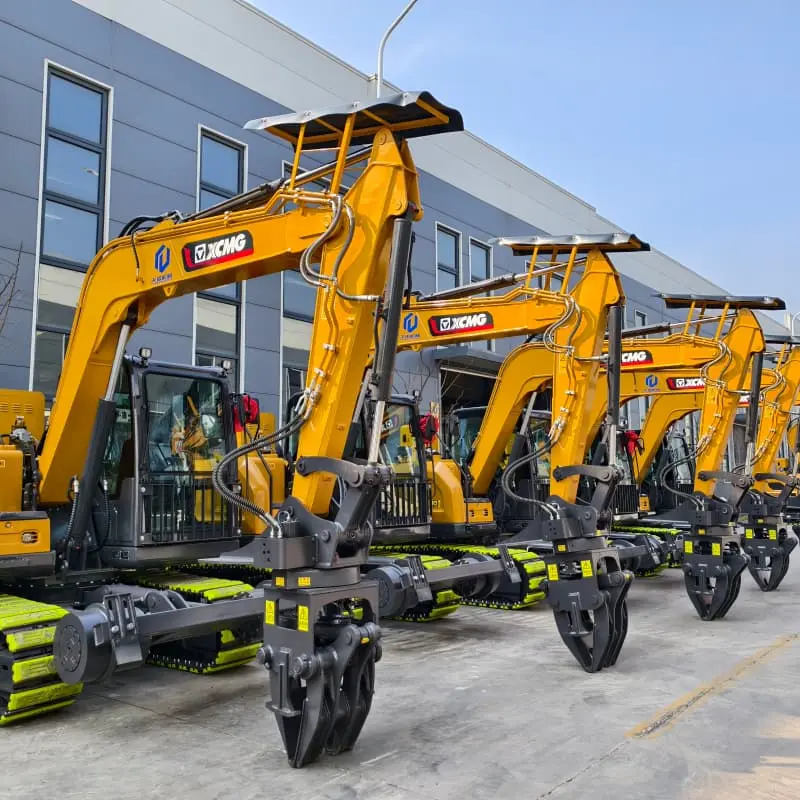
A railway sleeper changer is a rail-going machine built to take out worn or damaged sleepers and put new ones in, on track that stays in service. This machine combines a rail undercarriage with a 360° rotating hydraulic sleeper clamp mounted on an excavator platform. It runs under its own power along the rails to reach the work site, positions itself over the sleeper, extracts it and sets the replacement.
Because the upper structure is an excavator, the machine does not stop being useful when the sleeper work is finished. It retains a standard 0.3 m³ bucket, 50 kN of excavating force, a 6340 mm maximum digging radius and a 3.71 m arm with a 1.65 m stick, so the same unit can handle the ballast, trimming and clean-up that surrounds a renewal.
Key Features
1. It Travels on the Track Itself, at 10–15 km/h
The chassis carries rail wheels and is hydraulically driven on two wheels. On the track the machine travels under power wheel mode at 10 to 15 km/h, which is fast enough to move between work sites without tying up a train path, and the driving wheel is operated from the main crawler joystick, so an operator familiar with an excavator already knows how to move it.
For working, the machine switches to power wheel convertible freewheel mode and moves at 2.86 to 5.0 km/h. That lower range is not a limitation; it is the point. Sleeper positions are fixed and tolerances are tight, and the freewheel mode exists so the machine can be inched into position rather than driven at it.
2. Limit Wheels and a 2800 mm Plate for On-Track Stability
A machine that works on a live track has to stay on it. Two-Wheel Drive is used for travel, and the chassis in positioning mode carries track limit wheels that hold the machine against the rail and prevent derailment while it is working. The track wheels themselves are forged rather than cast.
The large plate is 2800 mm wide. A wider support base spreads the load and gives the operator a stable platform to work from, which matters when the upper structure is swinging a loaded clamp.
3. A 360° Sleeper Clamp with a 650 mm Opening
The sleeper clamp rotates a full 360° and opens to just under 650 mm. Full rotation means the operator can pick a sleeper from the trackbed or from a stack alongside the track and orient it for insertion without repositioning the machine. The 650 mm opening is the figure to check against your sleeper section before ordering, and it is the first dimension a maintenance planner should confirm.
4. Load-Sensitive Hydraulics with Disclosed Components
The hydraulic system is load sensing, and the major components are named in the specification: a Hengli HP3V80 main pump and Hengli HVSE18 main valve, a KYB MSG-44P-21 swing motor, a Dongming TM10Vd-A-26 travelling motor, and an integrated plunger motor for the drive. The engine is rated at 53.7 kW at 2100 rpm, and the cab is an H-series unit with a 7-inch LCD screen.
Publishing component brands is worth more than it appears. In railway equipment, the hydraulic pump and the swing motor are the parts that determine how the machine behaves after several seasons of work, and they are also the parts that are hardest to replace with equivalents. A buyer who knows the part numbers can check availability and pricing in their own market before placing the order, instead of discovering it later.
Not Only a Sleeper Changer
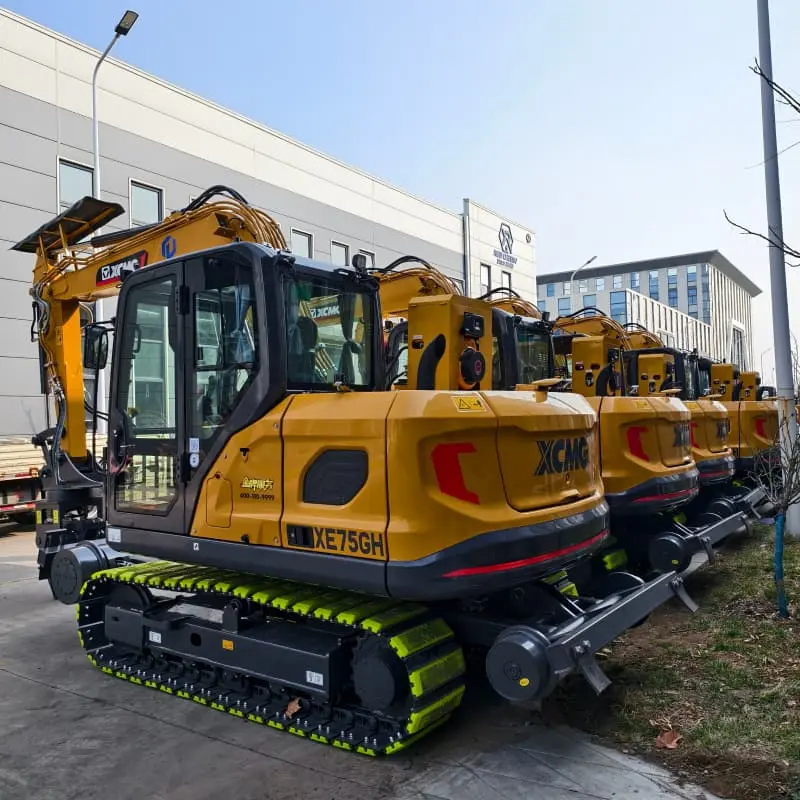
Because the carrier is an excavator rather than a dedicated rail unit, the machine covers work that would otherwise need a second piece of equipment on site:
Digging and loading — standard bucket capacity of 0.3 m³
Reach and breakout — maximum excavating force of 50 kN and a maximum digging radius of 6340 mm
Working geometry — a 3.71 m arm and 1.65 m stick
Access — it can walk on normal road surfaces as well as the railway line
For a maintenance depot or a contractor working short possessions, that combination means one machine and one operator can do the sleeper work and the ballast work in the same window.
Technical Specifications
Group | Item | Specification |
Undercarriage and travel | Applicable track gauge | 1435 / 1520 mm |
Undercarriage and travel | Drive type | Hydraulic drive, two-wheel |
Undercarriage and travel | Number of drive wheels | 2 |
Undercarriage and travel | Motor type | Integrated plunger motor |
Undercarriage and travel | Track wheel material | Forged |
Undercarriage and travel | Track gauge | 1610 mm |
Speed | Railway track travel speed (drive wheel) | 10–15 km/h |
Speed | Railway operation speed (free wheel) | 2.86–5.0 km/h |
Speed | Driving wheel operation | Main crawler joystick |
Sleeper handling | Sleeper clamp opening | Under 650 mm |
Sleeper handling | Rotation angle | 360° |
Sleeper handling | Large plate width | 2800 mm |
Excavator platform | Power / speed | 53.7 kW / 2100 rpm |
Excavator platform | Overall weight | 8100 kg |
Excavator platform | Arm / stick | 3.71 m / 1.65 m |
Excavator platform | Standard bucket capacity | 0.3 m³ |
Excavator platform | Maximum excavating force | 50 kN |
Excavator platform | Maximum digging radius | 6340 mm |
Hydraulics and engine | Hydraulic system | Load sensitive |
Hydraulics and engine | Engine | 4TNV98CT |
Hydraulics and engine | Main pump | Hengli HP3V80 |
Hydraulics and engine | Main valve | Hengli HVSE18 |
Hydraulics and engine | Travelling motor | Dongming TM10Vd-A-26 |
Hydraulics and engine | Swing motor | KYB MSG-44P-21 |
Hydraulics and engine | Cab | H-series, 7-inch LCD screen |
Operating range | Walking range | Normal road surface and railway line |
Where It Works
Gauge coverage — it is specified for the 1435 mm standard gauge used across most of the world and the 1520 mm broad gauge used on the CIS and Russian networks
Track renewal — replacing individual sleepers during spot maintenance, and working through a section during track renewal
Depots and sidings — sleeper handling and digging in the same possession, on yard and siding work where a work train is difficult to justify
Access-limited sites — because the machine can walk on normal road surfaces as well as the railway line, it can be moved on its own to work sites that would otherwise need a rail delivery
What to Confirm Before Ordering
A sleeper changer is built around the track it will work on, so a few details need to be settled first:
Track gauge — 1435 mm, 1520 mm, or both, and whether the machine will work on more than one network
Sleeper type and dimensions — the section dimensions have to clear the clamp opening of under 650 mm; sleeper weight also affects how the machine is handled
Rail and wheel interface — the machine runs on its own rail wheels, so the rail profile and the condition of the rail on the section are part of the assessment
Site access and transport route — this decides whether the machine can be brought in on its own and how sectioned the delivery has to be
Additional duties — if the same unit will handle ballast, trimming or loading, confirm the bucket and attachment requirement at the same time, so that the hydraulic configuration is set once
Why Choose Tiannuo Machinery
Source factory in Jining, Shandong — design and manufacture happen in our own facility, so the specification is set by us rather than passed through a trading layer
More than ten years in the industry — railway maintenance equipment such as the sleeper changer, along with excavator modification work including lifting cabs and long arms, and engineering vehicle auxiliary equipment
Build-to-order configuration — the machine is configured to the track gauge, sleeper section and attachment requirement of the project rather than sold from a fixed catalogue
Disclosed components — component brands and part numbers are published with the specification, so you can verify parts availability in your own market
Send Your Inquiry
Tell us your track gauge, sleeper section and the duties the machine will cover, and we will confirm the configuration and quote accordingly. Contact our team at arm@stnd-machinery.com.
Shandong Tiannuo Construction Machinery Co., Ltd.
Add: No. 369, Hard Innovation Industrial Park, Deyuan Road, Yanzhou District, Jining City, Shandong Province
Website: www.stnd-machinery.com
Email: arm@stnd-machinery.com