

The Function of Using a High-Frequency Screening Bucket
A high-frequency screening bucket is a hydraulic attachment mounted on an excavator that utilizes high-frequency vibrations to separate fine particles from mixed materials. Simply put, it functions like a mesh-lined bucket capable of rapid vibration, thereby endowing the excavator with the dual capabilities of both "excavating" and "screening."
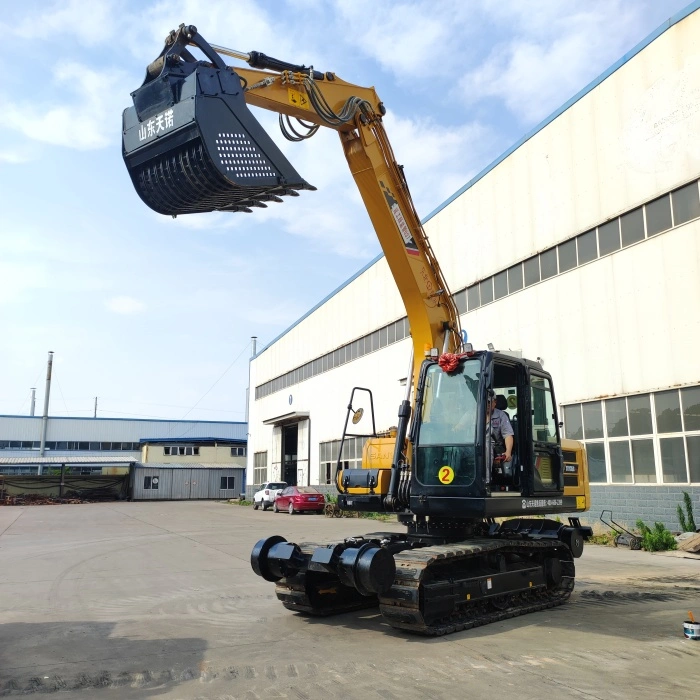
Working Principles and Functions
The core function of a high-frequency screening bucket is to facilitate the immediate classification and separation of materials directly at the construction site. It operates primarily through the following mechanisms:
High-Frequency Vibration for Efficient Separation:Unlike traditional trommel screens, this device utilizes a hydraulically driven motor to generate high-frequency vibrations. This high-frequency action effectively disrupts the surface tension of the material—particularly wet materials—allowing fine particles to pass rapidly through the screen mesh, thereby achieving highly efficient separation.
Integrated Excavation and Screening:The unit seamlessly combines the functions of an excavator bucket and a vibrating screen. Operators can scoop up material just as they would with a standard bucket, then activate the vibration function via the control system located within the cab to complete the screening process directly inside the bucket.
Reinforced Structure for Heavy-Duty Applications:Designed to withstand harsh operating environments such as mining sites and construction zones, the bucket features specially reinforced bottom plates and side panels. It is constructed using high-strength, wear-resistant steel plates and heavy-duty bearings to ensure durability under extreme loads, preventing structural failure or damage.
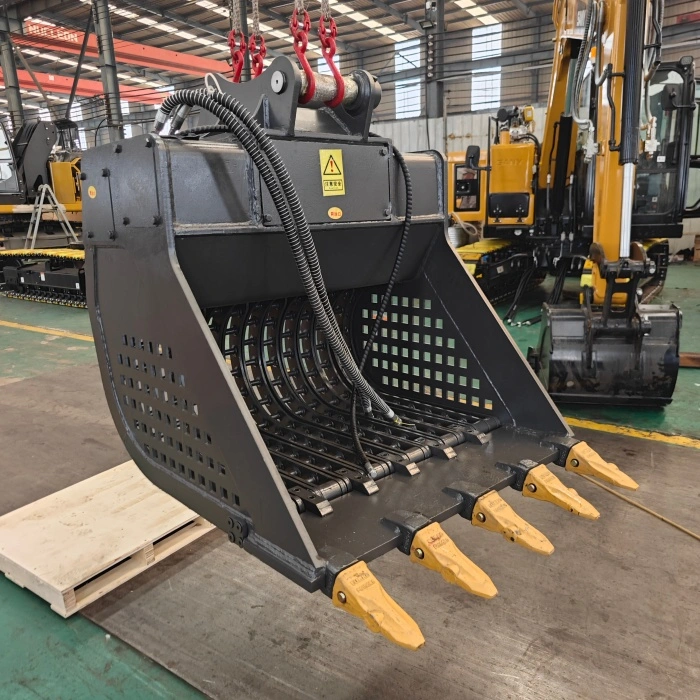
Core Benefits
Utilizing a high-frequency screening bucket offers significant economic and operational advantages:
Significantly Enhanced Efficiency:Its screening efficiency is several times that of a standard grid bucket. By enabling on-site material processing directly at the excavation site, it eliminates the need to transport materials to a fixed screening station, thereby drastically shortening project timelines.
Effective Cost Reduction: It eliminates the capital investment and operational costs associated with auxiliary equipment—such as dump trucks and loaders—as well as material transfer fees. A single excavator can perform three distinct tasks—excavating, loading, and screening—achieving "multi-purpose functionality" and effectively reducing both equipment and labor costs.
Time Savings and Accelerated Progress:By facilitating immediate on-site processing, the system allows for the prompt backfilling or reuse of qualified materials (such as fine soil, sand, and gravel), thereby minimizing the time spent on material handling and waiting periods.