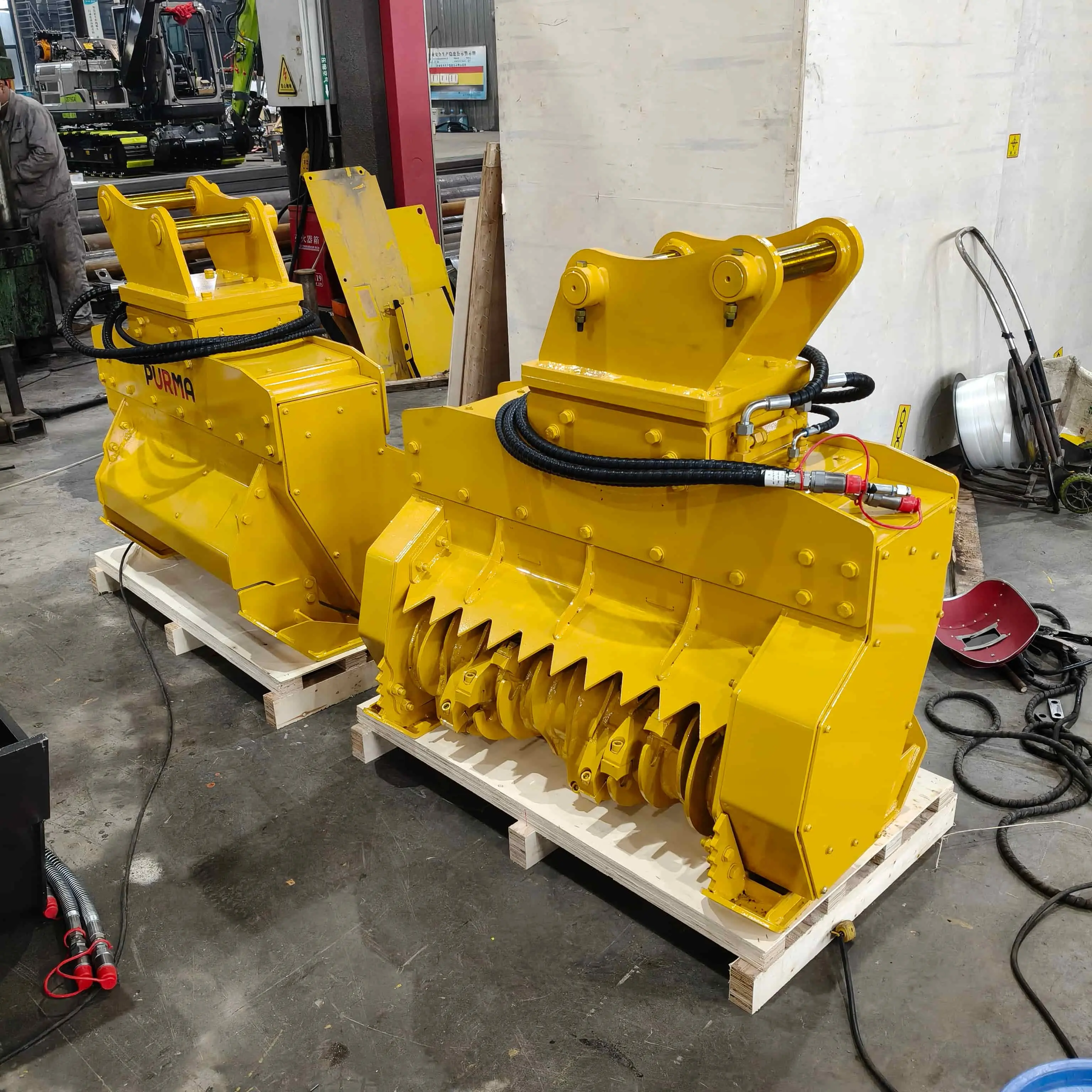

What Are the Advantages of Brush Crusher?
In modern construction and maintenance work, vegetation clearance is an essential but challenging task across many industries. Road slope maintenance, forest fire barrier construction, woodland reclamation, solar farm vegetation management, park greening renovation and infrastructure site clearing all require large‑scale removal of weeds, tangled vines, thick shrubs and small‑diameter trees. For a very long time, most field clearance work depends heavily on manual labor with chainsaws, sickles and other handheld cutting tools. This traditional working mode has many obvious shortcomings. Manual felling involves multiple separate steps including cutting down plants, trimming branches, gathering waste materials, loading and transporting debris off the site. The whole workflow consumes plenty of manpower and time. Labor costs keep rising year by year, and it is increasingly difficult for construction teams to hire enough skilled workers for tough outdoor assignments. Besides low productivity, field workers face serious safety threats when working on steep mountain slopes, remote valleys and uneven woodland ground. Slipping, falling, rebounding branches and flying wood chips can easily cause personal injuries. Under such background, the excavator‑mounted brush crusher stands out as a practical and cost‑effective mechanical solution for large‑scale field vegetation clearing projects.
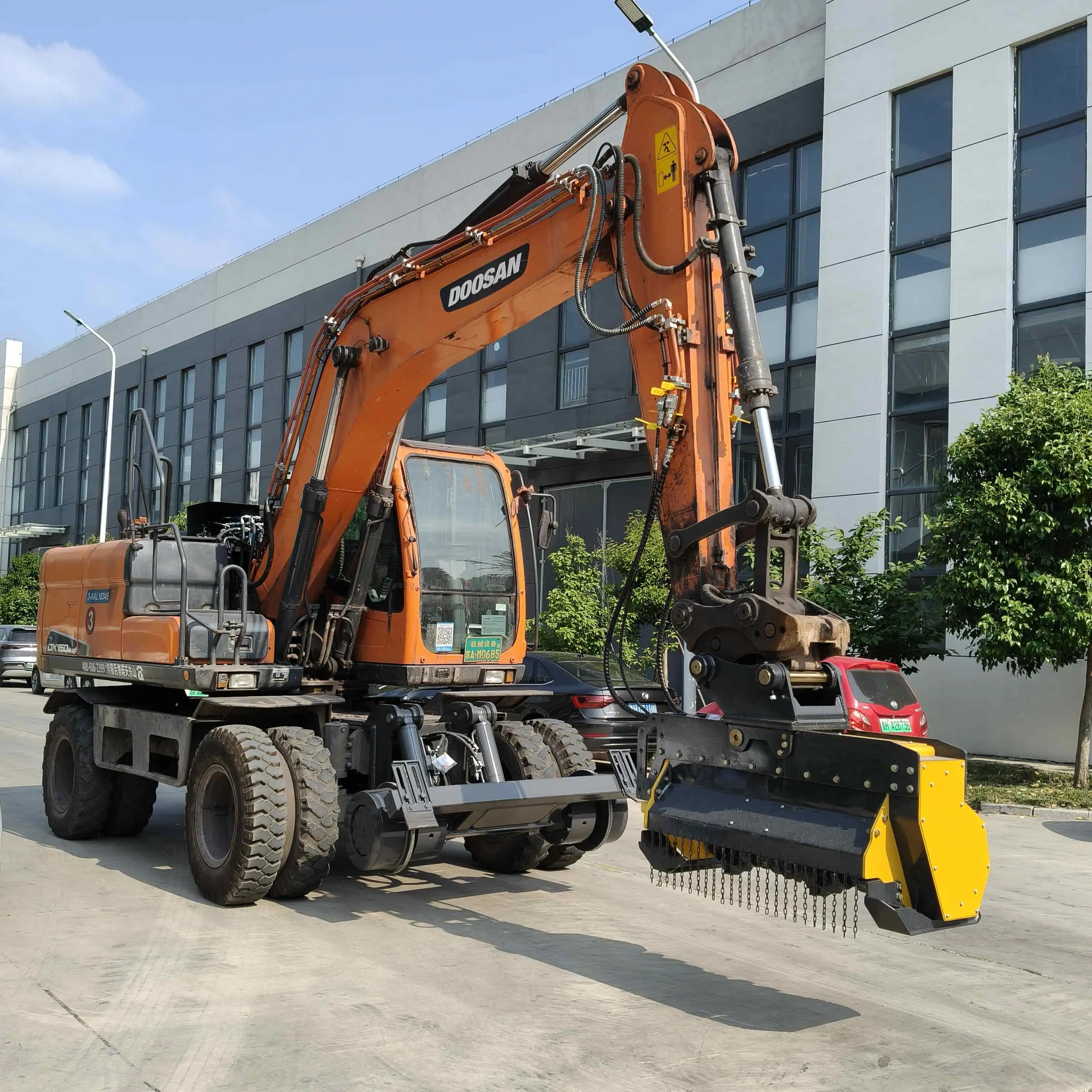
The most remarkable merit of a brush crusher lies in its outstanding working efficiency, which greatly eases tight‑schedule pressure for contractors. Driven by the excavator’s hydraulic power system, high‑speed rotating cutter rotors complete cutting, shredding and ground finishing in one continuous pass. There is no requirement for secondary handling or transportation of plant waste. This attachment can process weeds, tough vines, dense shrubs and small trees with a maximum crush diameter up to 150 millimeters. A single excavator equipped with this brush crusher can deliver equivalent output of more than ten experienced manual workers. When urgent assignments come such as pre‑season fire barrier development, highway roadside clearance and wasteland reclamation, the machine can finish huge clearance areas within limited time windows. It prevents vegetation removal work from holding back the overall progress of the whole project, which brings huge practical value for engineering teams.
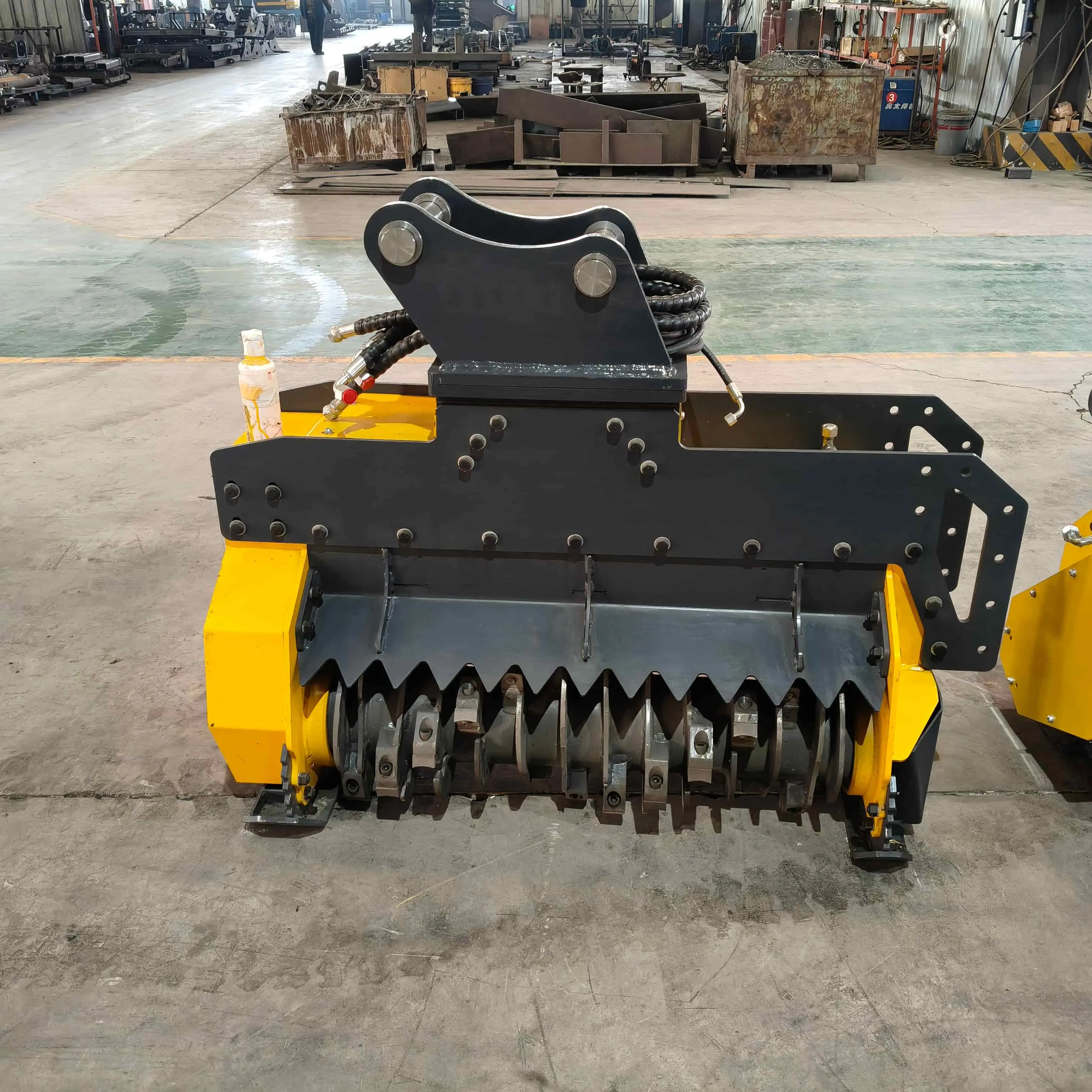
Apart from high efficiency, the brush crusher shows excellent terrain adaptability for complicated field conditions. Steep slopes, deep gullies, rocky river banks and narrow woodland paths are almost inaccessible for manual crews. Working on these locations creates high fall risks for field laborers. Mounted on an excavator, the brush crusher takes full advantage of the carrier machine’s mobility. It can operate stably on mountainous land, inclined side slopes and confined woodland spaces. Flexible angle adjustment allows the cutting unit to reach low‑lying corners and uneven slope surfaces for thorough dead‑zone‑free clearing. A complete product portfolio covers different specifications. Compact models for 6‑9 ton excavators suit narrow parks, dense woods and restricted job sites. Larger units matching 10‑25 ton excavators are well‑suited for large‑scale mountain reclamation and long‑distance fire‑break construction. Custom mounting brackets are available to fit various excavator brands, further expanding its application range for diverse site requirements.
On‑site crushing and mulching function is another key advantage that combines simplified workflow with eco‑friendly performance. After manual felling, piles of branches and twigs remain scattered across the worksite. Contractors have to arrange extra labor and trucks for collection, loading and outbound disposal of plant debris. Stacked dry vegetation also raises potential wildfire risks. The brush crusher shreds shrubs and weeds directly into fine wood chips right on the working spot. These crushed fragments spread evenly over the ground and gradually decompose to release organic nutrients that improve soil quality. On‑site mulching removes the need for waste haul‑away and prohibits risky open‑air burning. Construction teams can avoid administrative penalties caused by smoke pollution. Fewer intermediate working steps cut extra machinery shifts and labor expenditure, fully satisfying modern green construction standards promoted by environmental authorities.
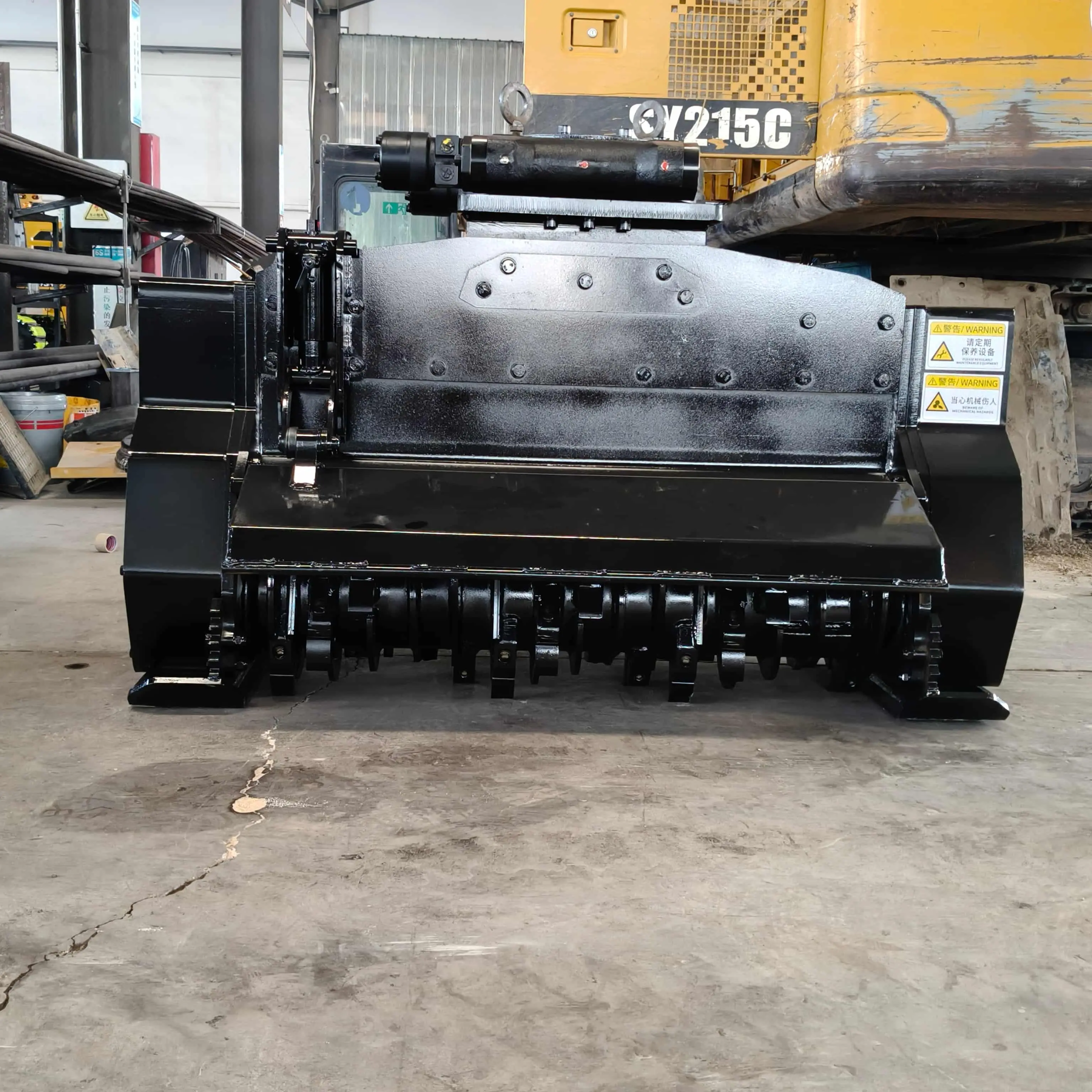
Safety performance has been greatly upgraded by this mechanical attachment. Traditional chainsaw operations frequently lead to cutting wounds caused by bouncing branches and flying wood fragments. Workers are exposed to snake bites, insect stings and fall hazards in remote wilderness. With a brush crusher, the operator sits safely inside the fully enclosed excavator cab, staying completely away from the dangerous cutting zone. The heavy‑duty housing covers the whole rotor assembly to block flying debris. Built‑in hydraulic overload protection offers buffer force when blades hit hidden stones or oversized hard wood. It automatically releases excess pressure to safeguard hydraulic motors and cutter shafts against impact damage. Equipment failure rate drops significantly. Project managers face much lighter burden for on‑site safety management.
Durable structure and affordable later‑stage maintenance make the brush crusher a worthwhile long‑term investment. The main frame is fabricated from thick high‑strength wear‑resistant steel plates with reinforced welding on stress‑bearing positions. It resists deformation and cracking under continuous heavy‑duty cutting and occasional rock impacts. Replaceable alloy blades feature high hardness and strong abrasion resistance. When blades wear out after long‑time service, users only need to change individual blades instead of replacing the entire expensive rotor assembly, which effectively controls maintenance spending. Optimized sealing structure keeps dust, mud and moisture out of bearings and hydraulic components. The machine maintains stable performance under dusty, damp outdoor field environments and achieves extended service life.
Moreover, the brush crusher realizes multi‑purpose utilization and improves the return rate of existing excavator assets. Quick‑connect pin structure supports fast attachment swapping on site. One excavator can switch among digging bucket, hydraulic breaker and brush crusher within a short time. Enterprises do not need to purchase special‑purpose dedicated clearing vehicles. This single attachment supports woodland restoration, transportation corridor clearance, fire‑break construction, park maintenance and post‑disaster debris removal. For construction companies, forestry bureaus and road‑administration departments, maximizing the usage of existing excavators greatly reduces comprehensive equipment investment and brings satisfying economic benefits over long‑term operation.
To sum up, the excavator‑mounted brush crusher effectively solves multiple long‑standing pain points of traditional manual shrub removal including low productivity, high safety hazards and excessive operating costs. With reliable mechanical quality and wide scenario compatibility, it has become a preferred mechanized clearing equipment for forestry, highway administration, municipal engineering and infrastructure sectors all over the world.