

What are the benefits of railway sleeper changing machine?
In the context of the continuous expansion of railway transportation networks and the growing demand for line maintenance, sleeper replacement has become a core project to ensure track stability and driving safety. Traditional manual sleeper replacement or operation modes relying on large-scale specialized equipment are no longer able to adapt to diverse construction scenarios. Nowadays, the railway sleeper changing machine (also known as sleeper replacement machine or railway tie replacement equipment) has gradually become the mainstream choice in the railway maintenance field due to its flexible adaptability, high efficiency and cost-effectiveness. So, in which scenarios is it more suitable to use the railway sleeper changing machine, and what are its core values?
Construction in Narrow and Restricted Sites and Special Sections: Flexibility Highlights Advantages
Traditional large-scale sleeper replacement equipment often struggles to operate in scenarios such as suburban railways, connecting sections at both ends of bridges, and station throat areas:
Narrow site space with limited equipment rotation range;
Insufficient ground bearing capacity in some sections to support heavy equipment;
Presence of overhead or surrounding obstacles such as catenary, signal facilities, and high-voltage line.
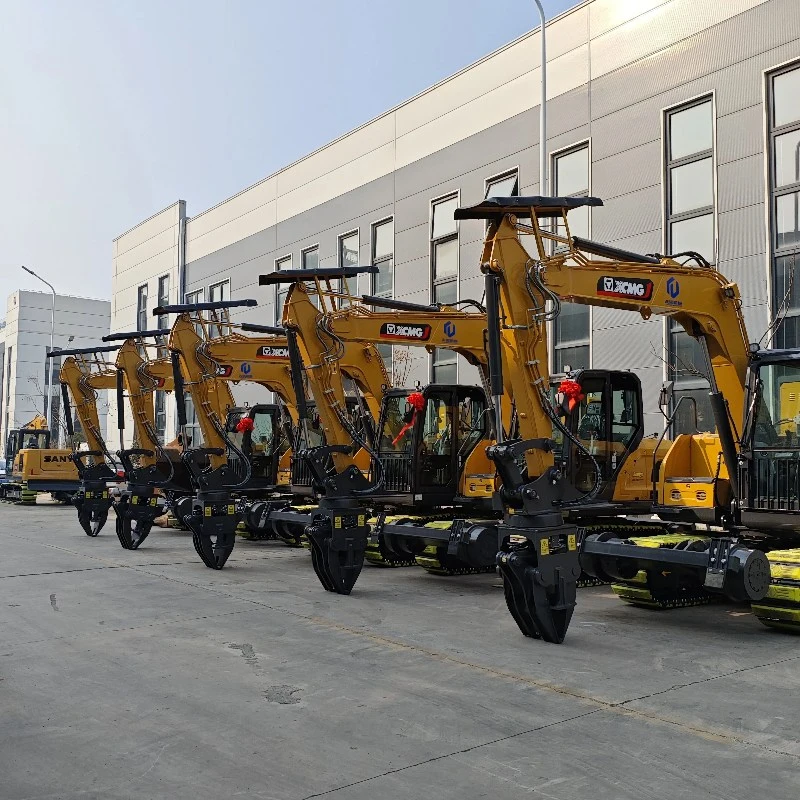
The flexibility advantage of the railway sleeper changing machine is particularly prominent in such scenarios:
Compact body design with a small turning radius, enabling flexible operation in limited spaces;
Moderate machine weight, requiring lower ground bearing capacity;
Strong adaptability, capable of accurately operating while avoiding surrounding obstacles, with convenient loading and unloading and self-movement without relying on additional equipment for transportation.
Therefore, the railway sleeper changing machine is a more advantageous choice for special sections with limited space or complex surrounding environments.
II. Small and Medium-Sized Maintenance Projects and Emergency Repairs: Balancing Cost and Efficiency
Large-scale specialized sleeper replacement equipment has high purchase and rental costs and complex scheduling processes, making it unsuitable for the following scenarios:
Small and medium-sized railway maintenance projects (such as replacement of aging sleepers in local sections and maintenance of branch railways);
Emergency repair projects (such as emergency replacement of sleepers damaged by natural disasters and line fault repairs);
Maintenance operations with scattered construction points (such as phased sleeper replacement on multiple branch railways and sporadic maintenance of rural railways);
Special tasks with small sleeper replacement quantities.
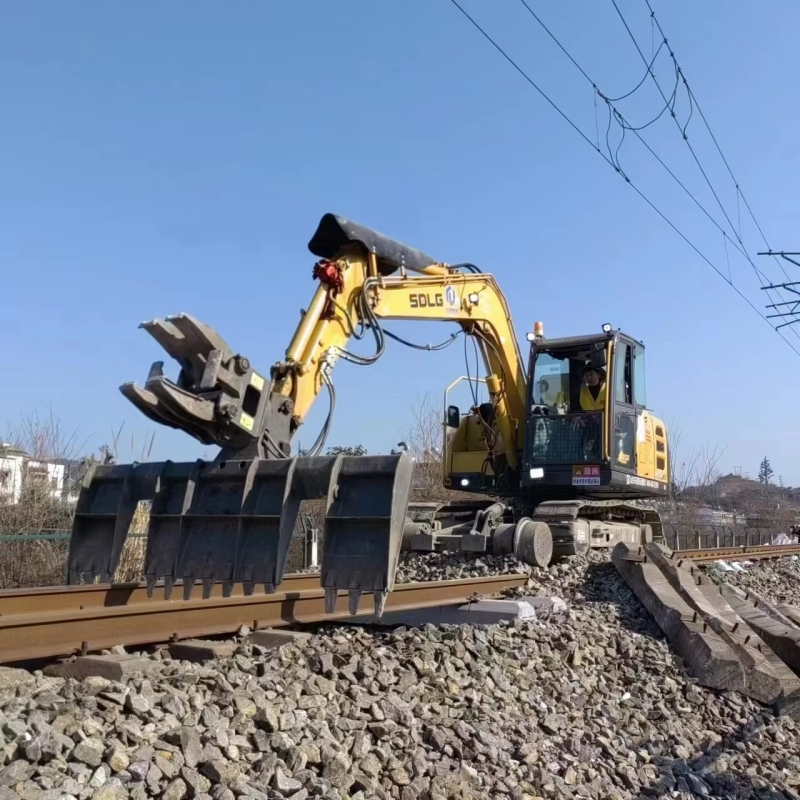
The railway sleeper changing machine can perfectly meet these needs:
It can be upgraded and modified based on existing railway maintenance equipment without the need to purchase large-scale equipment separately, significantly reducing costs;
Flexible scheduling, able to respond to construction needs at any time and quickly reach the operation site;
Simple operation process, no complex preliminary preparations required, and can quickly start sleeper replacement operations.
For projects with short construction periods, small sleeper replacement quantities and limited budgets, the railway sleeper changing machine is the optimal solution that combines economy and practicality.
III. Construction in Complex Terrain and Harsh Environments: Stronger Adaptability
In some railway sections with complex terrain or harsh environments, traditional equipment often struggles to operate normally, such as:
Steep slope sections and winding curve sections of mountain railways;
Areas with poor geological conditions such as swamps and soft soil foundations;
Outdoor operation scenarios under harsh weather conditions such as rain, snow and high temperatures;
Complex sections with uneven tracks and uneven settlement.
With its excellent adaptive performance, the railway sleeper changing machine performs brilliantly in these scenarios:
Strong chassis stability, equipped with anti-slip and anti-rollover devices, enabling safe operation on steep slopes and curve sections;
Large grounding area, low pressure on soft soil foundations, avoiding equipment subsidence;
Adopting waterproof, dustproof and high-temperature resistant designs, able to adapt to various harsh weather conditions;
Equipped with attitude adjustment function, which can adjust the operation angle in real time according to track flatness to ensure sleeper replacement accuracy.
IV. Adapting to Conventional Sleeper Types: Meeting Most Maintenance Needs
Although the railway sleeper changing machine is not omnipotent, it can cover the sleeper replacement needs of most railway maintenance projects and is suitable for the following common sleeper types:
Concrete sleepers (including ordinary concrete sleepers and prestressed concrete sleepers);
Wooden sleepers and bamboo sleepers (mostly used in rural railways, branch railways or special sections);
New composite material sleepers (such as glass fiber reinforced plastic sleepers and rubber sleepers).
For conventional light to medium-sized sleeper replacement tasks, the operation efficiency of the railway sleeper changing machine can even be comparable to that of large-scale specialized equipment. Even the conventional maintenance and sleeper replacement needs of some heavy-haul railways can be easily fulfilled.
V. Scenarios with Non-Extreme Efficiency Requirements: Balancing Efficiency and Cost
For projects with extreme efficiency requirements such as new high-speed railway construction and long-distance large-scale sleeper replacement projects, large-scale specialized sleeper replacement equipment is still required. However, in most railway maintenance scenarios, "sufficient efficiency" is enough, without the need to bear the high costs and complex operation processes of large-scale equipment.

The railway sleeper changing machine has found an excellent balance between efficiency and cost, with the following advantages:
Fast site access, no complex equipment assembly and commissioning required;
Accurate sleeper positioning, high degree of automation in the sleeper replacement process, reducing manual intervention;
Fast operation turnover, short time-consuming for single sleeper replacement, and minimal downtime impact;
The learning curve of the operator is smooth, and the operator can quickly master it.
Conclusion: Application Scenarios and Industry Trends of Railway Sleeper Changing Machines
The railway sleeper changing machine is not omnipotent, but it is the most practical choice in most railway maintenance scenarios. Its core applicable conditions can be summarized as: narrow and restricted sites, small project scales, short construction periods, complex terrain unsuitable for large-scale equipment, mixed construction of multiple processes, light to medium-sized sleeper replacement tasks, and limited project budgets.
Nowadays, with the continuous extension of railway networks and the refined development of maintenance needs, the railway sleeper changing machine, with its characteristics of flexibility, economy, high efficiency and strong adaptability, has become the preferred equipment in fields such as municipal railways, branch railways, rural railways, station maintenance and emergency repairs. It promotes the development of the railway maintenance industry towards "multi-functionality, lightweight and low-cost", providing reliable support for ensuring railway transportation safety and improving maintenance efficiency.