

When to Use a Sieving Bucket?
Railway ballast—the crushed stone beneath tracks—plays a critical role in stabilizing rails, draining water, and absorbing shock. But over time, ballast can become clogged, uneven, or displaced, threatening track safety and performance. Not all tools can handle the precision and efficiency needed for ballast upkeep—and that’s where Tiannuo Construction Machinery’s Sieving Bucket shines. Designed for targeted railway maintenance tasks, this specialized attachment is indispensable in specific scenarios that demand clean, uniform, and stable ballast. Let’s break down when it’s time to bring the Sieving Bucket into action.
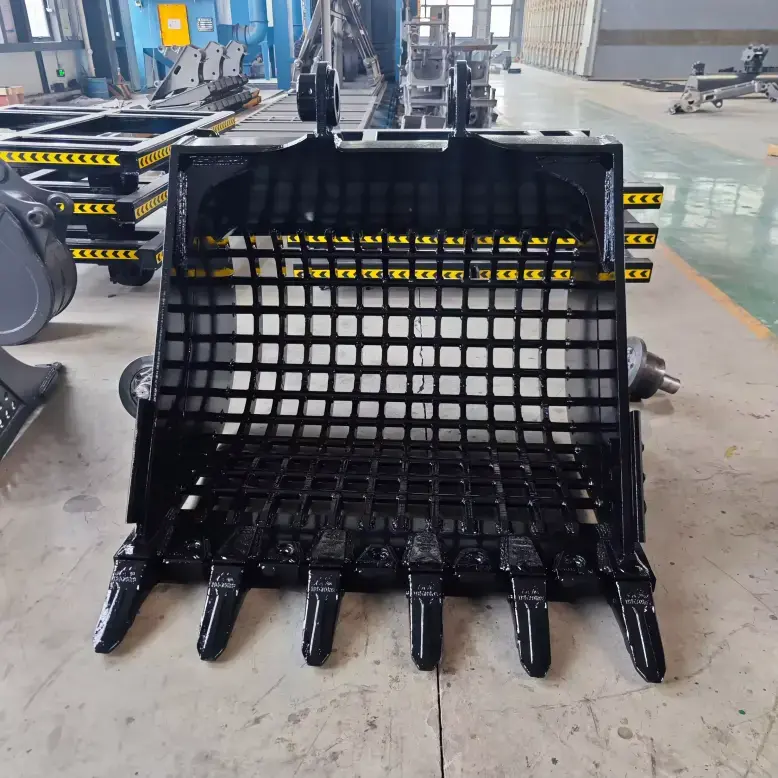
First, deploy the Sieving Bucket when clearing central track ballast buildup. Excess ballast in the track center can block drainage, reduce track elasticity, and even cause structural warping over time. The Sieving Bucket’s grid design (55×55mm for Tiannuo’s models) solves this perfectly: it grabs redundant central ballast while sifting out fine debris, preserving usable ballast instead of wasting it. For example, the TNSD75 model (0.35m³ capacity) excels at this “precision cleanup”—its compact size and grid structure ensure only unwanted material is removed, leaving the track core properly balanced.
Second, use it for sleeper ballast replenishment or leveling. Uneven ballast under sleepers leads to uneven track load distribution, which can accelerate wear on rails and sleepers. The Sieving Bucket simplifies this task: it scoops ballast, sifts it to remove impurities, and deposits uniform, clean ballast directly into sleeper gaps. For long sleeper sections, Tiannuo’s strip-type Sieving Bucket covers more area in one pass, completing work in a fraction of the time manual methods take. This not only ensures consistent ballast coverage but also cuts labor costs and minimizes track downtime.
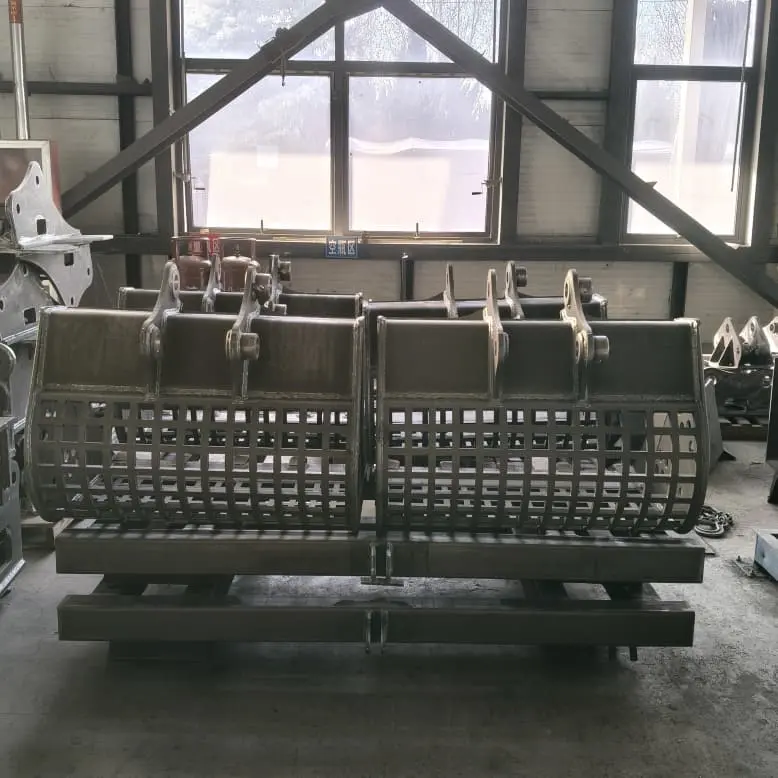
Third, the Sieving Bucket is essential for upper/lower ballast turning. Rain, vibration, and traffic can compact or clog ballast on the track’s upper and lower sides, reducing drainage and stability. The Sieving Bucket breaks up compacted ballast while sifting out mud and debris, restoring the ballast’s porous, shock-absorbent structure. Built with durable Q460+Q355 steel, Tiannuo’s Sieving Buckets resist wear even during frequent turning operations, making them a long-lasting solution for high-traffic lines.
Finally, bring it in for slope screening and ballast collection. Loose ballast on track slopes can slide onto adjacent areas, creating safety hazards and disrupting drainage. The Sieving Bucket’s multi-tooth design grabs slope ballast, sifts out fine material, and reconditions the slope to keep ballast in place. The TNQSD150 model (0.55m³ capacity, 600mm depth) handles larger slope areas efficiently, ensuring thorough cleanup without overworking your host machine (it’s compatible with 7–10 ton equipment).
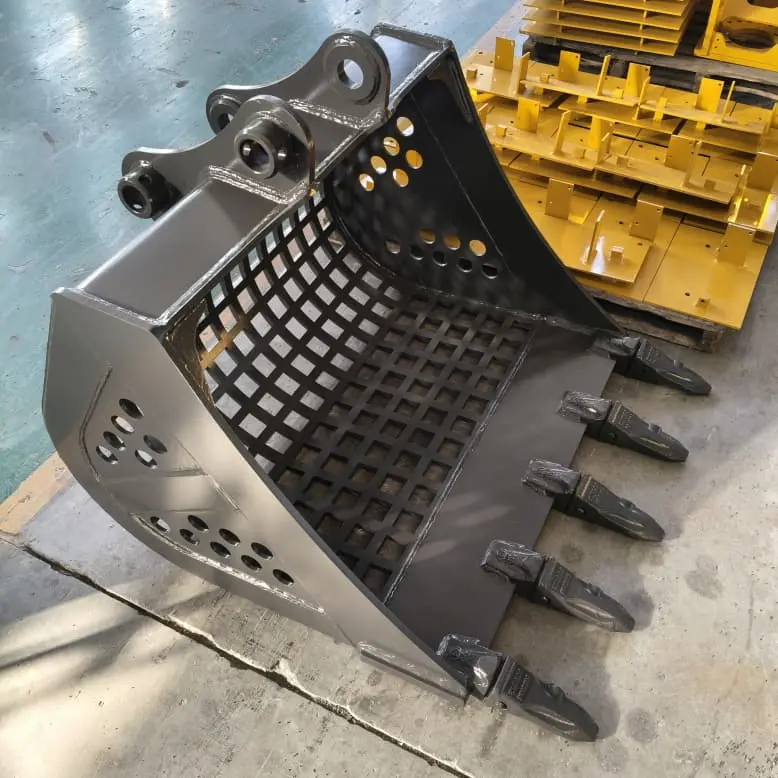
From central track clearing to slope maintenance, Tiannuo’s Sieving Bucket combines screening, cleaning, and distributing functions into one versatile tool. Available in strip and bucket types, it adapts to diverse railway maintenance needs—so whenever your track’s ballast needs precision care, this attachment is the reliable, efficient choice to keep lines safe and operational.