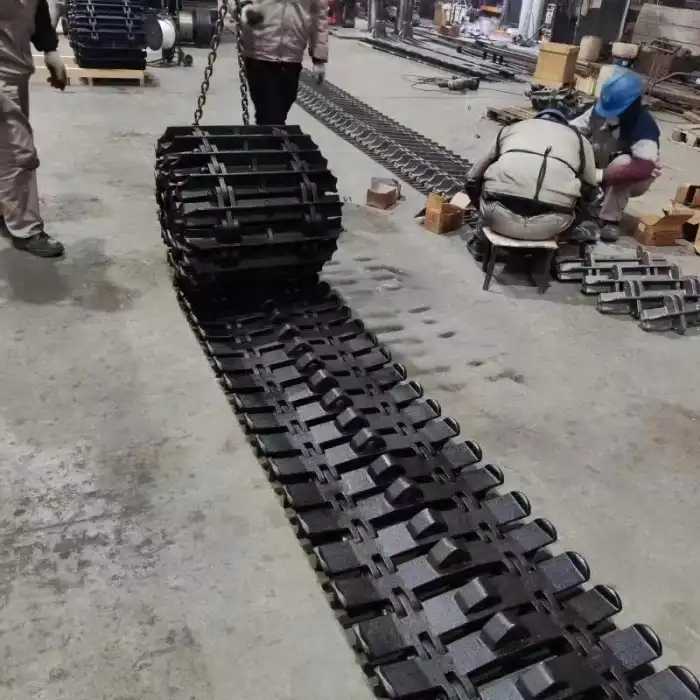

Why do 4x8 dump trucks need protective tracks?
Protective track assemblies for wheeled dump trucks (often referred to as anti-slip protective chains or track-style anti-skid chains) are auxiliary devices fitted over the drive tires. They are designed to overcome the inherent limitations of tires when operating on challenging terrain. The core principle is to transform the tire"s”point contact" with the ground into the "surface contact" of a track, thereby providing anti-slip traction, tire protection, and resistance against getting stuck in extreme environments.
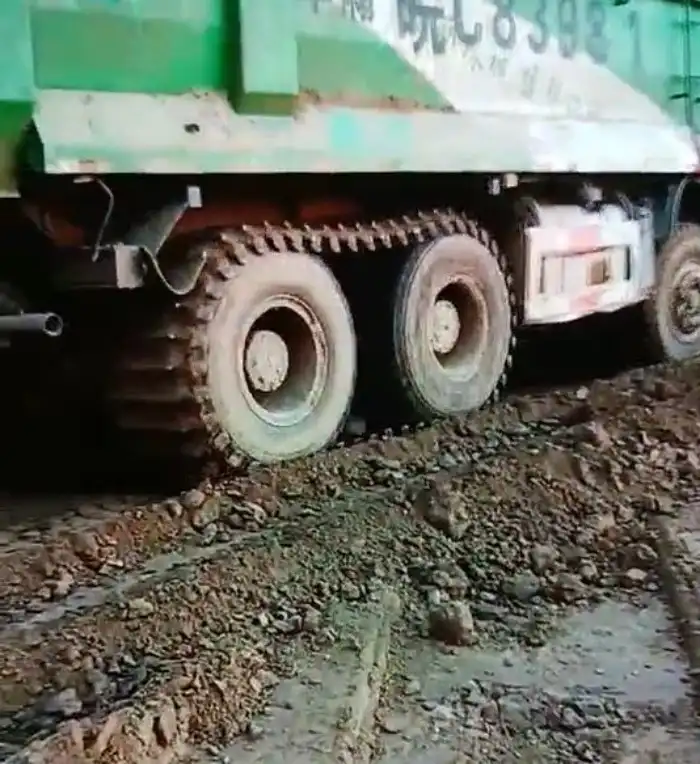
Primary Functions
Prevention of Slipping and Rollovers: On surfaces with low traction—such as those covered in rain, snow, or mud—tracks significantly increase the contact area between the tires and the ground, as well as the level of grip. This effectively prevents wheel spin and slippage, while reducing the risk of the vehicle sliding sideways or rolling over.
Protection Against Tire Damage: By covering the tire surface, track plates act as a shield against sharp objects—such as jagged rocks or steel rebar—that could otherwise scratch, puncture, or cause excessive wear to the tires. This is particularly crucial for vehicles operating in harsh environments like mining sites or quarries.
Prevention of Sinking on Soft Terrain: On soft ground, such as mud, sand, or marshland, tracks distribute the vehicle's load over a larger surface area. This lowers the ground pressure, thereby preventing or mitigating the risk of wheels sinking into the terrain and enhancing the vehicle's overall mobility and traversability.
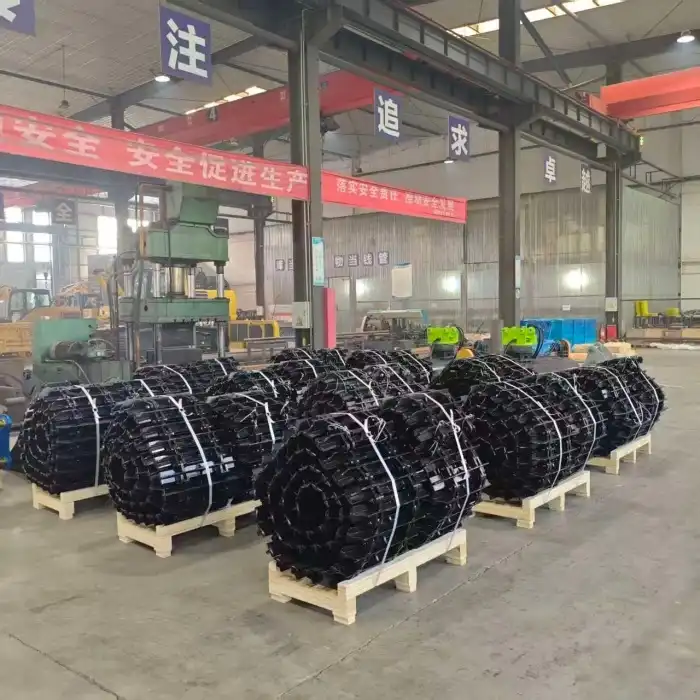
Practical Results and Data
Significant Safety Enhancement: The most immediate benefit is improved safety during driving and operations on hazardous terrain—such as icy, snowy, or muddy surfaces—by preventing accidents caused by loss of traction and control.
Substantial Extension of Tire Lifespan: This represents a major economic advantage of using track systems. Data indicates that under equally harsh operating conditions, the service life of tires can be extended up to three times when equipped with protective traction tracks. Furthermore, the tracks themselves are designed for a long service life and allow for modular maintenance and component replacement.
Increased Operational Efficiency: Enhanced grip reduces instances of ineffective wheel spin and redundant maneuvers caused by slippage. According to product data, overall operational efficiency can improve by nearly 30%; a task that would otherwise take 10 days to complete can potentially be finished in 7–8 days.
Reduced Fuel Consumption and Total Costs: Greater efficiency and minimized slippage mean that less power—and consequently less fuel—is required to complete a given volume of work. Although the initial purchase of the track system requires an upfront investment, it proves highly economical in the long run by generating savings on tire replacement, fuel, and labor hours.
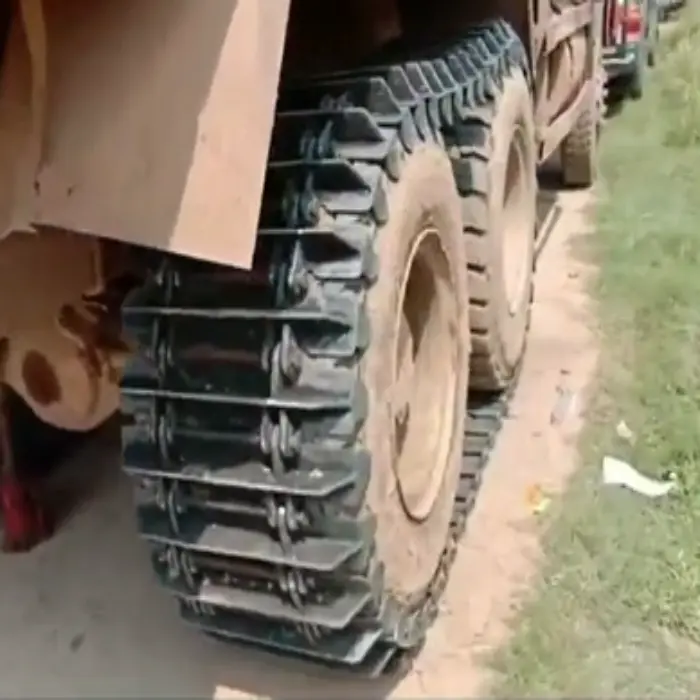
Typical Operating Conditions
Protective traction tracks are primarily designed for extreme terrain where wheeled dump trucks struggle to pass or face a high risk of getting stuck or damaged.
Icy, Snowy, and Muddy Terrain: This is the primary use case. On icy or snowy surfaces in winter, or muddy construction sites and unpaved roads during the rainy season, tires are highly prone to slipping or becoming bogged down; traction tracks provide the necessary grip.
Mines, Quarries, and Infrastructure Sites: These environments feature complex terrain littered with loose rocks and debris, which can easily puncture or cut tires. Furthermore, soft, unpaved ground can cause heavily loaded vehicles to sink; protective traction tracks help prevent both tire damage and vehicle entrapment.
Rugged Mountain Roads and Steep Slopes: On unpaved mountain trails or steep inclines, tracks enhance a vehicle’s climbing ability and stability, reducing the risk of slippage.
Other Soft Ground: In areas such as sandy terrain, the edges of swamps, or soft agricultural paths, tracks increase the vehicle's ground contact area, thereby preventing or minimizing the risk of the vehicle sinking.