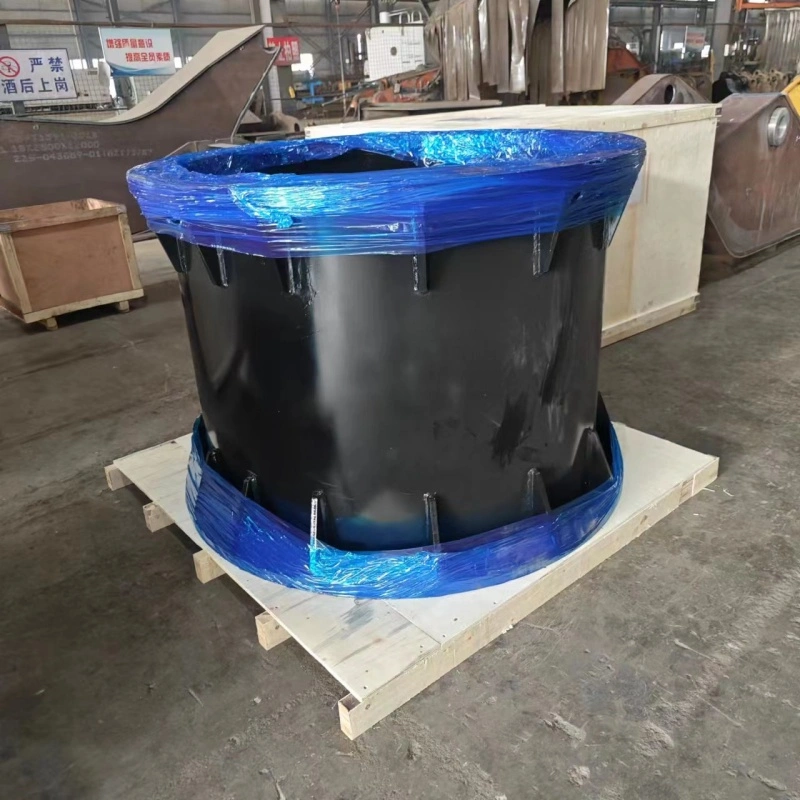

Excavator chassis raising technology makes your equipment the king of wetlands!
Shandong Tiannuo Engineering Machinery Co., Ltd. is a comprehensive enterprise integrating R&D, design, manufacturing, sales, and service of multi-functional excavators. The company is located in Jining City, Shandong Province, known as the "Hometown of Confucius and Mencius, a Land of Etiquette."
The purpose is to increase the working height, while raising the chassis is to increase the overall ground clearance and wading depth of the excavator, enabling it to work stably in extremely soft, muddy, or deep water conditions such as swamps, mud pits, and shallow beaches.
I. Basic Purpose and Function
Main Purpose: To increase the distance between the excavator's undercarriage (tracked chassis) and the ground, preventing critical components such as the chassis, slewing bearing, and travel motor from sinking into mud or being submerged in water.
Core Function: To increase ground clearance and wading depth, protect equipment, and improve mobility.
II. Working Principle and Structure
Essentially, it involves installing a robust steel support structure between the excavator's track frame or chassis body and the tracks.
Structural Components:
Extended Support Body: Typically a box-shaped structure welded from high-strength steel plates, it is the main load-bearing and height-increasing component.
Upper Connecting Plate: Precisely matches the mounting holes on the excavator's original track frame or chassis, rigidly connected using high-strength bolts.
Lower Connecting Shaft/Seat: Used to install the original or extended track running gear (including track rollers, carrier rollers, drive wheels, guide wheels, and track pads).
Reinforcing Ribs and Crossbeams: Ensure the entire structure's torsional and bending strength under harsh working conditions.
Working Process:
Separation: Lift the excavator and remove its original track running gear (i.e., "four wheels and one track").
Installation: Secure the upper connecting plate of the extended support to the excavator's original chassis interface.
Reassembly: The traveling mechanism (which may require an extended drive shaft and chain) is reinstalled onto the connecting bracket at the lower end of the lift support.
Result: The entire excavator body is raised, but the relative positions of the cab and boom remain unchanged; only the "footprints" are higher.
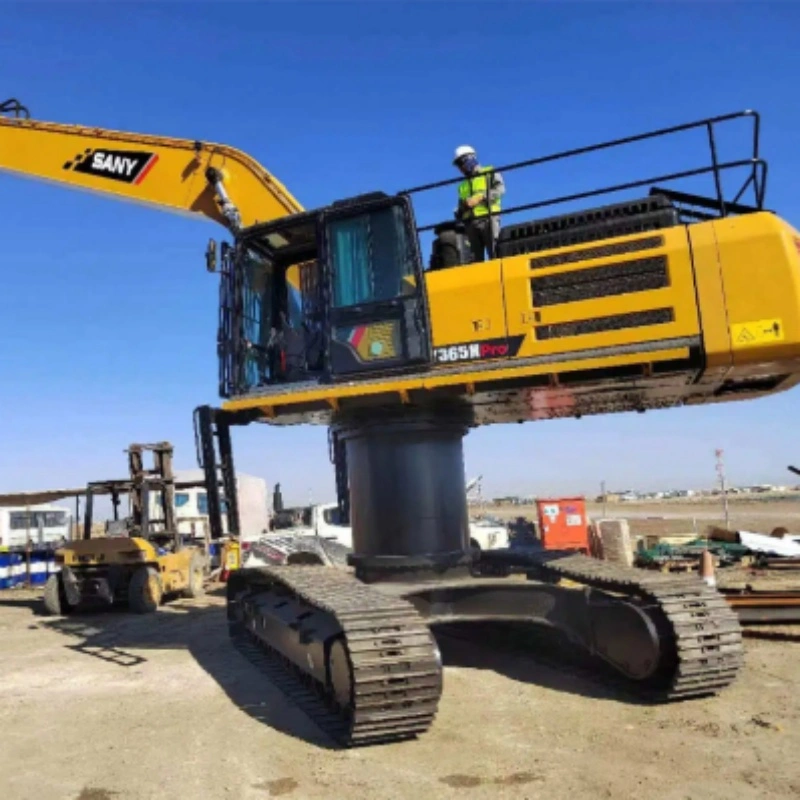
What is excavator extension column?
"Excavator extension column" generally refers to a lifting rod used to extend or raise the working height of an excavator. This modification is typically used in special working conditions, such as deep foundation work, high-rise building demolition, and deep pit rescue, where a larger vertical working range is required.
Excavator extension posts are suitable for excavators of various tonnages.?
Typically applicable to excavators with a capacity of 20-30 tons.
How much height is it raised?
The 20-ton series excavators can lift 1-2 meters; the 2-meter height is achieved by stacking two 1-meter-high extension columns. The 30-ton series excavators can lift 1-2.5 meters; the 2.5-meter height is achieved by stacking two 1.25-meter-high extension columns.
III. The Nature of Technology
Technical essence: This is a mechanical height extension interface that does not involve complex hydraulic or electronic systems. It simply raises the chassis by increasing the height of the physical structure.
IV. Typical Application Scenarios
Wetland and Swamp Operations: Lotus root harvesting, river dredging, and swamp construction.
Coastal Tidal Flat Construction: Intertidal zone operations, requiring sufficient wading capability before high tide.
Paddy field transformation and salt pan operations.
Other extremely soft foundations.