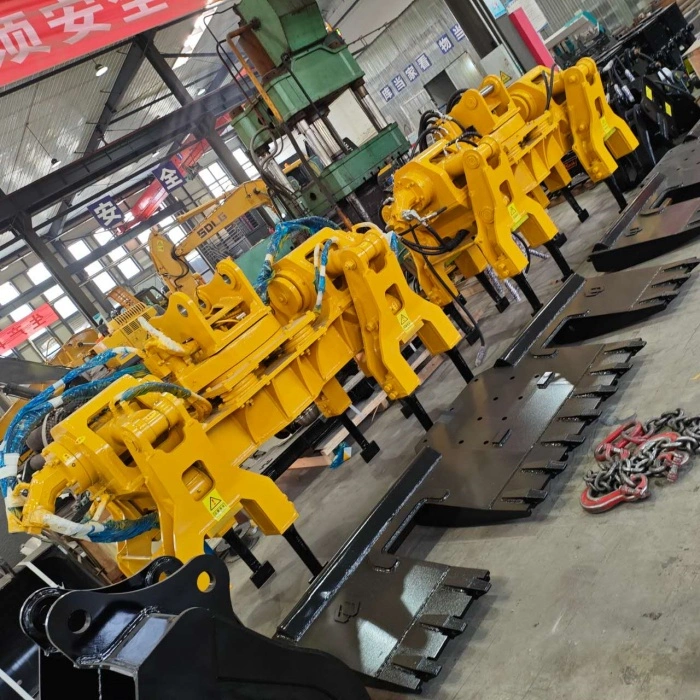

Excavator-Mounted Compactor: An Efficient Compaction Solution for Confined and Complex Working Conditions
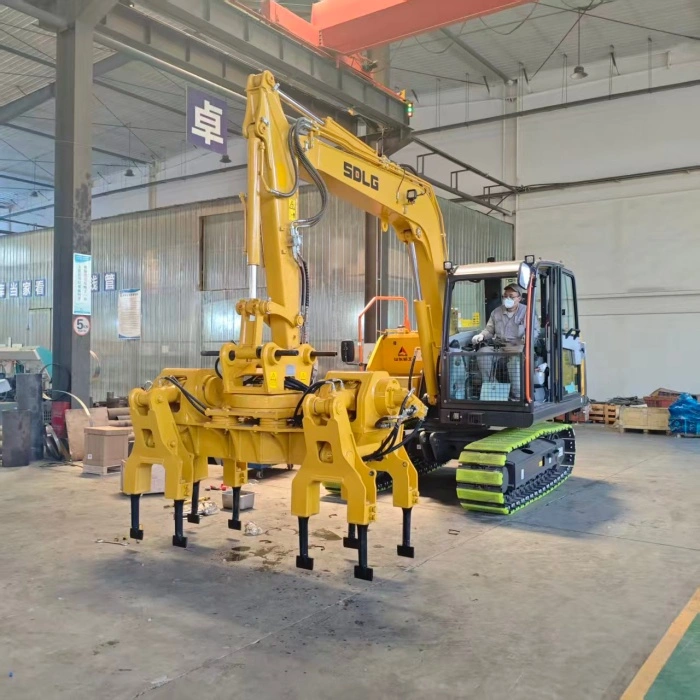
An excavator-mounted compactor (also known as a tamping attachment or compaction tool) is a piece of hydraulic vibratory compaction equipment that replaces the standard bucket on an excavator’s arm. It utilizes the excavator’s own hydraulic power and control system to perform compaction tasks, effectively transforming the excavator into a highly efficient compaction tool.
Key Features
Easy Installation and Simple Operation: It can be mounted directly onto the end of an excavator’s boom—replacing the standard bucket—and is powered by the excavator’s existing hydraulic system. Requiring no additional power source, it features a relatively simple structure, making it convenient to operate and maintain.
Adjustable Parameters for High Adaptability: The vibration frequency can be tuned to suit different soil types (e.g., high frequency for fine-grained soil, low frequency for coarse-grained soil), allowing it to meet various compaction requirements.
Robust Design for Durability: Built with a highly rugged design, it is capable of withstanding high-impact forces, ensuring reliable and excellent compaction results.
Specialized Functions (on select models): Certain units—such as those designed for railway maintenance—may incorporate specialized features like 360° rotation or articulating tamping tines, offering enhanced flexibility.
Integrated Vibration-Damping System: Equipped with vibration-isolation components, the unit minimizes the transmission of harmful vibrations to the excavator’s boom, thereby protecting the machine’s structural integrity and reducing noise levels.
Key Advantages
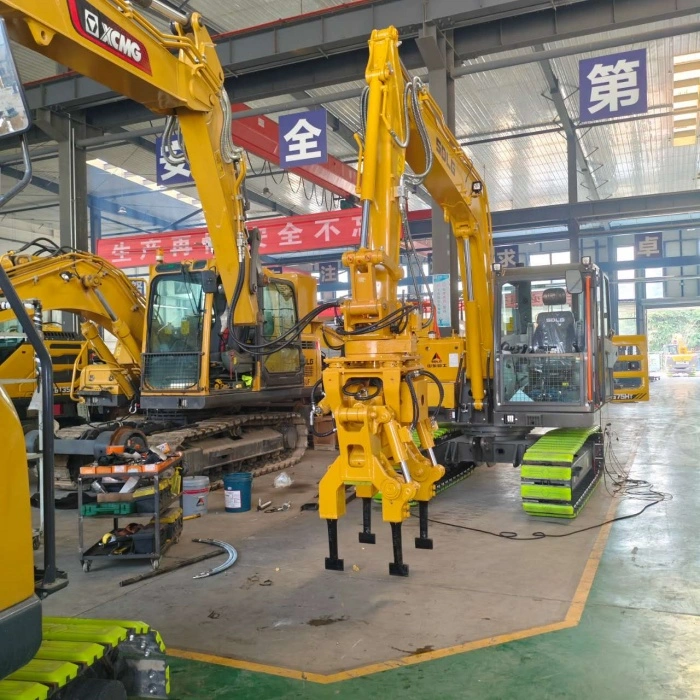
Flexible and Efficient Operation: Mounted on an excavator, the equipment offers exceptional ease of relocation and positioning. It can readily access various work sites, delivering construction efficiency far superior to traditional walk-behind plate compactors—in certain operating conditions, it can be dozens of times more efficient.
Significant Cost Savings: It enables a "one-person, one-machine" operation, leading to substantial labor cost savings. Compared to large, specialized tamping machines—which can cost tens of millions of yuan—it offers a clear and significant cost advantage.
Capable in Complex and Confined Spaces: It addresses challenges in terrain where conventional road rollers cannot operate. Its compact dimensions, combined with the reach of the excavator, allow for effective compaction in tight or hard-to-reach areas, such as trenches, slopes, corners, and behind bridge abutments.
Minimal Impact on Adjacent Structures: During operation, the force is directed primarily downward. This results in significantly less lateral impact on adjacent structures—such as bridge abutments or retaining walls—compared to other compaction methods, ensuring a safer and more reliable construction process.
Safe and Environmentally Friendly: Operators can perform tasks from within the excavator cab, remaining safely away from the hazardous zones often associated with walk-behind equipment. Furthermore, the enclosed design helps reduce noise and vibration, creating a better working environment.
High-Quality Compaction: With high tamping energy, the equipment is less sensitive to the composition or moisture content of the fill material, ensuring effective compaction results across a wide range of conditions.
Typical Operating Scenarios
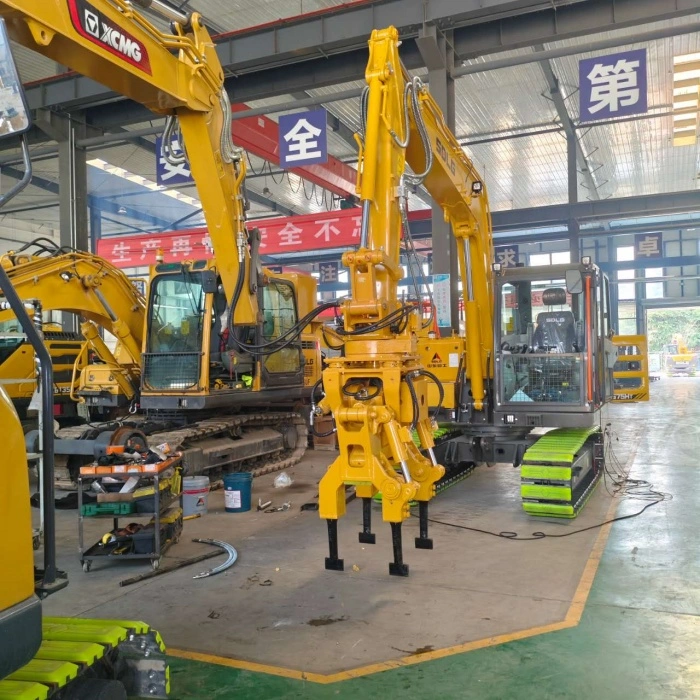
Backfilling in Trenches and Confined Spaces: Compacting backfill in areas such as foundation trenches, utility trenches, and behind retaining walls is the primary application where excavator-mounted compactors excel.
Slope and Embankment Engineering: Capable of performing compaction directly on slopes, overcoming the challenges traditional equipment faces when attempting to operate stably on inclined surfaces.
Railway Maintenance and Repair: Used for tamping ballast after sleeper replacement, routine track maintenance, major overhauls, and emergency repairs; suitable for high-speed railways, conventional rail lines, and turnout areas.
Tunneling and Underground Construction: Employed during tunnel construction for tasks such as compacting temporary access roads and backfilling excavated earth or rock.
Site and Road Base Compaction: Used to compact temporary roads and work platforms at construction sites, as well as the base layers for highway or railway roadbeds.
Demolition and Reconstruction Sites: Used for compacting backfill materials following the demolition of structures or site clearance.