

Excavator Rotating Tilting Buckets
Excavator Rotating Tilting Buckets: How Excavator Attachments Boost Operational Efficiency and Precision
In modern construction, the excavator has long since evolved beyond being merely a simple "dirt-digging machine." With the continuous advancement of construction machinery technology, innovations across various excavator attachments are redefining the operational boundaries of these machines. Today, we will take a deep dive into a revolutionary attachment that is transforming the way excavation tasks are performed—the excavator rotating tilting bucket—and analyze how it delivers significant efficiency gains for a wide range of engineering projects.
What is an Excavator Rotating Tilting Bucket?
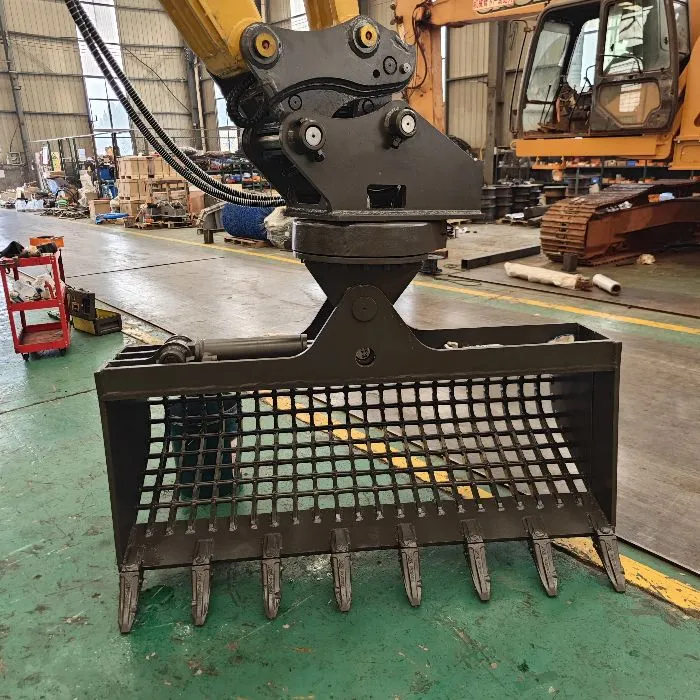
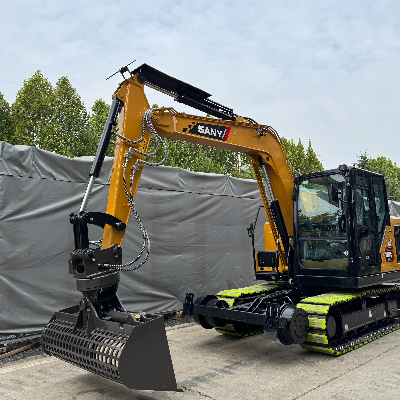
An excavator rotating tilting bucket is an advanced attachment driven by a hydraulic system, enabling the bucket to achieve continuous 360-degree rotation and multi-angle tilting. Unlike traditional buckets—which rely solely on the excavator's boom and stick to perform tasks at fixed angles—the rotating tilting bucket grants operators immense flexibility, allowing them to execute complex-angle excavation, leveling, and slope-shaping tasks without having to reposition the excavator's main body.
The core value of this attachment lies in its versatility: an excavator equipped with a rotating tilting bucket effectively combines the functions of a standard digging bucket, a grading bucket, and a slope compactor into a single unit, thereby drastically reducing equipment changeover times and the need for manual intervention.
Key Advantages of Rotating Tilting Buckets
1. Exceptional Operational Flexibility
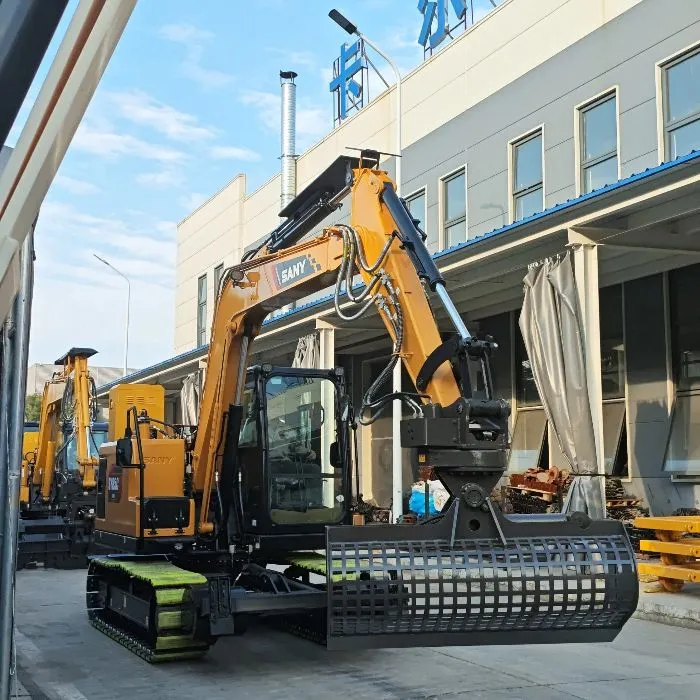
In traditional construction scenarios, when tasks involve excavating trench slopes or grading sloped surfaces, operators often have to repeatedly reposition the excavator or rely on manual labor for secondary finishing work. However, an excavator equipped with a hydraulic tilting bucket can execute precise slope-shaping tasks directly, utilizing the bucket's own tilting capabilities. Whether the task involves highway embankments, riverbank protection structures, or land leveling across complex terrain, the rotating tilting bucket handles it with ease.
2. Significant Boost in Operational Efficiency
Time is money—a maxim that holds especially true in engineering projects. The excavator rotating bucket minimizes the need for equipment repositioning, allowing operators to cover a larger work area from a single stationary position. Statistics indicate that for complex land leveling and slope-trimming operations, the use of a rotating tilting bucket can boost operational efficiency by over 30%. This translates directly into shorter project timelines and reduced fuel consumption. 3. Precise Control and High-Quality Operations
Modern tilt-rotator buckets are equipped with sophisticated hydraulic control systems, enabling operators to achieve millimeter-level fine-tuning. For scenarios requiring delicate work—such as preparing bedding for pipe laying, backfilling and compacting around structures, or landscape shaping—this precise control capability ensures that the job is done right the first time, significantly reducing the likelihood of rework.
4. Versatile Functionality, Reduced Equipment Costs
For small to medium-sized construction teams, purchasing multiple pieces of specialized equipment is often prohibitively expensive. Pairing a single excavator with a range of interchangeable attachments presents an ideal solution for achieving multi-functional capabilities. The tilt-rotator bucket enables an excavator to handle a diverse array of tasks—including digging, leveling, slope work, and trench cleaning—thereby maximizing the utilization rate of a single machine.
Applications of Tilt-Rotator Buckets
Land Leveling and Slope Control
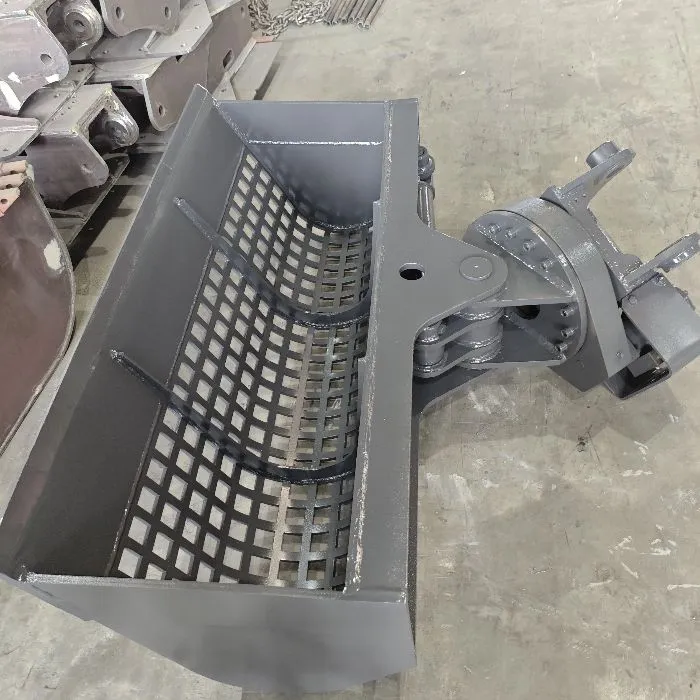
In site leveling operations, traditional methods often require an excavator to perform rough grading, followed by manual labor or a roller to achieve the final fine grade. However, the tilting function of a hydraulic tilt-rotator bucket allows the operator to perform precise leveling directly according to the design gradient, shaping slopes in a single pass and drastically reducing the need for manual intervention.
Trenching and Pipeline Construction
After a trench has been excavated, the trench bottom often requires fine-tuning to meet the specific requirements for pipe laying. A tilt-rotator bucket offers flexible angle adjustment, allowing operators to clear loose debris from the trench bottom and create a bedding surface that precisely matches design specifications. Furthermore, during the trimming and finishing of trench slopes, the tilting function makes the slope-shaping process significantly more efficient and accurate.
Demolition and Cleanup Operations
In demolition tasks, the rotation function enables the bucket to grasp and clear rubble and debris from various angles without the need to frequently reposition the excavator. This capability is particularly valuable in urban renewal projects where working space is often limited.
How to Choose the Right Tilt-Rotator Bucket?
1. Match the Excavator's Tonnage
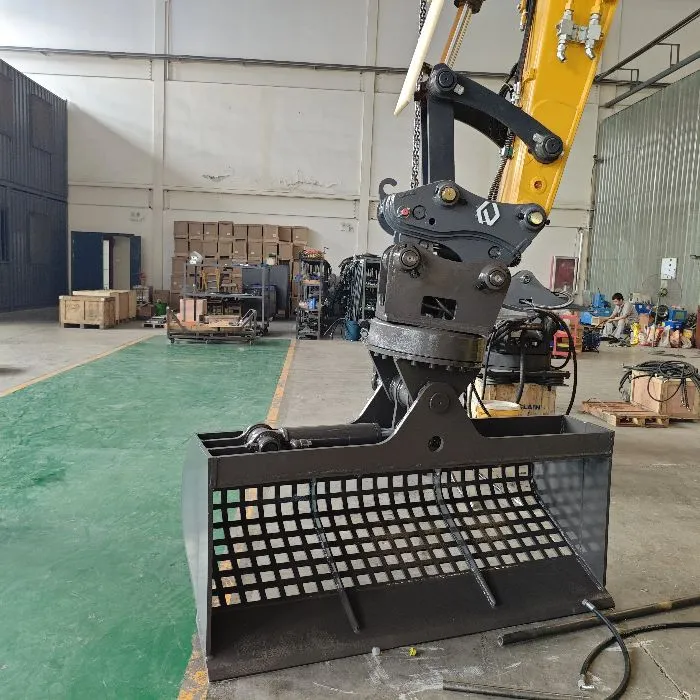
The tilt-rotator bucket must be properly matched to the excavator's operating weight (tonnage) and hydraulic flow capacity. A bucket that is too large can overload the hydraulic system, negatively impacting the excavator's service life and operational efficiency; conversely, a bucket that is too small will fail to fully harness the excavator's potential power. Before making a purchase, be sure to consult with a professional supplier to obtain recommendations for the appropriate bucket specifications based on your specific excavator model. 2. Consider Operating Conditions
Different operating conditions impose varying requirements on a bucket's wear resistance and structural strength. For heavy-duty applications—such as rock excavation and demolition—reinforced buckets constructed from high-strength steel plates should be selected. Conversely, for standard applications—such as soil excavation and site leveling—a standard-type bucket will suffice.
3. Prioritize the Quality of the Hydraulic Rotation System
The hydraulic rotation system is the core component of a rotating tilt bucket; its quality and reliability directly determine the bucket's service life and operational precision. Opting for hydraulic rotation motors and seals from reputable brands—while potentially entailing a slightly higher initial investment—proves more economical in terms of long-term operating costs.
Key Maintenance Points
To ensure that your excavator's rotating tilt bucket remains in optimal working condition, the following maintenance points warrant close attention:
Regularly inspect hydraulic lines: The hydraulic lines on a rotating bucket undergo frequent use; they should be inspected periodically for leaks, wear, or loose connections, and tightened or replaced promptly as needed.
Lubricate the rotation mechanism: In accordance with the manufacturer's instructions, regularly apply grease to the rotation bearings and gears to ensure smooth rotational movement.
Check for wear on the cutting edge: The bucket's cutting edge is the component that makes direct contact with the material being excavated. Severe wear on this edge can compromise excavation efficiency; therefore, it should be repaired via hardfacing or replaced in a timely manner.
Clean the bucket: Upon completion of operations, remove any accumulated soil or debris from both the interior and exterior of the bucket—paying particular attention to buildup around the rotation mechanism—to prevent material from drying and hardening, which could subsequently hinder rotational functionality.
Conclusion
As the construction machinery industry continues its evolution toward greater intelligence and multifunctionality, the excavator rotating tilt bucket—serving as a vital excavator attachment—is revolutionizing efficiency across an increasing number of construction projects. It not only expands the operational scope of the excavator but, through its "one machine, multiple uses" capability, also assists contractors in reducing equipment costs and enhancing project profitability.
If you are currently seeking solutions to boost your excavator's operational efficiency, we encourage you to explore the performance features of hydraulic rotating buckets in greater depth; they may well prove to be the "efficiency multiplier" your next project requires.