

How Much Work Can a Sleeper Changer Save on a Construction Site?
Just How Much Work Can a Sleeper Changer Save on a Construction Site? These Real-World Cases Tell the Story.
Anyone involved in railway engineering knows that replacing sleepers—the ties supporting the rails—looks simple on the surface, but is anything but easy in practice. A single concrete sleeper weighs between 200 and 300 pounds; relying solely on manual lifting and carrying, a work crew can only replace a handful during a single "track possession" window—and they end up utterly exhausted in the process.
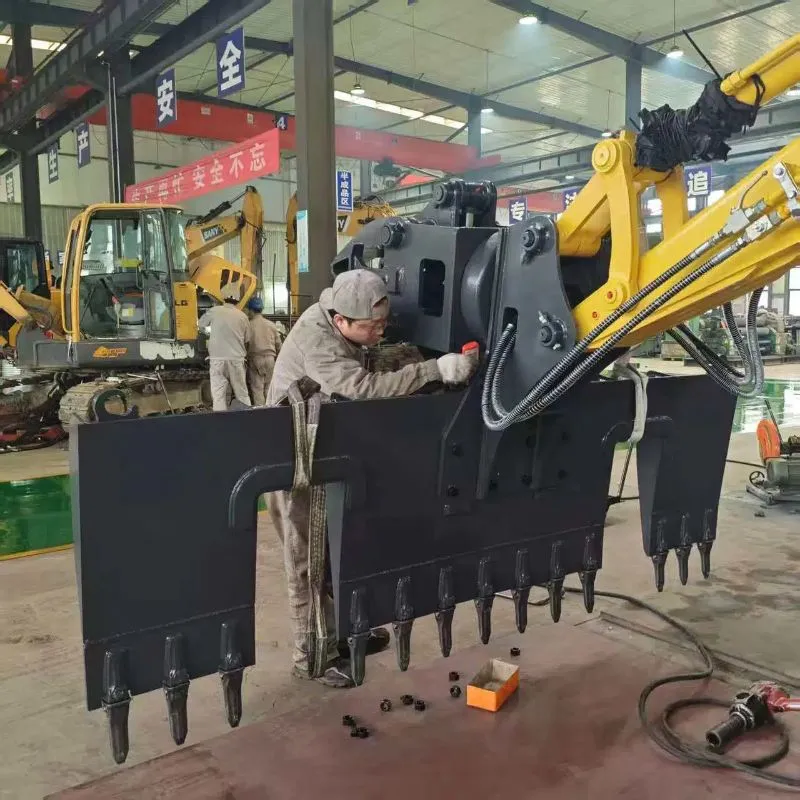
In recent years, an increasing number of railway maintenance sections and engineering teams have begun utilizing "sleeper changers" (also known as sleeper replacement machines). But are these machines actually effective? And just how much manpower can they truly save? Today, let's have a frank discussion based entirely on real-world facts.
What exactly is a sleeper changer? Simply put, it’s an excavator fitted with a "robotic arm."
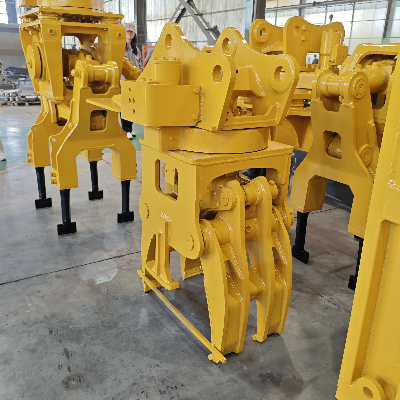
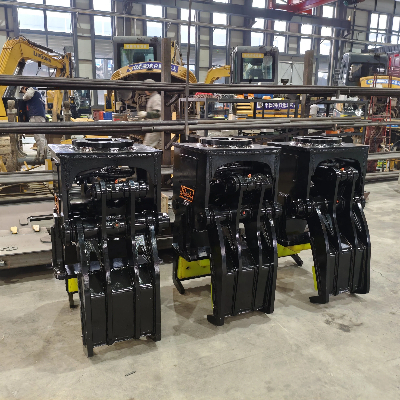
The sleeper changers commonly found on the market are essentially modified excavators. A specialized attachment—or clamp—is mounted onto the excavator's boom; this clamp is capable of opening, closing, and rotating, and is designed specifically for gripping railway sleepers.
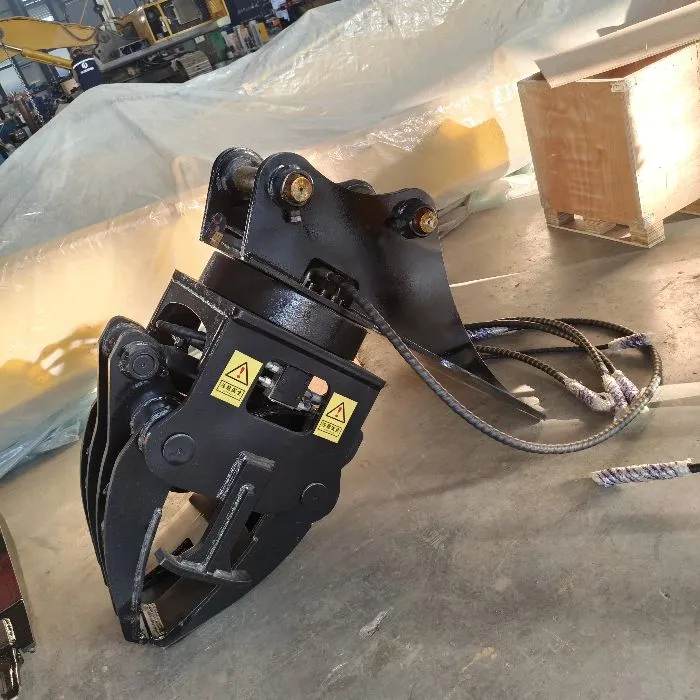
The operator sits inside the cab, manipulating the control joysticks. The mechanical arm extends downward to clamp onto an old sleeper, lifts it up, rotates 90 degrees to extract it from beneath the rails, and then picks up a new sleeper to slide into place—executing the entire sequence with fluid, seamless precision.
Depending on the size of the excavator, the machine can grip one, two, or even four sleepers at a time. Smaller models are ideal for working in confined spaces, such as railway stations or switch zones, while larger models offer greater efficiency when deployed on open-track sections.
How much manpower can a sleeper changer actually save? These figures speak for themselves.
Case Study 1: Railway Switch Modernization Project in Shandong Province
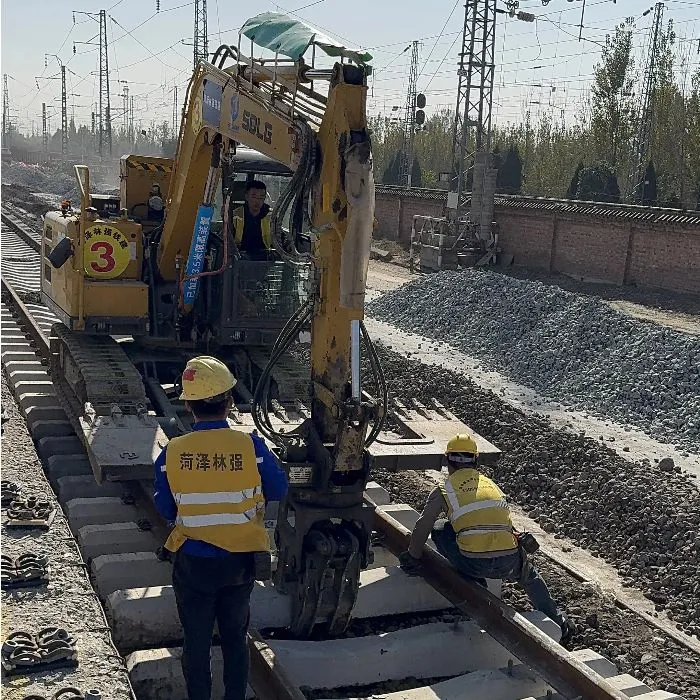
This particular project required the dismantling of an old set of railway switches (turnouts) and their replacement with a track system utilizing concrete sleepers.
The "Old Way" (Manual Labor): It required a crew of over 80 workers on-site, working continuously for 16 hours straight to complete the job.
The "New Way" (Mechanized): A coordinated team of just 20-odd workers—assisted by two sleeper changers and one multi-purpose excavator—completed the entire task in a mere 6 hours.
The result? A three-quarters reduction in manpower and a time savings of more than 50 percent. Crucially, the workers no longer had to endure back-breaking labor that left them unable to stand upright; instead, they were assigned lighter tasks, such as removing rail fasteners and clearing ballast—work that is far less physically demanding. Case Study 2: Railway Sleeper Replacement on a Line in Shaanxi
This work was carried out during the railway's designated "maintenance window"—the specific time slot when trains are not running. Each window lasted only 180 minutes, requiring every second to be utilized to the fullest.
Twelve sleeper replacement machines were lined up in a row, with their operators working in perfect sync: the first machine cleared the ballast; the second gripped and removed the old sleeper; the third inserted the new one—it resembled a highly efficient assembly line.
The result? In just 180 minutes, 377 sleepers were replaced. Mathematically, that averages out to more than one sleeper replaced per minute.
In the past, when sleeper replacement was done manually, replacing a few dozen sleepers during a single maintenance window was considered a fast pace. By comparison, efficiency has increased nearly twentyfold. Tasks that previously required several maintenance windows to complete are now finished in a single night.
Case Study 3: Turnout Sleeper Renovation on Beijing Subway Line 13
Subway construction presents even greater challenges: work can only be performed during the three to four hours at night when train service is suspended, and tracks must be fully restored for operation before dawn.
This project employed a "man-machine" collaborative approach: human workers were responsible for removing rail fasteners, while the sleeper replacement machines handled the extraction of old sleepers and the installation of new ones.
Using conventional methods, this type of job would typically take three months to complete. However, by utilizing the sleeper replacement machines, the entire project was finished in just six days, with a total of 412 turnout sleepers replaced.
Personnel from the subway company remarked, "If we hadn't seen it with our own eyes, we truly wouldn't have believed it could be done this quickly."
How to Choose a Sleeper Replacement Machine? Keep These Points in Mind to Avoid Pitfalls
If you are looking to add a sleeper replacement machine to your team's equipment roster, consider the following questions carefully in advance:
First: What size excavator should you pair it with?
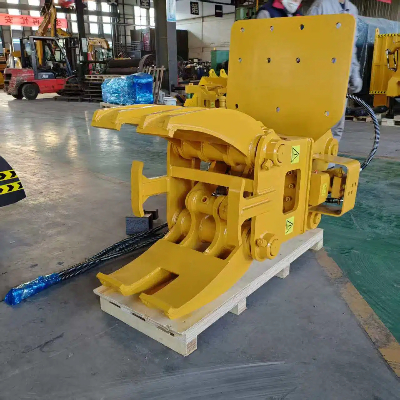
If you frequently work in station yards or turnout areas—where space is confined and there are many curves—it is recommended to pair the attachment with a 7–9-ton excavator for maximum flexibility and ease of maneuvering.
If your primary work involves replacing sleepers in sections along open track lines, a 10–18-ton excavator is recommended; this allows the machine to grip three sleepers at a time, resulting in higher efficiency.
For professional major-maintenance teams with a high volume of work, an excavator of 20 tons or larger is advisable; this allows for gripping four sleepers at a time, effectively doubling productivity—one pass does the work of two.
Second: Pay close attention to these specific details.
Pressure-holding valve: This is an absolute necessity. In the event of a hydraulic line failure, the pressure-holding valve ensures that the clamp does not suddenly release—preventing the sleeper from falling and striking a worker. This is a critical safety feature designed to save lives.
Is the clamp adjustable? Some construction sites utilize concrete sleepers, others use wooden ones, and some use steel sleepers. An adjustable clamp eliminates the need to constantly switch out equipment to accommodate these different materials.
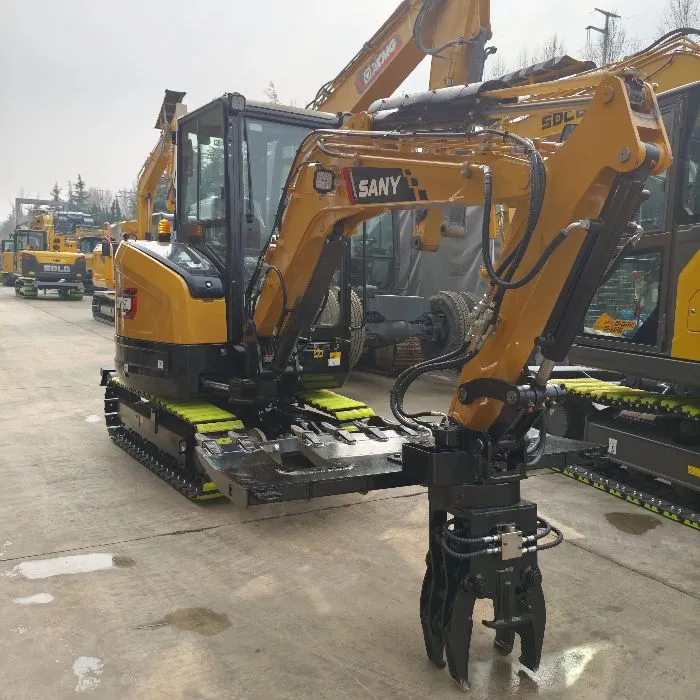
Can it rotate 360 degrees? A high-quality sleeper handling machine should be capable of rotating 90 degrees in both forward and reverse directions; this makes it much easier to maneuver sleepers underneath the steel rails.
Third: Do Not Overlook After-Sales Service
Machinery is bound to experience malfunctions occasionally. The timely availability of spare parts and whether the manufacturer provides on-site repair technicians directly determine the duration of any potential downtime. Before making a purchase, be sure to ask for clarification on these points: Where is the spare parts warehouse located? How quickly can they respond to a service request?
How should routine maintenance be performed? Keep these four points in mind:
Once you’ve purchased the machine, do not simply use it without maintaining it. Since the sleeper machine is constantly exposed to gravel and dust, maintenance doesn't have to be complicated—just remember these four key steps:
Clean frequently: At the end of each workday, use a high-pressure water gun to rinse away any mud or ballast accumulated on the machine, paying special attention to moving parts such as the clamp's pivot points.
Tighten bolts: The machine generates significant vibration during operation, causing bolts to loosen easily. Once a week, use a wrench to retighten the bolts in critical areas to prevent them from coming loose and causing an accident.
Monitor hydraulics: Check the hydraulic hoses for any signs of oil leakage and verify that the hydraulic fluid level is sufficient. If the fluid level is low, top it up immediately; if the fluid appears dirty, replace it.
Inspect for wear: The teeth on the clamp will eventually wear down and become blunt after prolonged use. Replace them as soon as necessary; do not try to save a few dollars by delaying the replacement, as a clamp that cannot grip securely—resulting in a dropped sleeper—will create far more trouble in the long run.
By diligently following these four maintenance steps, you can extend the machine's service life by several years and significantly reduce its failure rate.