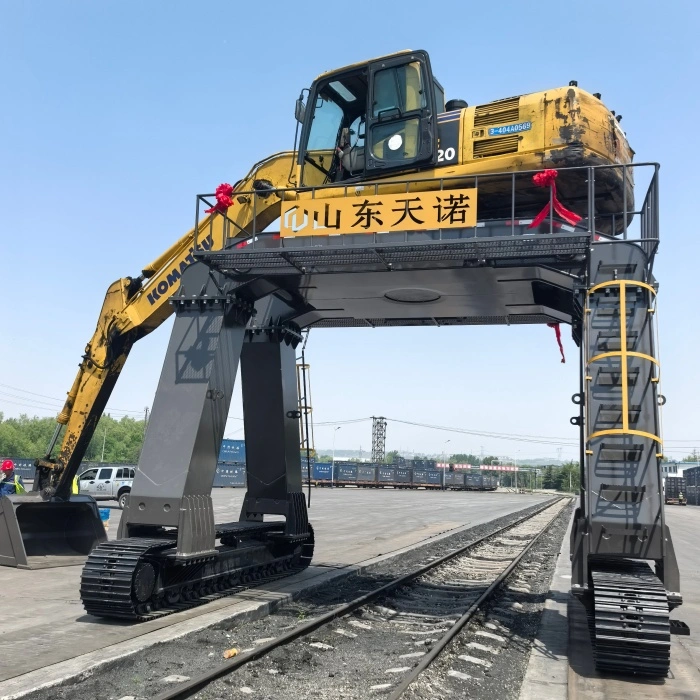

Railway Unloading "Game-Changer"—The Excavator Gantry Frame
The gantry-mounted excavator for unloading trains is essentially a highly specialized modification of a standard excavator; it allows the machine to operate by directly "straddling" the railcars, specifically addressing the challenge of rapidly unloading bulk cargo from trains.
Key Advantages
High Efficiency and Significant Time Savings:This is its standout advantage. Paired with a large-capacity bucket (e.g., 2 cubic meters), unloading a single railcar typically takes just 3 to 8 minutes. This represents a massive leap in efficiency compared to traditional manual methods or single-sided excavator operations.
Thorough Unloading and Reduced Material Waste: The bucket operates from a centered position directly above the railcar, easily clearing material from the bottom and side corners. This ensures a clean unload, minimizing residual material and waste.
Cost Savings and Streamlined Handling: The excavator transfers material directly from the railcar to waiting trucks or stockpiles. This "no-ground-contact" transfer eliminates the costs and time associated with intermediate handling steps.
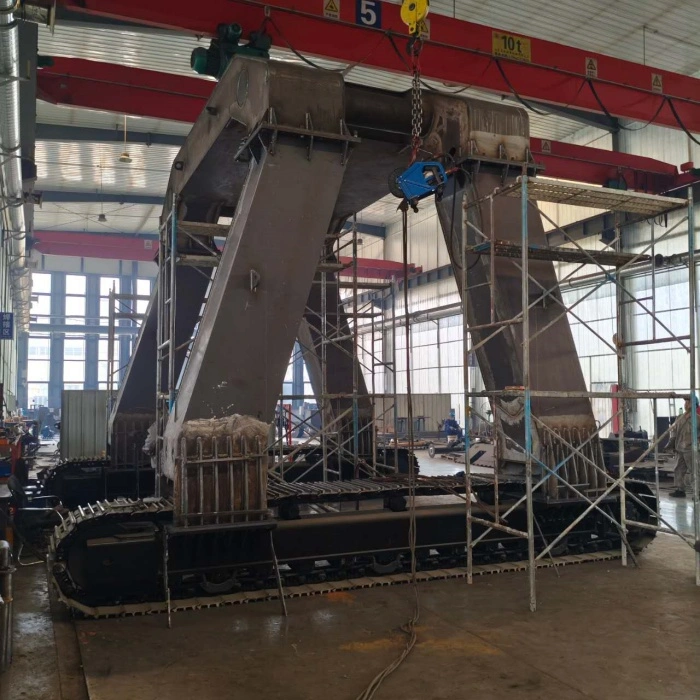
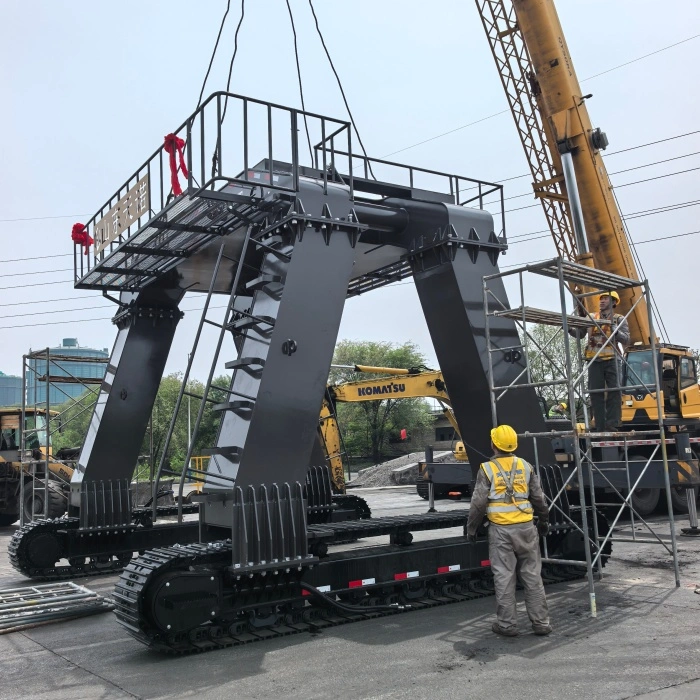
Versatility and Flexible Investment: The raised undercarriage typically features a modular design for easy assembly and disassembly. When not performing railcar unloading tasks, the gantry structure can be removed to revert the excavator to its standard configuration for general construction work, thereby maximizing equipment utilization.
Enhanced Visibility and Safety: Operating from above the railcar provides the operator with an expansive field of view, facilitating precise control. Additionally, the equipment features extended tracks for greater stability, as well as safety guardrails and access ladders, ensuring operational safety.
Key Functions
Resolves railway unloading bottlenecks: Specifically designed to replace inefficient and high-risk manual unloading, or to overcome the limitation where standard excavators cannot operate directly due to insufficient reach height.
Enables rapid transfer of bulk cargo: Primarily used for unloading bulk commodities—such as coal, iron powder, and ore—from trains at locations including ports, freight terminals, and large industrial complexes.
Typical Operational Scenarios
Ports and Railway Freight Terminals: Used at high-throughput ports and railway hubs to rapidly unload bulk commodities—such as coal and ore—ensuring efficient logistics flow.
Power Plants and Large Industrial/Mining Enterprises: Utilized at facilities with dedicated railway sidings to efficiently unload raw materials (e.g., coal for power plants or iron ore fines for steel mills) from trains and transfer them into storage silos or stockpiles.
Railway-Side Loading/Unloading Points: Serves as a flexible, efficient mobile unloading solution for railway locations that lack permanent, large-scale unloading infrastructure (such as railcar dumpers).