

What Are the Benefits of Sweepers?
In numerous fields such as industrial production, infrastructure maintenance, and urban environmental governance, cleaning work has always been a key link in ensuring operational safety and improving environmental quality. The traditional manual cleaning mode generally faces pain points such as low efficiency, high labor intensity, and uneven cleaning effects, while the emergence of sweepers has completely changed this situation. As a core representative of modern cleaning tools, sweepers have been widely used in various industries due to their strong functional advantages.
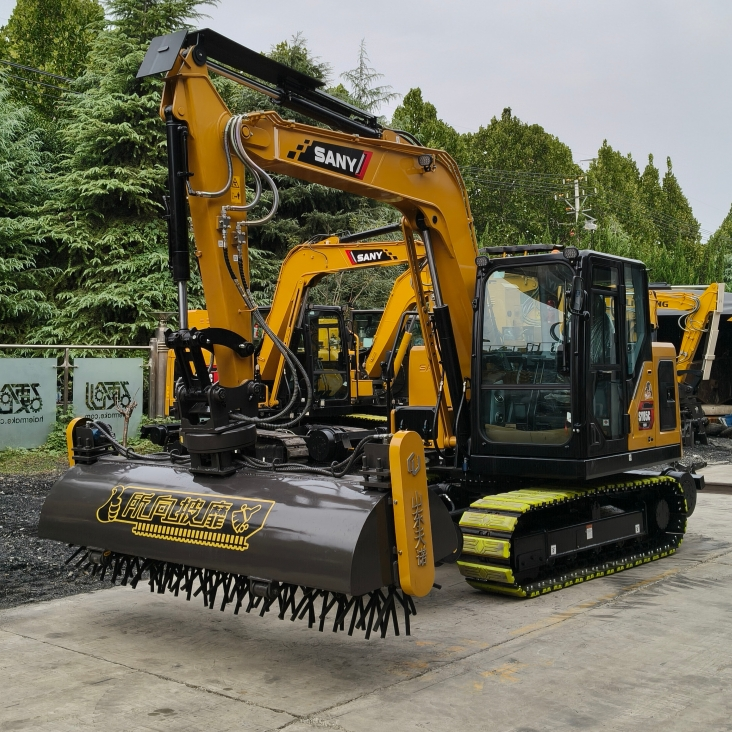
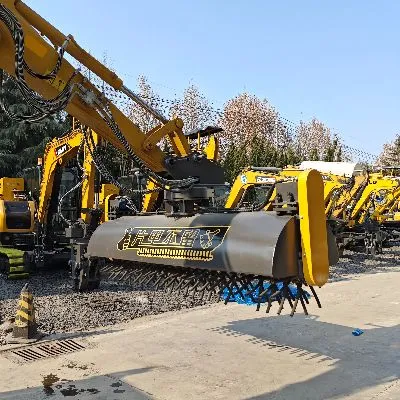
The most intuitive benefit of sweepers is the ultimate improvement of cleaning efficiency, which is also their core competitiveness in replacing manual labor. Taking the ballast sweepers commonly used in railway maintenance as an example, when manually cleaning residual ballast on railway sleepers, limited by human physical strength, operation scope and other factors, a worker can only complete hundreds of meters of cleaning work a day, and it is difficult to ensure uniform cleaning. Professional sweepers adopt hydraulic motor-driven flexible cleaning roller brushes, which maintain stable speed and uniform cleaning force during operation. The effective working width can reach 2800mm, and some models support customized widening. Combined with a 360° flexible working angle, they can fully cover the operation area without leaving any cleaning dead ends. Taking TIANNUO Machinery's TNDZQSJ75 ballast sweeper as an example, it is compatible with 7-10 ton host machines. Under the stable operation state of a rated flow of 40L/min and a working pressure of 12mpa, the cleaning workload per hour is equivalent to that of dozens of workers in a single day, greatly shortening the operation cycle. It is especially suitable for large-scale maintenance projects such as railway trunk lines and high-speed railway lines, ensuring that the lines can quickly resume operation.
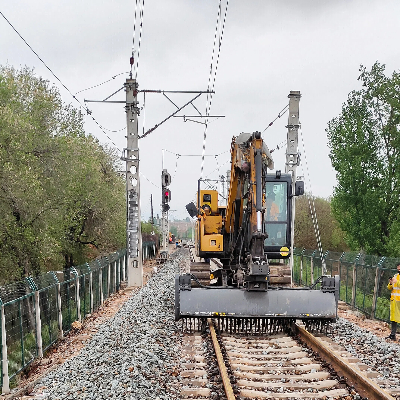
In terms of controlling cost expenditures, sweepers bring users long-term and significant economic benefits. Manual cleaning not only requires paying high labor salaries but also bears additional costs such as social security, training, and management. With the annual increase in labor costs, the pressure of long-term investment is enormous. After a one-time investment in sweepers, only a small amount of maintenance costs need to be borne to achieve long-term stable operation. Taking railway maintenance projects as an example, if manual cleaning is adopted, a 100-kilometer line may require hundreds of workers to operate continuously for several months, resulting in extremely high comprehensive labor costs. However, after using sweepers, only a few operators need to cooperate with the host machine to complete the same workload, which not only reduces the number of workers but also lowers the management difficulty. In addition, the core components of sweepers are made of high-quality materials, featuring a long service life and low maintenance frequency, which further reduces subsequent use costs and provides strong support for users to achieve "cost reduction and efficiency improvement".
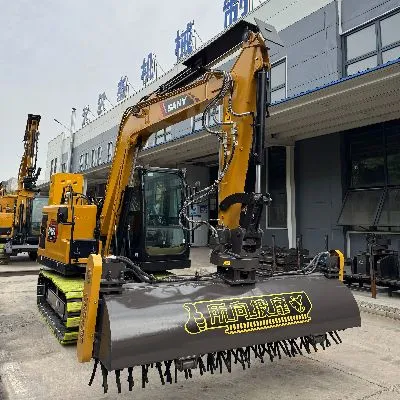
The advantages of cleaning quality and standardization of sweepers are incomparable with manual cleaning. In fields such as railways and highways that have high requirements for cleaning precision, uncleaned residual debris may affect line stability and vehicle driving safety. Through precise mechanical structure design and hydraulic control systems, sweepers can operate in strict accordance with industry standards. For example, railway ballast sweepers, with their flexible cleaning roller brushes, can not only strongly remove residual ballast on sleeper surfaces but also avoid damage to sleepers and rails, perfectly meeting the requirements of railway standardization. At the same time, the operating parameters of sweepers can be accurately adjusted, and the effective working width, cleaning force, etc., can be kept consistent, ensuring that the cleaning effect of each section of the operation area meets the standards uniformly, and eliminating the uneven cleaning quality caused by fatigue and operational differences during manual cleaning. This standardized cleaning effect not only improves the safety and service life of infrastructure but also lays the foundation for the standardized development of the industry.
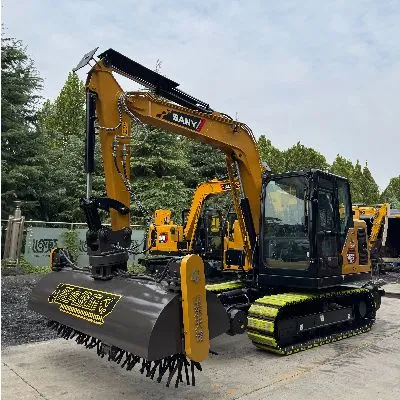
Safe operation and scenario adaptability further highlight the practical value of sweepers. In scenarios such as railway lines, highways, and large factories, manual cleaning faces safety risks such as passing vehicles and high-altitude operations. Especially manual cleaning on railway lines, where operators need to work around the tracks, making safety accidents prone to occur. Sweepers can be operated remotely or in cooperation with host machines, so operators do not need to directly contact dangerous areas, greatly reducing operational risks. At the same time, sweepers have strong scenario adaptability and can meet different operating environments and needs. Taking ballast sweepers as an example, they support multiple track gauges such as 1000mm, 1435mm, and 1520mm, and can be adapted to railway lines of different specifications; the effective working width can be customized according to actual needs, meeting the cleaning requirements in different scenarios. Whether it is complex railway tracks, wide factory roads, or narrow lanes, sweepers can flexibly adjust their operation modes to efficiently complete cleaning tasks, demonstrating strong applicability.
In addition, sweepers also play a positive role in environmental protection and sustainable development. During traditional manual cleaning, secondary pollution such as dust and scattered debris is likely to occur, affecting the surrounding environment and human health. Most modern sweepers are equipped with dust-proof and dust-collecting devices, which can timely collect debris and dust during the cleaning process, reduce dust diffusion, and protect the ecological environment. At the same time, the energy utilization efficiency of sweepers is constantly improving, and some models adopt energy-saving hydraulic systems to reduce energy consumption, in line with the concept of green development. In the long run, the wide application of sweepers can not only reduce resource waste but also promote the transformation and upgrading of the cleaning industry towards a low-carbon and environmentally friendly direction, contributing to sustainable development.
From railway maintenance to urban cleaning, from industrial production to infrastructure construction, sweepers have become an indispensable important equipment in various industries due to their core advantages of high efficiency, low cost, high quality, safety, and reliability. They not only liberate human resources and solve many pain points of the traditional cleaning mode but also promote the transformation and upgrading of the cleaning industry with standardized and intelligent operation methods. For enterprises and relevant units, choosing a suitable sweeper is not only a practical measure to improve work efficiency but also a strategic choice to reduce costs, ensure safety, and achieve high-quality development. With the continuous advancement of technology, sweepers will play a greater role in more scenarios, creating a cleaner, safer, and more efficient working and living environment for people.