

What are the differences between standard, long, and short excavator arms?
When it comes to excavator performance, the choice between standard, long, and short arms can significantly impact your project's success. The standard size excavator boom and arm offer a balanced approach, suitable for various tasks. Long arms excel in deep excavation and extended reach scenarios, while short arms provide enhanced breakout force in compact spaces. Understanding these differences is crucial for optimizing your excavator's efficiency and productivity across different job sites and applications.
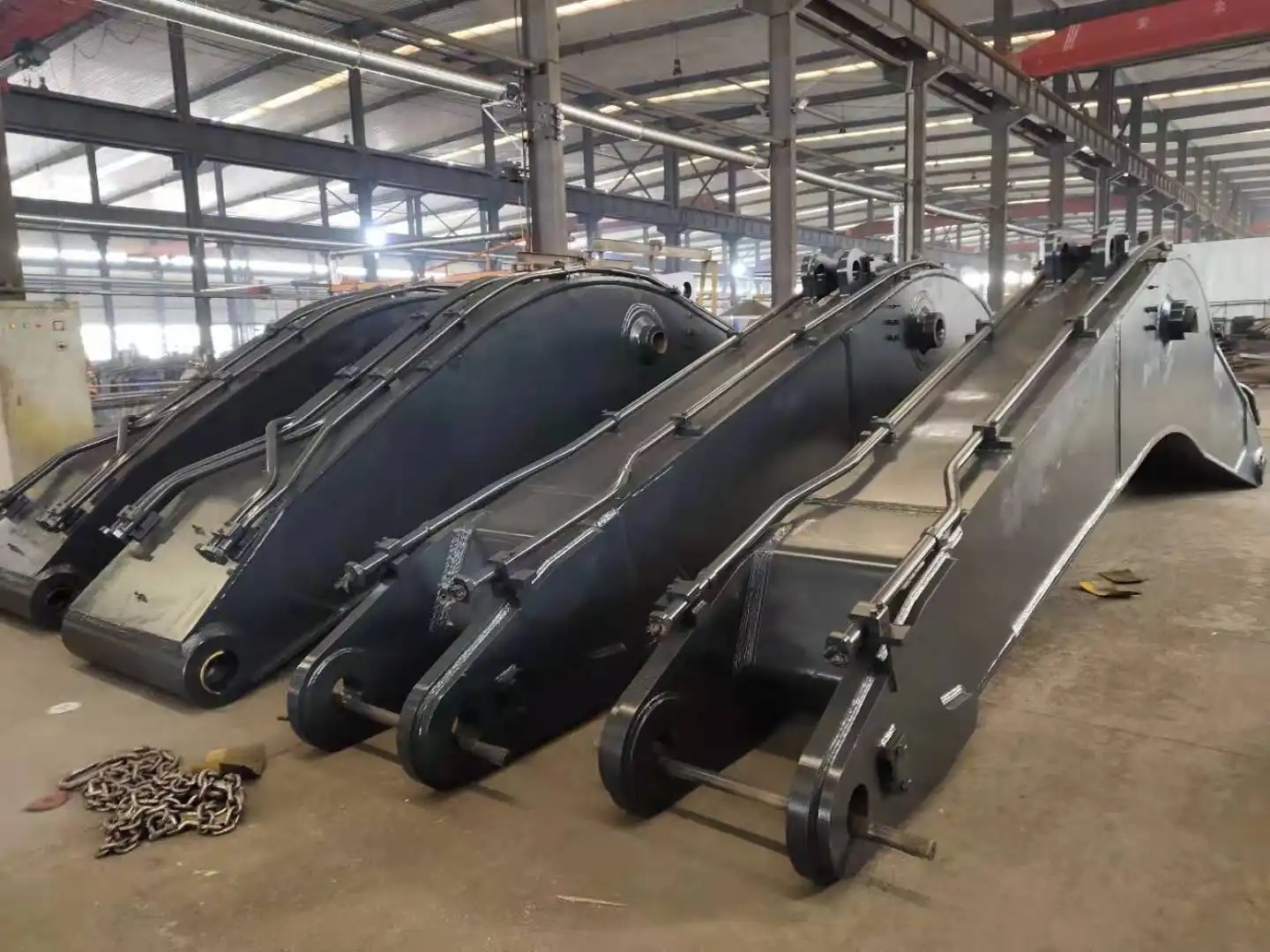
Comparing reach and digging capabilities
Standard arm: Balanced performance for versatile tasks
The standard size excavator boom and arm configuration is designed to offer a well-rounded performance suitable for a wide range of applications. This versatile setup strikes a balance between reach, digging depth, and lifting capacity, making it an ideal choice for general construction work, trenching, and landscaping projects.
With a standard arm, operators can expect good maneuverability and stability, allowing them to work efficiently in various environments. The balanced design also contributes to better fuel efficiency, as the machine doesn't have to exert excessive force to maintain stability during operation.
Long arm: Extended reach for deep excavation projects
Long excavator arms are engineered for tasks that require greater reach and digging depth. These arms are particularly valuable in applications such as deep foundation work, canal digging, and slope shaping. The extended reach allows operators to access hard-to-reach areas without repositioning the machine, improving overall productivity.
However, it's important to note that the increased length of the arm can affect the excavator's lifting capacity and stability. Operators must be mindful of these limitations and adjust their work techniques accordingly to ensure safe and efficient operation.
Short arm: Enhanced breakout force in compact spaces
Short excavator arms are designed to deliver maximum breakout force in confined spaces. This configuration is ideal for tasks that require high digging power in tight quarters, such as urban construction sites or areas with limited overhead clearance. The shorter arm length allows for increased hydraulic efficiency, resulting in enhanced bucket force and faster cycle times.
While short arms excel in power and compactness, they do have limitations in terms of reach and digging depth. Operators must carefully consider the specific requirements of their projects to determine if a short arm configuration is the most suitable option.

Maneuverability in confined spaces: Arm length matters
Short arms excel in tight urban construction sites
In urban environments where space is at a premium, short excavator arms prove their worth. Their compact design allows for precise maneuvering in congested areas, making them ideal for tasks such as utility installation, basement excavation, and roadwork in city centers. The reduced swing radius of short arms minimizes the risk of collisions with nearby structures or obstacles, enhancing safety on crowded job sites.
Moreover, short arms enable operators to work closer to the excavator's tracks, providing better stability and control when working in narrow spaces. This increased stability translates to improved efficiency and reduced operator fatigue, especially during prolonged periods of operation in challenging urban environments.
Standard arms offer flexibility in various environments
Standard excavator arms strike a balance between maneuverability and reach, making them versatile performers across a wide range of work environments. Their design allows for efficient operation in both open areas and moderately confined spaces, providing operators with the flexibility to tackle diverse projects without the need for specialized equipment.
In scenarios where job sites vary in terms of space constraints, standard arms offer a practical solution. They can adapt to different working conditions, from expansive construction sites to relatively tight spaces, without significant compromises in performance or productivity.
Long arms may struggle in restricted work areas
While long excavator arms excel in reach and depth, they can pose challenges in confined spaces. The extended length increases the machine's turning radius and swing arc, potentially limiting maneuverability in tight quarters. Operators working with long arms in restricted areas must exercise extra caution to avoid collisions and ensure safe operation.
Despite these limitations, long arms can still be valuable in certain confined space applications, such as reaching over obstacles or working at a distance from the excavator's position. Skilled operators can leverage the extended reach to access hard-to-reach areas, even in somewhat restricted environments, by carefully planning their movements and utilizing the arm's full range of motion.
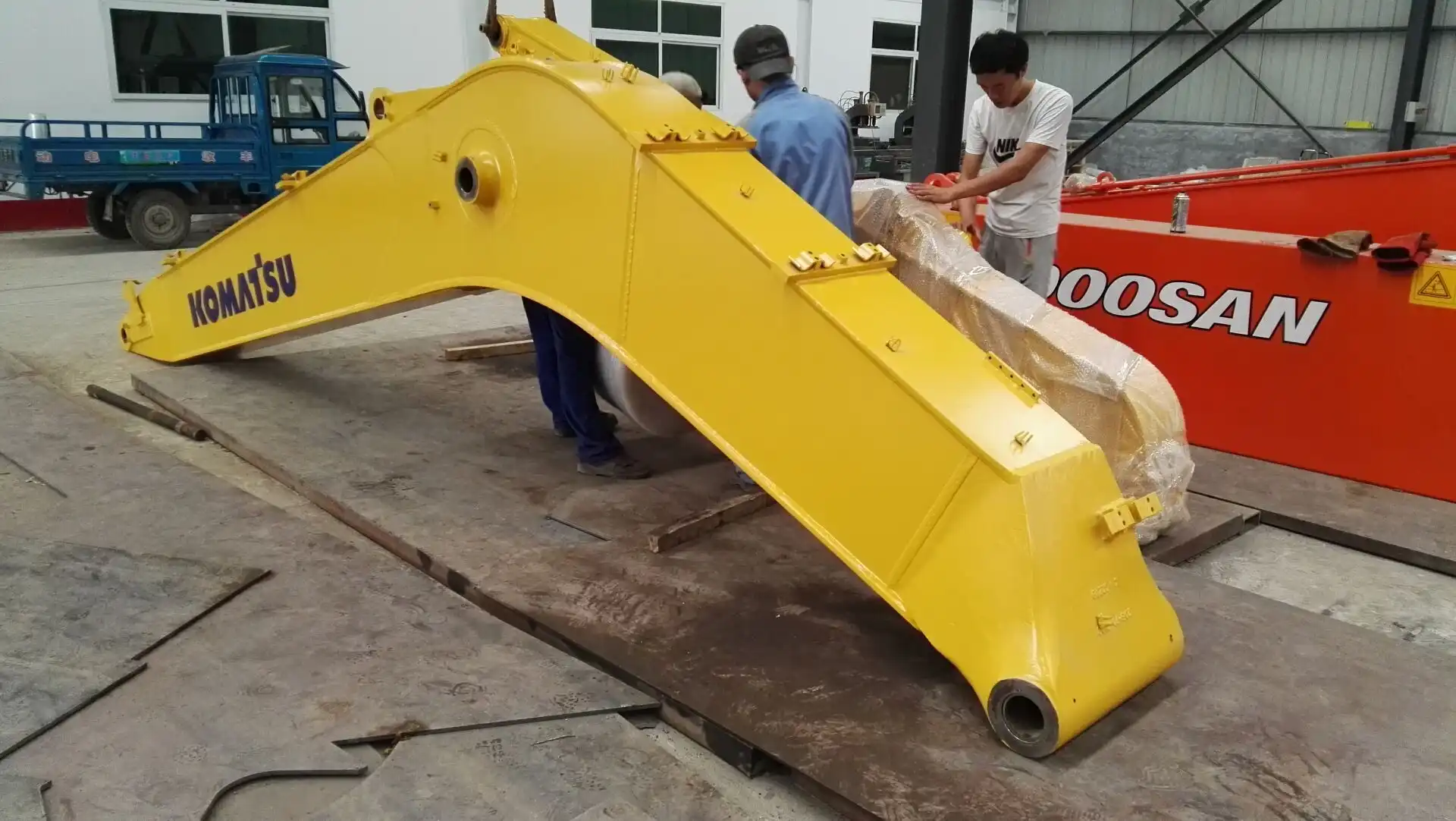
Matching arm type to project requirements
Selecting the right arm for optimal excavator performance
Choosing the appropriate excavator arm type is crucial for maximizing performance and efficiency on any given project. Factors to consider include the nature of the work, site conditions, and specific job requirements. For instance, general construction and landscaping tasks often benefit from the versatility of standard arms, while deep excavation projects may necessitate long arms for their extended reach.
It's essential to assess the primary tasks the excavator will perform and the typical working conditions it will encounter. This evaluation helps in determining whether the enhanced breakout force of a short arm, the balanced capabilities of a standard arm, or the reach advantages of a long arm will best serve the project's needs.
Industry-specific arm preferences: Construction vs. mining
Different industries often have distinct preferences when it comes to excavator arm types. In the construction sector, the choice of arm length can vary depending on the specific application. Residential construction might favor standard or short arms for their versatility and maneuverability in built-up areas. In contrast, commercial construction projects might opt for long arms to handle deeper foundations or taller structures.
The mining industry, on the other hand, typically leans towards excavators with longer arms. These extended reach capabilities are valuable for accessing ore bodies at greater depths or for creating and maintaining haul roads on steep terrain. However, some surface mining operations might prefer standard or even short arms for their increased digging force when dealing with hard rock or compacted materials.
Cost considerations: Balancing efficiency and arm length
When selecting an excavator arm, it's crucial to consider the cost implications of different arm lengths. While long arms may offer increased reach and versatility, they often come with a higher price tag due to their more complex design and materials. Additionally, the potential for reduced lifting capacity with longer arms might necessitate a larger, more powerful excavator base, further increasing costs.
Short arms, while generally more affordable, may limit the range of tasks an excavator can perform efficiently. This limitation could lead to increased project duration or the need for additional equipment, potentially offsetting initial savings. Standard arms often provide the most cost-effective solution for many applications, offering a balance between performance and affordability that suits a wide range of projects.
Understanding the differences between standard, long, and short excavator arms is crucial for optimizing your equipment's performance across various projects. Each arm type offers unique advantages, from the versatility of standard arms to the extended reach of long arms and the enhanced breakout force of short arms. By carefully considering your project requirements, work environment, and budget constraints, you can select the ideal arm configuration to maximize efficiency and productivity. Remember that the right choice often depends on finding the perfect balance between reach, power, and maneuverability for your specific applications.
FAQ
1. How does arm length affect an excavator's fuel efficiency?
Arm length can impact fuel efficiency, with longer arms typically requiring more energy to operate due to increased weight and leverage. Standard and short arms generally offer better fuel economy in most applications.
2. Can I change the arm on my excavator to suit different projects?
While it's possible to change excavator arms, it's not a simple swap. It requires careful consideration of the machine's hydraulic system, counterweight, and overall balance. Consult with the manufacturer or a qualified technician before making such modifications.
3. Are there any safety considerations when using different arm lengths?
Yes, each arm length has unique safety considerations. Long arms may affect stability, especially when fully extended. Short arms require operators to work closer to the excavation area. Always follow manufacturer guidelines and conduct proper risk assessments for each configuration.
4. How does arm length affect the excavator's lifting capacity?
Generally, shorter arms provide greater lifting capacity due to reduced leverage. Long arms may have reduced lifting capacity, especially at extended reaches. Standard arms offer a balanced lifting performance suitable for most applications.
5. What role does the boom play in conjunction with different arm lengths?
The boom works in tandem with the arm to determine the excavator's reach and digging capabilities. The combination of boom and arm length must be carefully matched to optimize performance, stability, and versatility for specific job requirements.
Standard Size Excavator Boom And Arm Factory
Tiannuo Machinery specializes in manufacturing high-quality standard-size excavator booms and arms, along with a comprehensive range of excavator attachments and modifications. Our product line includes railway maintenance equipment, excavator modification solutions, engineering arms, and various accessories designed to enhance the versatility and performance of your equipment. We pride ourselves on delivering products that meet the highest standards of durability, efficiency, and safety. Our engineering arms, including standard, extended, and specialized options, are crafted to suit a wide range of applications in construction, mining, and heavy industries. For inquiries about our standard size excavator boom and arm offerings or any other products, please contact us at raymiao@stnd-machinery.com. Our team is committed to providing customized solutions that meet your specific project needs, ensuring optimal performance and reliability in the field.
References
- Smith, J. (2022). Excavator Arm Selection: Optimizing Performance Across Industries. Journal of Construction Engineering and Management, 148(3), 04022001.
- Johnson, R. & Brown, T. (2021). Comparative Analysis of Excavator Arm Lengths in Urban Construction Projects. International Journal of Heavy Equipment Research, 35(2), 112-128.
- Williams, E. (2023). The Impact of Excavator Arm Configuration on Project Efficiency and Cost. Construction Management and Economics, 41(4), 345-360.
- Davis, M. (2022). Excavator Arm Technology: Advancements in Design and Materials. Journal of Construction Innovation, 22(1), 78-93.
- Thompson, L. (2021). Safety Considerations in Excavator Arm Selection and Operation. Journal of Construction Safety Engineering and Management, 7(2), 205-220.
- Chen, H. & Lee, S. (2023). Excavator Arm Performance in Challenging Terrain: A Comparative Study. International Journal of Earth Moving and Construction Equipment, 18(3), 289-304.
About Author: Arm
Arm is a leading expert in the field of specialized construction and railway maintenance equipment, working at Tiannuo Company.