
When to Use a Grid Bucket?
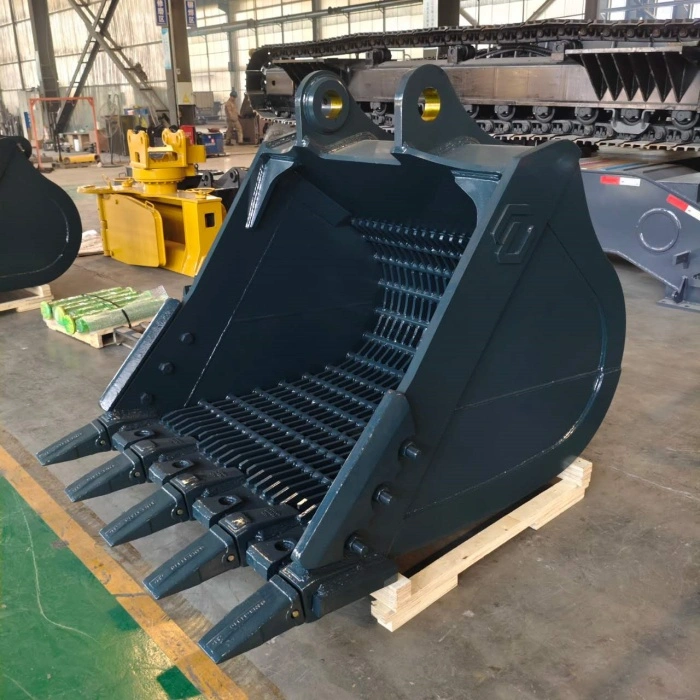
A grid bucket is a special working device used on excavators. Its core function can be summarized in eight words: digging and screening, completed in one operation.
You can think of it as a "sieve that digs soil." Its biggest feature is that the sealed bottom plate of a regular excavator bucket is replaced with a grid-like structure composed of round bars or slats. During operation, fine particles such as soil and water are filtered out through the gaps in the grid, while larger materials such as stones, garbage, and tree roots are retained inside the bucket.
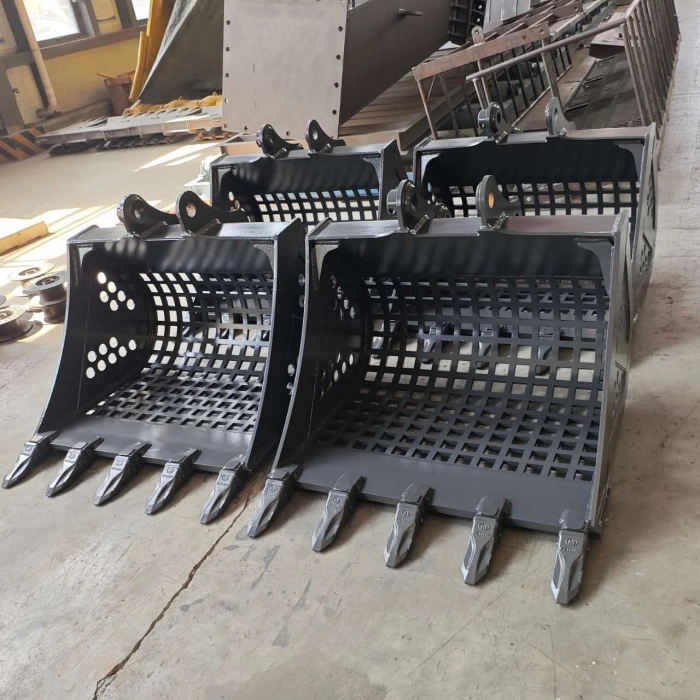
This design makes it highly practical in many specific working conditions:
Water Conservancy Dredging: When clearing silt and weeds from rivers, canals, and ponds, water flows away through the grid, leaving only silt and debris, greatly facilitating the separation and subsequent treatment of waste.
Municipal and Agricultural/Forestry Use: It can be used to screen municipal waste, process dead branches and leaves, and remove fragments from construction waste, achieving effective material classification.
Mining and Gravel Plants: Commonly used for preliminary screening of ores or filtering out non-standard fine sand and gravel, serving a grading function.
In railway maintenance, this is commonly referred to as ballast cleaning or ballast repair. The core purpose is to restore the elasticity of the track bed and ensure smooth drainage through cleaning or ballast repair, thereby guaranteeing the safe and stable operation of trains.
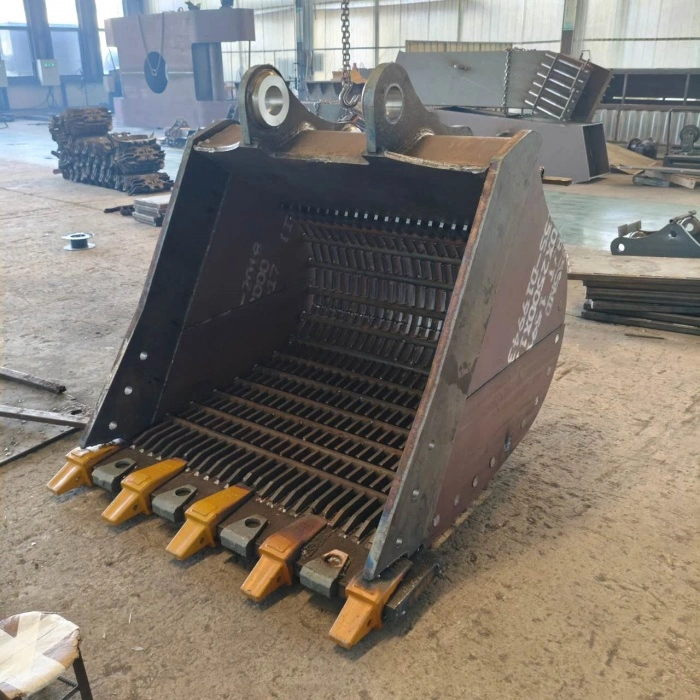
In general, the grid bucket is designed for working conditions requiring on-site separation of materials by size. It not only improves operational efficiency in specific environments but also eliminates the hassle of subsequent screening using time, equipment, and manpower.