

Why Clamshell Buckets Outperform Standard Buckets for Loose Material Handling?
A clamshell bucket is a grappling attachment mounted on an excavator, named for its resemblance to an opening and closing shell. It is specifically designed to efficiently handle loose materials that are difficult for standard excavator buckets to manage, effectively serving as the excavator's "mechanical hand" or "large claw."
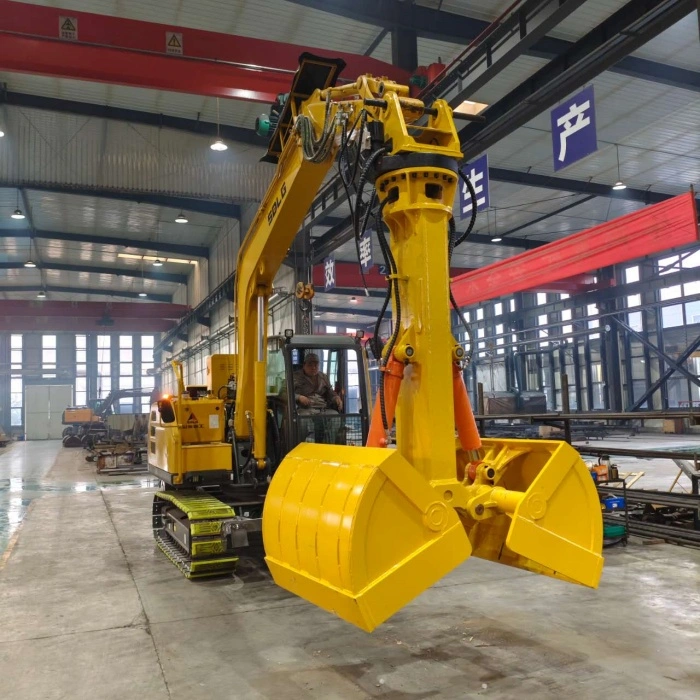
The core logic of a clamshell bucket lies in "grasping" rather than "excavating"—a distinction that becomes particularly evident when compared to a standard digging bucket.
1.Precise Grasping and Low-Loss Handling: Driven by dual hydraulic cylinders, the clamshell bucket opens and closes much like a shell, enabling it to firmly "embrace" materials. When loading loose bulk materials prone to spillage—such as sand, coal, or grain—the bucket seals tightly upon closing, resulting in virtually no material leakage and significantly reducing both waste and cleanup costs.
2.Flexible Rotation and Operation in Confined Spaces: Many clamshell buckets feature hydraulic rotation capabilities, allowing for 360-degree operation without any blind spots. In narrow trenches, deep shafts, or ship holds, the grasping angle can be adjusted without the need to reposition the vehicle itself, offering exceptional operational flexibility.
3.Gentle Handling and Material Protection: The hydraulic system allows for precise control over grasping force. When handling materials such as grain, fertilizer, waste paper for recycling, or wood chips, the bucket maintains a secure grip without applying excessive force that could cause damage to the materials.
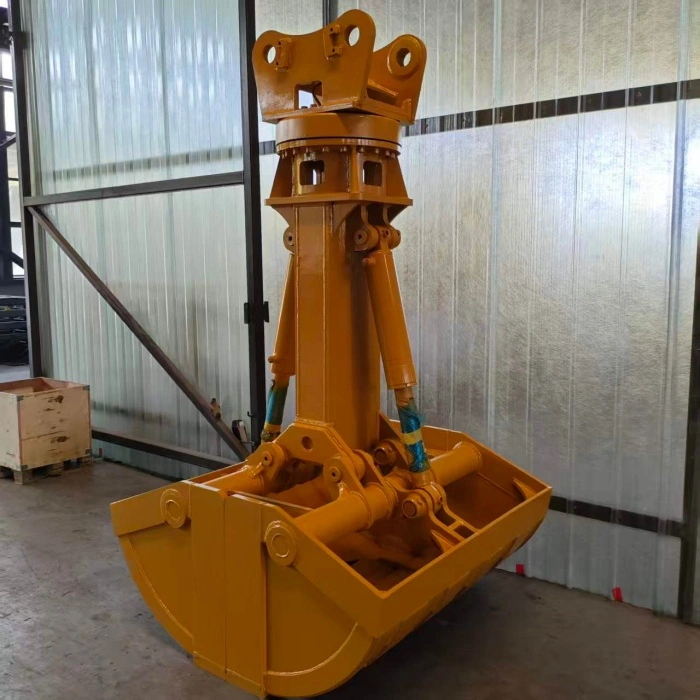
4.Underwater Dredging and Specialized Operations: Clamshell buckets treated with special waterproofing and anti-corrosion coatings are suitable for underwater dredging operations in rivers and ports. They effectively withstand the impact of water currents, enabling the stable and secure retrieval of silt and gravel.
Application Scenarios
Clamshell buckets have an extremely wide range of applications, covering almost every scenario involving the handling of loose materials:
Construction Engineering: Clearing loose mixtures of gravel and spoil following foundation excavation, or performing excavation and cleanup operations within confined pile shafts.
Ports and Terminals: Efficiently loading and unloading bulk cargo—such as coal, ore, and sand—from ships and trains; their efficiency far exceeds that of standard excavator buckets.
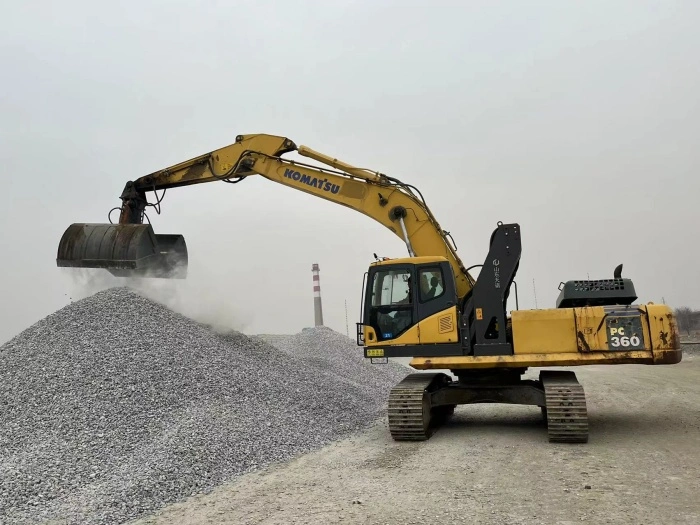
Agriculture, Forestry, and Grain Handling: Grabbing and handling grain (e.g., corn, wheat), wood chips, waste paper, and similar materials, thereby enabling a single machine to serve multiple functions.
Municipal and Environmental Services: Used for river dredging, sludge removal at wastewater treatment plants, and waste transfer operations at landfills.
Deep Excavation and Specialized Operations: When paired with a telescopic boom, they can reach deep into foundation pits—extending to depths of over a dozen meters or more—or into underground diaphragm walls to perform grabbing operations, a task that is virtually impossible for standard excavator buckets.