

A Global Overview of Railway Track Gauges: Measuring Global Connectivity in Millimeters
Railways are the world's transportation arteries, and track gauge, as the core benchmark for railway construction, quietly defines the global intermodal transport landscape. After a century of development, the world's railways have formed three major systems: standard gauge, broad gauge, and narrow gauge, with over thirty different gauges coexisting. This reflects both the historical imprint of geographical adaptation and industrial development in various countries, and is a true microcosm of geopolitical transportation and economic development.
The 1435 mm standard gauge is the "universal language" of global railways. Originating from early British railway designs, it has been adopted as the universal standard by the International Union of Railways (UIC), and currently, over 60% of the world's main railway lines use this specification. With its strong compatibility, suitability for high-speed rail and heavy-haul freight, and convenient intermodal transport, the standard gauge has become the world's mainstream.
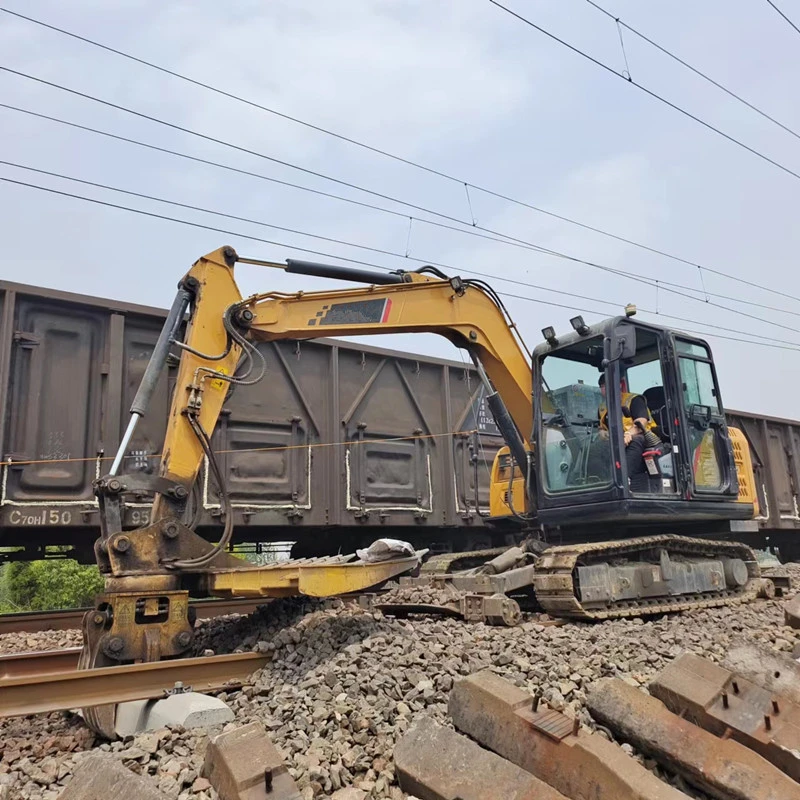
My country's entire main railway and high-speed rail network uniformly uses the standard gauge, which is also the common specification for "Belt and Road" overseas infrastructure projects. Meanwhile, most newly built railways in Europe, North America, Australia, the Middle East, and Africa have fully adopted the standard gauge, constructing an interconnected international railway transport system.
Broad gauge, prioritizing stability and heavy-haul transport, is a characteristic choice for railway layouts in major countries. The mainstream gauges are the 1520mm Russian broad gauge and the 1676mm Indian broad gauge. The 1520mm broad gauge is prevalent in Russia, the five Central Asian countries, and Mongolia, adaptable to high-altitude, cold, and vast terrains, capable of handling large-scale heavy-haul transport, and forming a unique regional railway system. This necessitates the replacement of bogies at border crossings between China and Russia, and between China and Mongolia, creating a distinctive scenario for cross-border intermodal transport.
The 1676mm broad gauge dominates South Asia, covering countries such as India, Pakistan, and Bangladesh. Its larger gauge perfectly suits the high-density passenger and bulk freight demands of these regions. Currently, many South Asian countries are integrating their lines and upgrading to a unified broad gauge standard.
Narrow gauge, on the other hand, prioritizes flexibility and low cost, adapting to specific terrains. Common gauges include the 1067mm colonial narrow gauge and the 1000mm meter gauge. 1067mm narrow gauge is widely used in Japan's conventional railway lines, as well as in parts of Southeast Asia and Africa. It is well-suited to mountainous and island terrains, offering low construction difficulty and high adaptability.
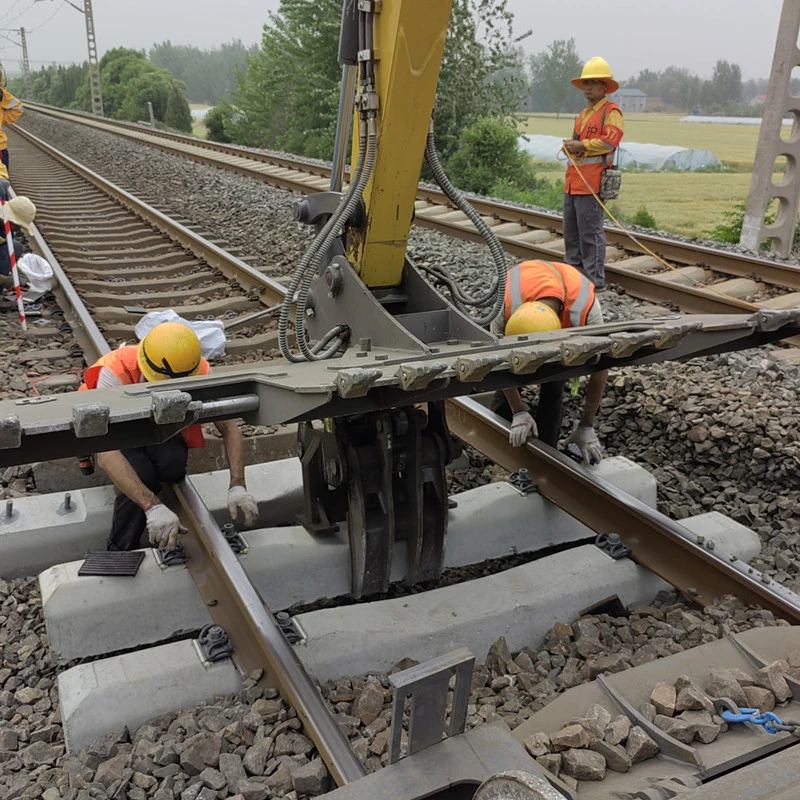
1000mm meter gauge is concentrated in Southeast Asian countries such as Vietnam, Myanmar, and Thailand, and its use is still prevalent due to historical construction practices. The meter-gauge section of the Kunming-Hekou Railway in Yunnan, my country, carries a century of cross-border transportation history and witnesses trade and economic exchanges along the southwestern border. In addition, 600mm and 762mm micro-gauges are mostly used in niche applications such as mines and tourist trains.
The global diversity of railway gauges is a result of individual construction and geopolitical planning by countries during the industrial era. Due to the enormous costs of upgrading existing lines, countries have retained their dominant gauges, resulting in a differentiated landscape.
Today, with deepening global cooperation, gauge barriers are gradually dissolving. Many countries are adopting standard gauge for newly built cross-border railways, and new technologies such as variable gauge bogies are widely used, significantly improving cross-border transportation efficiency. The difference in track gauge, though only millimeters, carries the weight of a century of industrial transformation and will eventually, with the development of the times, open up the world's transportation network, connecting mountains and seas and linking all things.