

A prime example of technological advancements in railway maintenance: the tamping machine
The tamping machine paired with a railway excavator is essentially a highly efficient and precise railway track bed maintenance device. By mounting the tamping device as an attachment on the excavator, it achieves a transformation from traditional manual labor to mechanized and intelligent operations.
Core Function: Enhancing Track Stability After repeated train runs, the ballast in railway tracks can loosen and sink, causing unevenness. The core function of this equipment is to use high-frequency vibration to re-compact and compact the loose ballast, restoring the track bed's elasticity and ensuring the sleepers are firmly supported. This not only significantly improves the smoothness and stability of the track but is also crucial for ensuring the safe and stable operation of trains.
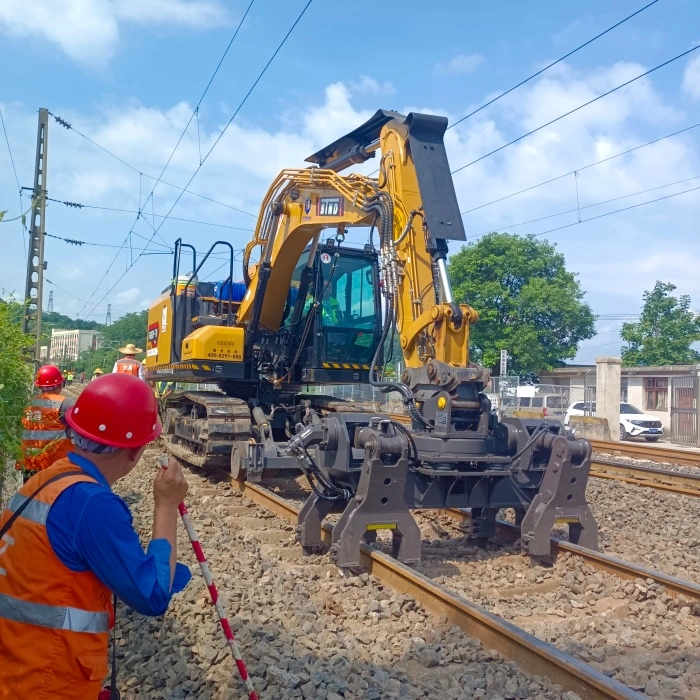
Effects and Advantages: A Leap in Efficiency and Quality
Leap in Efficiency: Compared to manual labor, work efficiency can be increased by 4 to 10 times. For example, tamping a 30-meter section of track bed that previously required 8 workers and 120 minutes can now be completed by just one operator in 20 minutes.
Superior Quality: Mechanized tamping produces more uniform and dense tamping, significantly improving roadbed stability. Data shows that roadbed stability can be improved by 30%.
Reduced Costs: Significantly saves manpower and reduces labor costs. For example, case studies show savings of over 50,000 yuan per kilometer in labor costs, and can extend the track bed maintenance cycle from one month to three months.
Precise Operation: Some equipment has automatic positioning functions, automatically adjusting the tamping position based on track data, with errors controlled within 5 centimeters.
Safe and Reliable: Frees workers from heavy and dangerous manual labor, effectively avoiding the safety risks of manual operations.
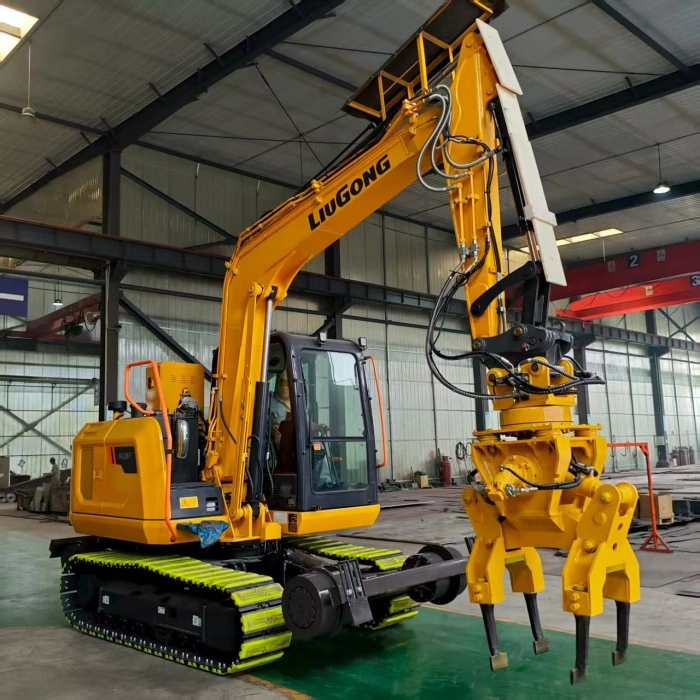
Applicable Working Conditions: Filling a Market Gap
This equipment precisely fills the market gap between large professional tamping machines and purely manual labor, and is mainly used in the following scenarios:
Major and medium track repairs: Retamping the ballast after cleaning and screening operations.
New track construction: Initial tamping of newly laid ballast.
Switch areas: One of its most prominent application scenarios, allowing flexible access to switch areas where large equipment is difficult to operate.
Routine maintenance and emergency response: Suitable for track maintenance, closure operations, and flood control and emergency response.
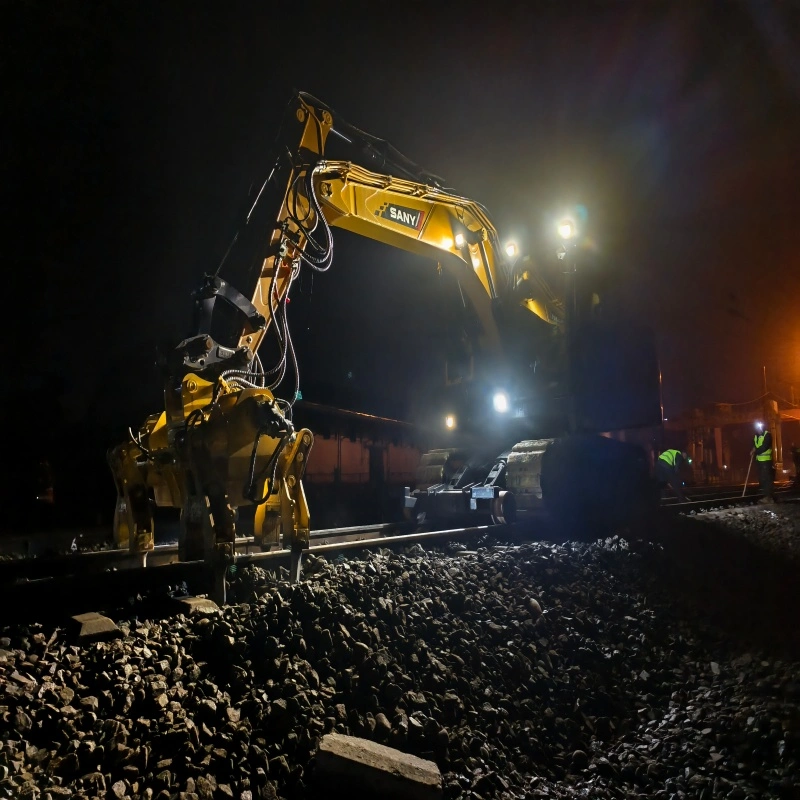
Working Environment: All-Weather, Multi-Scene Adaptability
This equipment is specifically designed for harsh railway working conditions and possesses strong environmental adaptability.
All-Weather Operation: Equipped with an all-around lighting system, it can meet the needs of all-weather, multi-time operation, including nighttime.
Adaptability to Complex Terrain: Its compact structure and small turning radius allow for flexible access to narrow spaces such as turnout areas and track gaps.
Coping with Harsh Weather: Some equipment can operate in environments ranging from -5℃ to 40℃.
Website: www.stnd-machinery.com
Email: arm@stnd-machinery.com