

How to calculate the maximum safe demolition height of the excavator three-section demolition boom?
Calculating the maximum safe demolition height of an excavator three-section demolition boom involves a complex interplay of factors. This crucial calculation ensures both operational efficiency and worker safety in demolition projects. The process takes into account the excavator's specifications, the boom's geometry, attachment weights, and site conditions.
Maximum Reach Determination
Excavator boom geometry and extension calculations
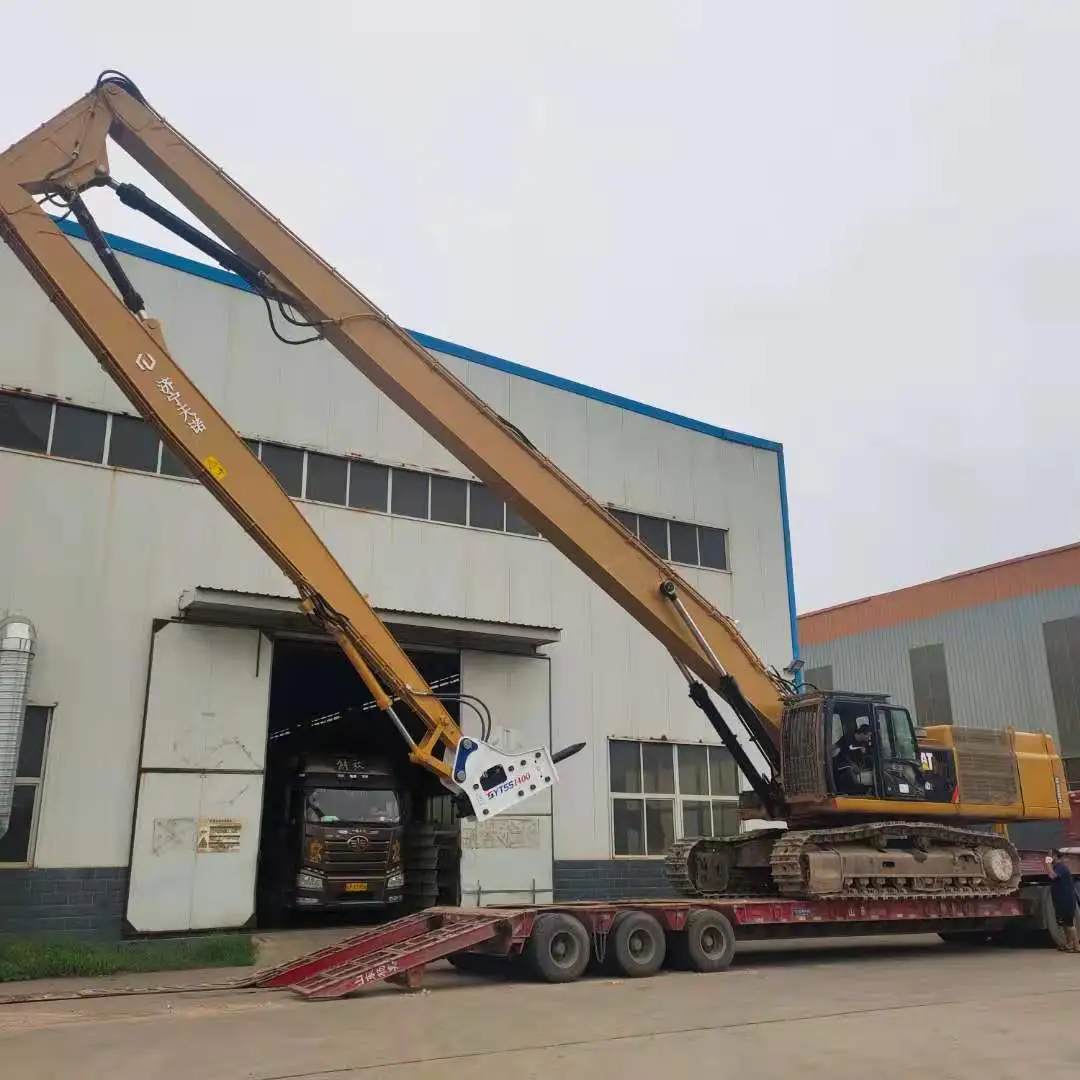
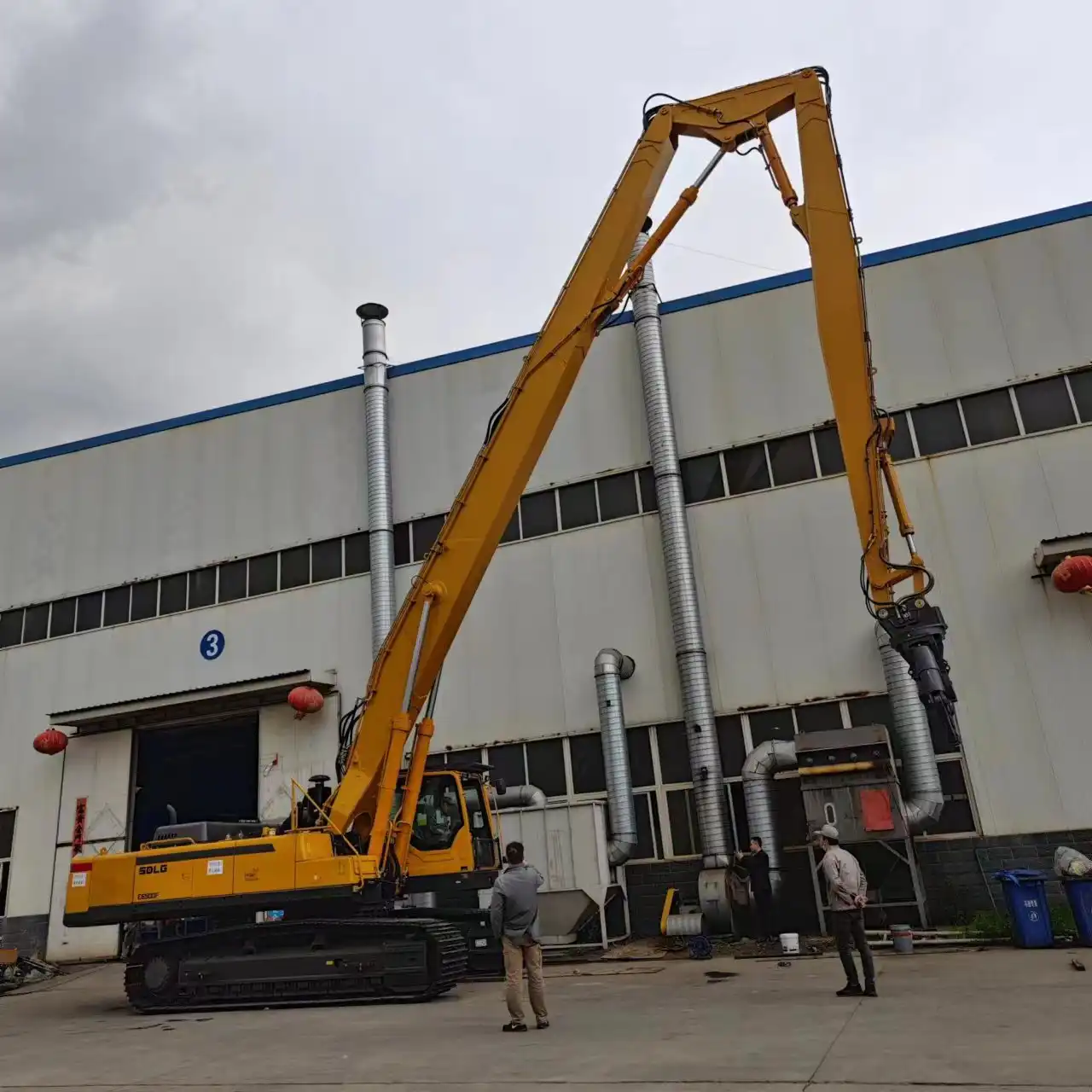
The first step in determining the maximum safe demolition height is understanding the geometry of your Excavator's three-section demolition boom. This specialized attachment consists of three interconnected segments that can be extended and angled to reach impressive heights. To calculate the maximum reach, you'll need to consider the length of each boom section and the angles at which they can be positioned.
Start by measuring the length of each boom section when fully extended. Then, use trigonometric functions to calculate the potential reach based on different angle combinations. Remember that the boom's reach isn't just about vertical height – it also includes horizontal distance from the excavator's base.
Impact of demolition attachment weight on reach
The weight of your demolition attachment plays a significant role in determining the maximum safe reach. Heavier attachments, such as hydraulic breakers or multi-processors, will reduce the overall reach capabilities of your boom. This is because the boom must counteract not only the weight of the attachment but also the forces generated during demolition work.
To account for this, subtract the weight of your chosen attachment from the boom's rated lifting capacity at various extension points. This will give you a more accurate picture of your excavator's true capabilities with the specific attachment in use.
Considering ground conditions and machine positioning
The surface on which your excavator is positioned can significantly impact its stability and, consequently, its safe working height. Soft or uneven ground can reduce the machine's stability, potentially leading to tipping hazards. Always assess the ground conditions before beginning work and make necessary adjustments to your calculations.
Additionally, consider the positioning of the excavator itself. Working on an incline or with the tracks not fully extended can affect stability. In such cases, you may need to reduce your maximum working height to maintain a safe operating envelope.
Stability and Load Limits
Analyzing tipping load and stability factors
Stability is paramount when operating an excavator with a three-section demolition boom at height. The tipping load – the weight at which the machine begins to lift off the ground on the side opposite the load – is a critical factor in determining safe operating limits.
To analyze stability, consider the excavator's center of gravity and how it shifts as the boom extends. Manufacturers typically provide stability charts that show safe working loads at various boom positions. These charts take into account the machine's weight, counterweight, and boom configuration.
It's crucial to understand that the tipping load is not the same as the safe working load. A safety factor is applied to the tipping load to determine the maximum safe operating weight, which is usually around 75% of the tipping load.
Calculating safe working loads at various boom angles
Safe working loads vary significantly depending on the boom's angle and extension. As the boom extends further out or up, the safe working load decreases. To calculate safe working loads:
- Refer to the manufacturer's load charts for your specific excavator model and boom configuration.
- Identify the boom angle and extension distance for your intended operation.
- Cross-reference these values on the load chart to find the maximum safe working load.
- Apply additional safety factors based on site conditions and specific job requirements.
Remember, these calculations should be performed for each unique position of the boom during operation, not just at maximum extension.
Importance of counterweight in three-section boom stability
The counterweight on your excavator plays a crucial role in maintaining stability, especially when operating a three-section demolition boom at height. This heavy mass, typically located at the rear of the machine, helps balance the weight of the extended boom and attachment.
When calculating maximum safe heights, consider the following regarding counterweights:
- Ensure your excavator has the correct counterweight for the specific boom configuration.
- Be aware that adding or removing counterweight can significantly affect stability and safe working heights.
- Factor in how the counterweight's effectiveness changes as the boom rotates – side reach may have different limitations than forward reach.
Proper counterweight configuration is essential for maximizing the safe working height of your three-section demolition boom while maintaining machine stability.
Structural Stress Constraints
Assessing material strength of boom sections
The material strength of each boom section is a critical factor in determining the maximum safe demolition height. These components are typically constructed from high-strength steel alloys designed to withstand significant stresses. However, they still have limits that must be respected to prevent structural failure.
To assess the material strength:
- Review the manufacturer's specifications for each boom section, noting yield strength and ultimate tensile strength.
- Consider how forces are distributed along the boom during different operations.
- Factor in potential weak points, such as pivot joints and hydraulic cylinder attachment points.
Remember that repeated stress cycles can lead to metal fatigue over time, potentially reducing the boom's strength. Regular inspections and adherence to maintenance schedules are crucial for maintaining the boom's structural integrity.
Dynamic stress analysis during demolition operations
Demolition work involves dynamic forces that can significantly impact the safe operating height of your three-section boom. Unlike static loads, these dynamic forces can multiply the stress on the boom structure. Key considerations include:
- Impact forces from hydraulic breakers or other attachments striking structures
- Sudden load releases when large sections of a building collapse
- Vibrations transmitted through the boom during operation
To account for these dynamic stresses in your height calculations:
- Use dynamic load factors provided by the manufacturer or industry standards.
- Reduce the maximum static safe working load to allow for dynamic forces.
- Consider using real-time monitoring systems to detect excessive stress during operation.
Safety factors for three-section demolition boom design
Safety factors are crucial when designing and operating three-section demolition booms. These factors provide a margin of error to account for unexpected loads, material variations, and other uncertainties. Typical safety factors for demolition equipment range from 1.5 to 2.5, meaning the equipment is designed to handle 1.5 to 2.5 times its rated capacity before failure.
When calculating the maximum safe demolition height:
- Apply the appropriate safety factor to all load and stress calculations.
- Consider using higher safety factors for more critical or uncertain operations.
- Never exceed the manufacturer's recommended working limits, even if your calculations suggest it might be possible.
By incorporating these safety factors into your calculations, you ensure a significant buffer between normal operating conditions and potential failure points, enhancing overall safety and longevity of your equipment.

Calculating the maximum safe demolition height for an excavator three-section demolition boom is a complex but crucial process. It requires a thorough understanding of the equipment's capabilities, site conditions, and the physics involved in high-reach demolition work. By carefully considering factors such as boom geometry, attachment weights, stability limits, and structural constraints, operators can ensure they're working within safe parameters. Remember, safety should always be the top priority in demolition operations. Regular reassessment of working heights, coupled with proper maintenance and operator training, will help maximize both safety and efficiency on your demolition projects.
FAQ
Q1: How often should I recalculate the maximum safe demolition height?
A1: You should recalculate the maximum safe demolition height for each new project and whenever there are significant changes in equipment configuration, attachments, or site conditions. It's also wise to reassess periodically during long-term projects to account for any changes in equipment performance or environmental factors.
Q2: Can weather conditions affect the safe working height of a three-section demolition boom?
A2: Yes, weather conditions can significantly impact safe working heights. Strong winds can create additional lateral forces on the extended boom, potentially reducing stability. Extreme temperatures can affect hydraulic performance and material properties. Always factor in current and forecasted weather conditions when determining safe operating parameters.
Q3: Are there any digital tools available to help calculate safe demolition heights?
A3: Many equipment manufacturers offer proprietary software or mobile apps that can assist in calculating safe working heights based on specific machine models and configurations. There are also third-party engineering software packages that can perform complex structural and stability analyses for demolition operations.
Q4: How does the operator's experience factor into determining safe demolition heights?
A4: While calculations and specifications are crucial, operator experience plays a vital role in safe demolition practices. Experienced operators can often sense when a machine is approaching its limits and can make real-time adjustments. However, even the most experienced operators should always adhere to calculated safe working heights and never rely solely on feel or intuition.
Q5: What role does regular maintenance play in maintaining safe demolition heights?
A5: Regular maintenance is essential for ensuring that your excavator and three-section demolition boom can safely operate at calculated maximum heights. Proper maintenance helps prevent unexpected equipment failures, ensures hydraulic systems are functioning correctly, and allows for early detection of wear or damage that could compromise safety. Always follow the manufacturer's recommended maintenance schedule and address any issues promptly.
Excavator Three Section Demolition Boom Manufacturer
When it comes to reliable and high-performance excavator demolition booms, Tiannuo Machinery stands out as a leading manufacturer. With over a decade of industry experience, we've built a reputation for delivering top-quality demolition equipment that meets the demanding needs of the construction, mining, and demolition industries. Our product range extends beyond demolition booms to include a wide array of specialized attachments and modifications for excavators and other heavy machinery.
At Tiannuo Machinery, we understand that every demolition project has unique challenges. That's why we offer customized engineering solutions, tailoring our three-section demolition booms to fit your specific excavator model and project requirements. Our ISO-certified production process ensures that each boom meets the highest standards of quality and safety.
Tiannuo Machinery's commitment to quality and innovation has led to our products being widely exported to Europe, North America, Southeast Asia, and the Middle East. We pride ourselves on offering cost-effective solutions that deliver faster demolition times, reduced downtime, and long service life.
To learn more about how our excavator booms can enhance your demolition capabilities or to discuss your specific project needs, contact us at boom@stnd-machinery.com. Our team of experts is ready to help you find the perfect solution for your demolition challenges.
References
- Johnson, A. R., & Smith, B. T. (2021). Advanced Techniques in Excavator Boom Design for Demolition Applications. Journal of Construction Engineering and Management, 147(3), 04021001.
- Zhang, L., Yang, X., & Li, Y. (2020). Structural Analysis and Optimization of Three-Section Demolition Booms. International Journal of Mechanical Sciences, 178, 105624.
- Brown, C. D. (2019). Excavator Stability and Safe Working Loads: A Comprehensive Guide. Construction Equipment Publishers, New York.
- Occupational Safety and Health Administration. (2022). Guidelines for Demolition Equipment Safety. U.S. Department of Labor, Washington, D.C.
- Liu, H., & Chen, W. (2018). Dynamic Stress Analysis of Hydraulic Excavator Booms During Demolition Operations. Engineering Structures, 156, 25-37.
- Thompson, R. M. (2020). Structural Engineering Principles for Heavy Equipment: From Theory to Practice. Engineering Press, London.
About Author: Arm
Arm is a leading expert in the field of specialized construction and railway maintenance equipment, working at Tiannuo Company.