

How do double-head tamping machines achieve "precision maintenance"?
Addressing the Pain Points: Why are Traditional Maintenance Methods No Longer Effective?
Many track maintenance personnel have firsthand experience: for station tracks, dedicated lines, or turnout areas, large tamping machines are often infrequently used due to high costs and scheduling difficulties; while handheld single-head tamping picks, although lightweight, are not only labor-intensive when dealing with compacted ballast or large-area track lifting operations, but also fail to achieve the required tamping effect, resulting in rapid subsidence after operation and difficulty in maintaining track geometry.
Furthermore, compacted ballast is a major challenge in maintenance. Ordinary vibratory tamping cannot break up hardened ballast layers, preventing the ballast from being rearranged and compacted, often requiring "breaking the bottom" before tamping, a cumbersome process.
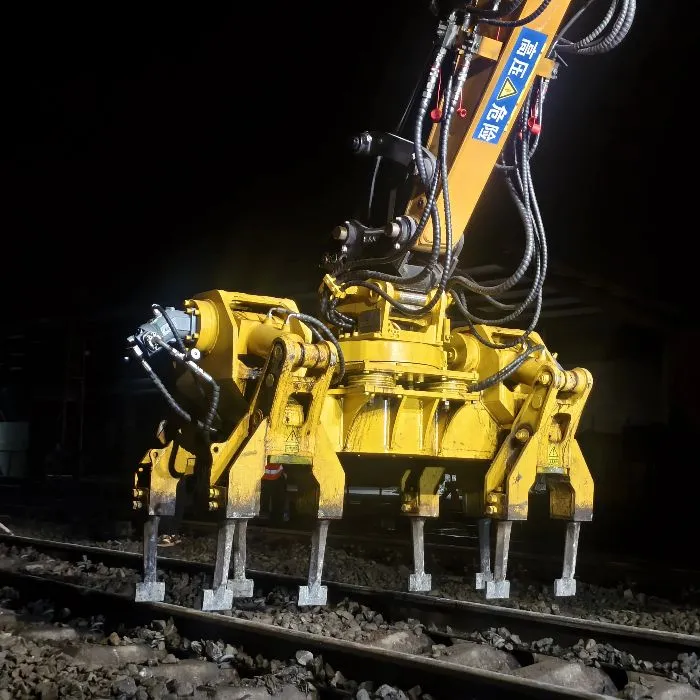
On-site Observation: The Hardcore Performance of Double-Head Tamping Machines in "Real-World" Operations
To more intuitively demonstrate the equipment's performance, we received feedback from the front lines of railway construction sites. In track maintenance work at [Customer Name/Region], facing high-intensity, high-density tasks, this internal combustion vibratory double-head tamping machine demonstrated excellent adaptability to various working conditions.
1. Balance between excitation force and work efficiency: Unlike the superficial work of small machines, double-head tamping machines are typically equipped with high-powered gasoline engines (such as the GX160 engine), capable of providing a maximum excitation force of up to 4.2KN×2 and a vibration frequency of up to 150HZ. This means it can easily handle compacted track beds, using high-frequency vibration to redistribute and rearrange the ballast, filling the gaps under the sleepers and thus stabilizing the track bed.
2. True "Dual-Head" Synchronous Operation: Traditional single-head operations require repeated repositioning, while the dual-head design allows one machine to simultaneously tamp both sides of a sleeper or two sleepers. In actual operation, this not only saves half the labor costs but also increases work efficiency to 200-260 sleepers/set per hour. This high output ratio is the core value most valued by construction companies.
3. Lightweight and Convenience
Although powerful, this type of equipment is designed with ease of "removal" from the track in mind. When a train approaches, it can quickly move out of the track clearance, ensuring traffic safety. This flexibility is unmatched by large tamping machines.
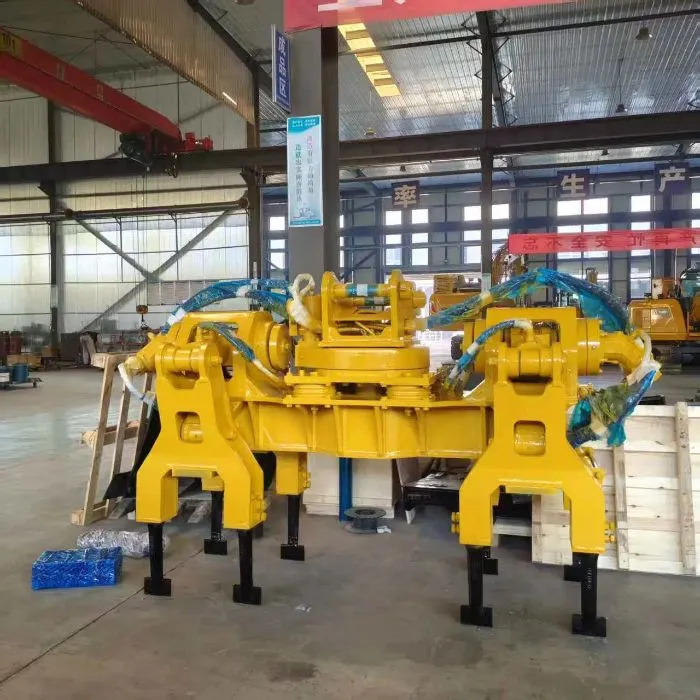
In-depth Technology: A Technological Leap from "Taming" to "Stability"
When purchasing or renting tamping equipment, focusing on the following three core indicators can help you quickly assess equipment performance:
Amplitude and Frequency: These are key factors determining compaction. Whether different excitation modes are needed for different geological conditions (e.g., ordinary crushed stone track bed vs. hard, compacted track bed) is an important consideration in selection.
Scope of Application: Excellent double-headed tamping machines are not only suitable for main lines but should also have turnout tamping capabilities. Whether a tamping device capable of lateral sliding is equipped determines the equipment's maneuverability and operational quality in turnout areas.
Operational Precision: With the addition of track-lifting and leveling devices, modern tamping machines go beyond simply compacting ballast; they must also possess the ability to lift, level, and correct track alignment, ensuring that the track's geometric dimensions meet safety standards after operation.
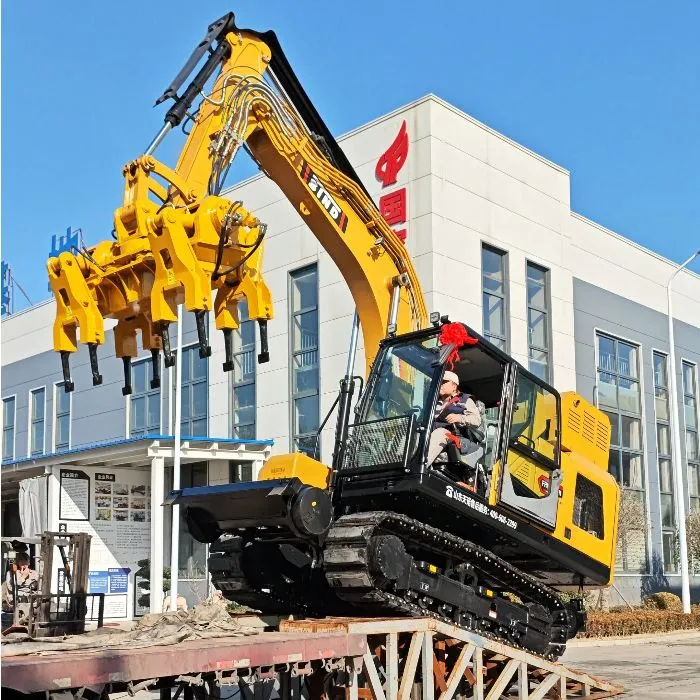
Market Trends: Intelligent Transformation of Small and Medium-Sized Machinery
Observing the international market, innovative products such as the Romitamp 2.0 launched by brands like Robel reveal a trend towards "one-person operation" and "dual-purpose (rail and road) operation." This means that future railway maintenance will require not only "strongmen" but also "wise experts."
For domestic infrastructure projects and those along the Belt and Road Initiative, procuring cost-effective, high-performance double-head tamping machines that meet the maintenance needs of heavy-haul railways is crucial for cost control and improved maintenance quality.
Conclusion: From manual tamping to large machinery, and now to flexible and efficient double-head tamping solutions, railway maintenance is moving towards "refinement" and "speed." If you are also facing problems such as difficult maintenance of dedicated lines, slow operation in turnout areas, or a shortage of personnel, a double-head tamping machine is undoubtedly a cost-effective upgrade option at this stage.